Very little about Morocco is genteel — least so when one ventures to Berber country that spreads itself between the more cosmopolitan, touristic cities.
On a December family getaway, my parents and I are driving back from Essaouira, a UNESCO heritage walled city by the sea, to Marrakech. When I’m with them, my market-hunter instincts bow to more powerful predators (it’s a dog eat dog world). They did raise me, after all. It’s a Sunday, and they’ve set their minds to sniffing out a fabled market my mum has read about online: the largest rural market in the region, an open-air livestock market called Had Draa. The sights out of the window blur into an unchanging undulation of burning sand, and together with the heat I succumb to drowsiness.
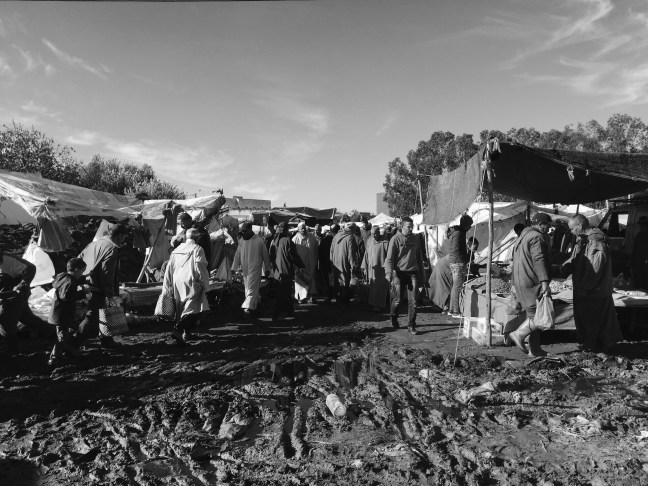
I awake to a cacophony of animal noises. This is no delicate sound — men shouting Arabic and Amazigh are overlaid with the clip clop of donkey’s hooves, cars honking, my parents giving conflicted instructions to our bewildered driver on where to park. Cars are cramming themselves along each side of the narrow road, and further along I can see the procession to the market. Moments later we’re in the thick of it: next to me, a hunchbacked little man, his face lined and weathered by the unrelenting sun, riding on his donkey with the imperiousness of a noble. Men of all ages hustling and bantering, their djellabas sweeping along behind them. My parents hurry ahead of me, thrilled and intoxicated by the chaos of it all. This is our type of market.
–
My reading material in Morocco was Edward Said’s Orientalism, a text that made me hyper-aware of my propensity to romanticise and inadvertently Otherise my travel experiences. While with a tour group visiting the Atlas Mountains (where Berber villages dot the slopes), I anxiously scrolled through academic articles discussing the political geography of the area. The Berbers are descendants of a tribe in North Africa, the true indigenous people in the region. ‘Berber’ was originally a derogatory slur, and the preferred term for self-identification is Imazighen.
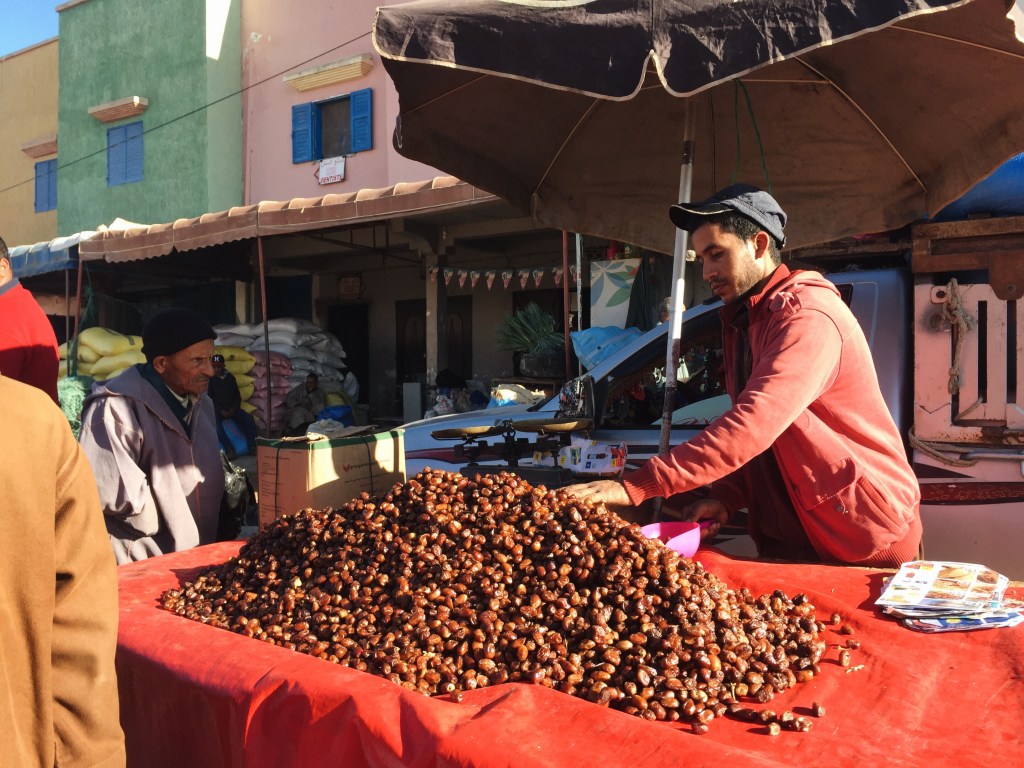
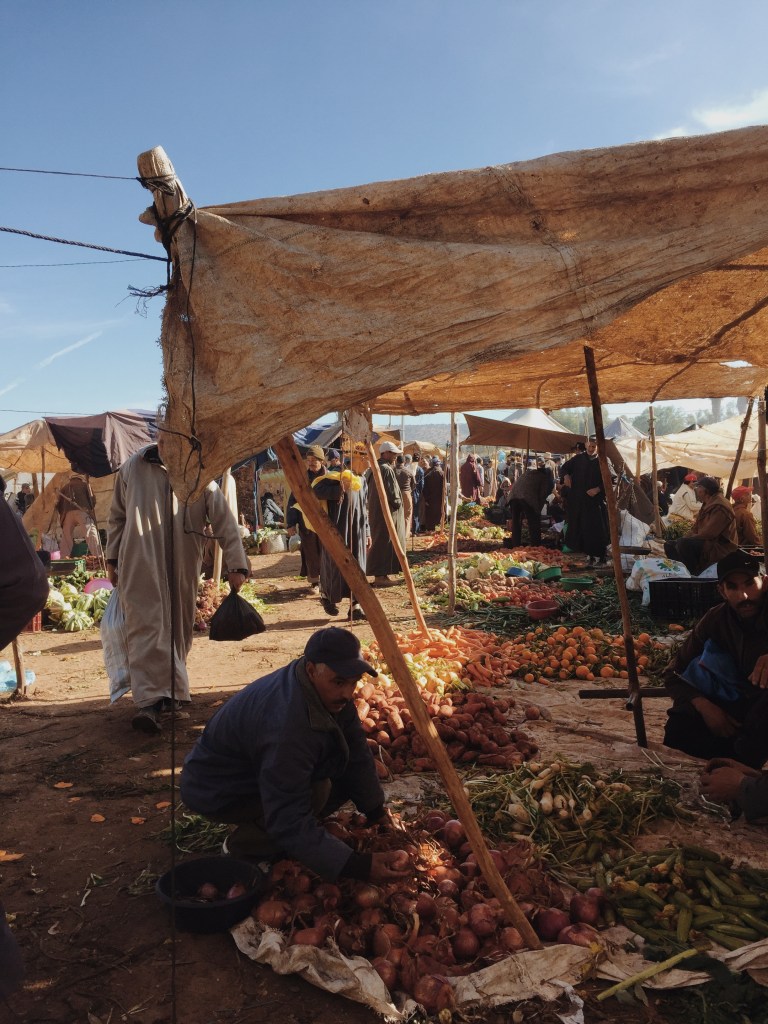
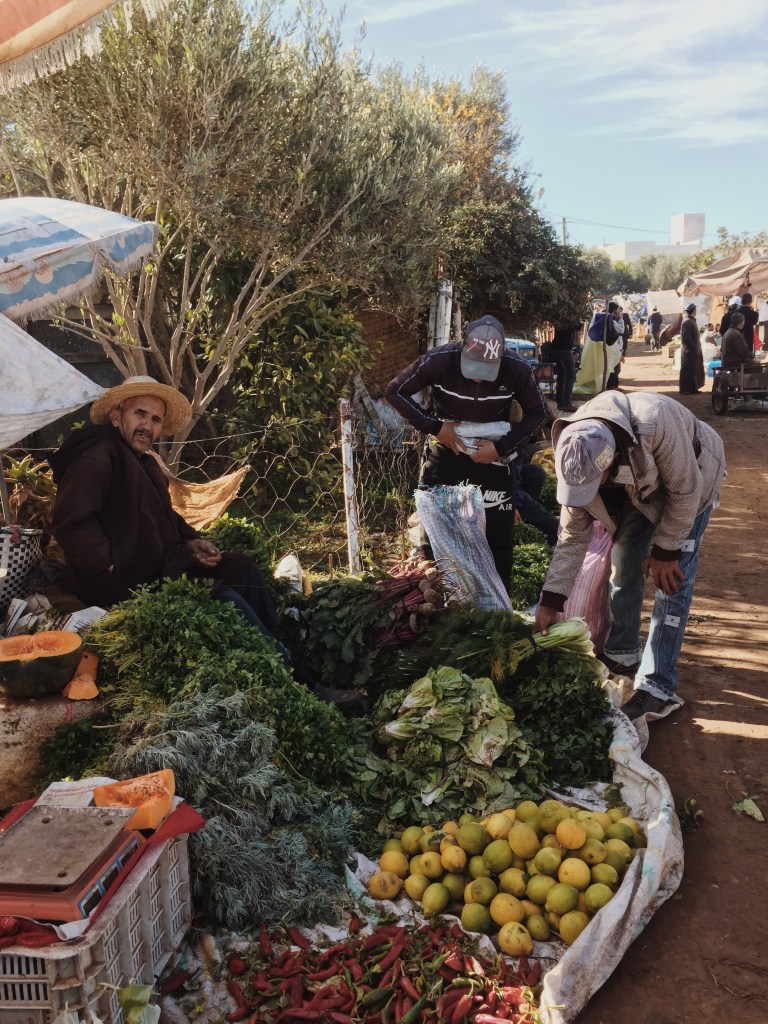
On this Sunday morning, the Imazighen men probably wouldn’t give a hoot what I referred to them as, so long as I kept out of their way. On either side, produce spilled out into the blinding sunlight, fresh olives and oranges and mountains of dates looking like jewels from an overturned treasure chest.
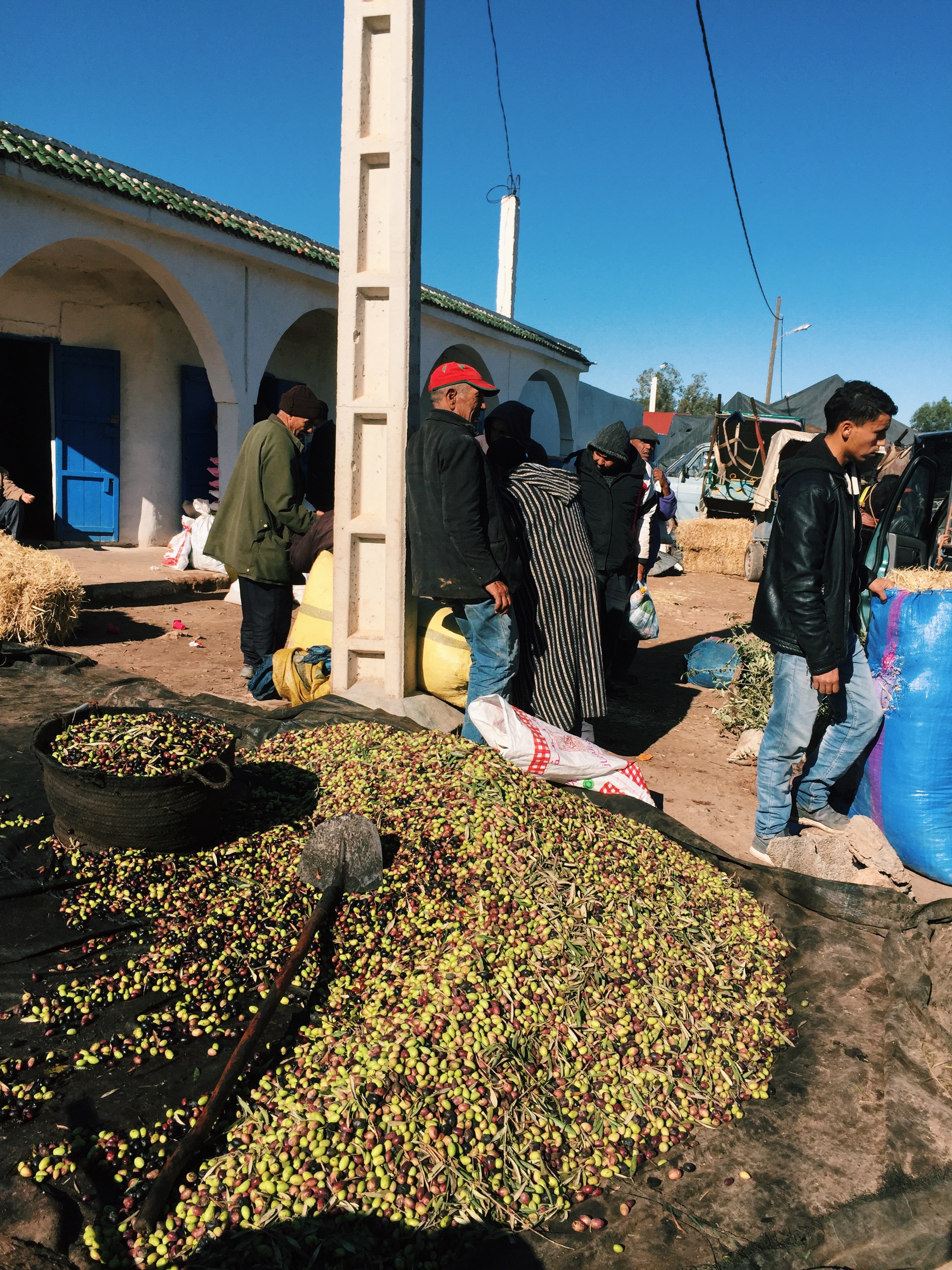
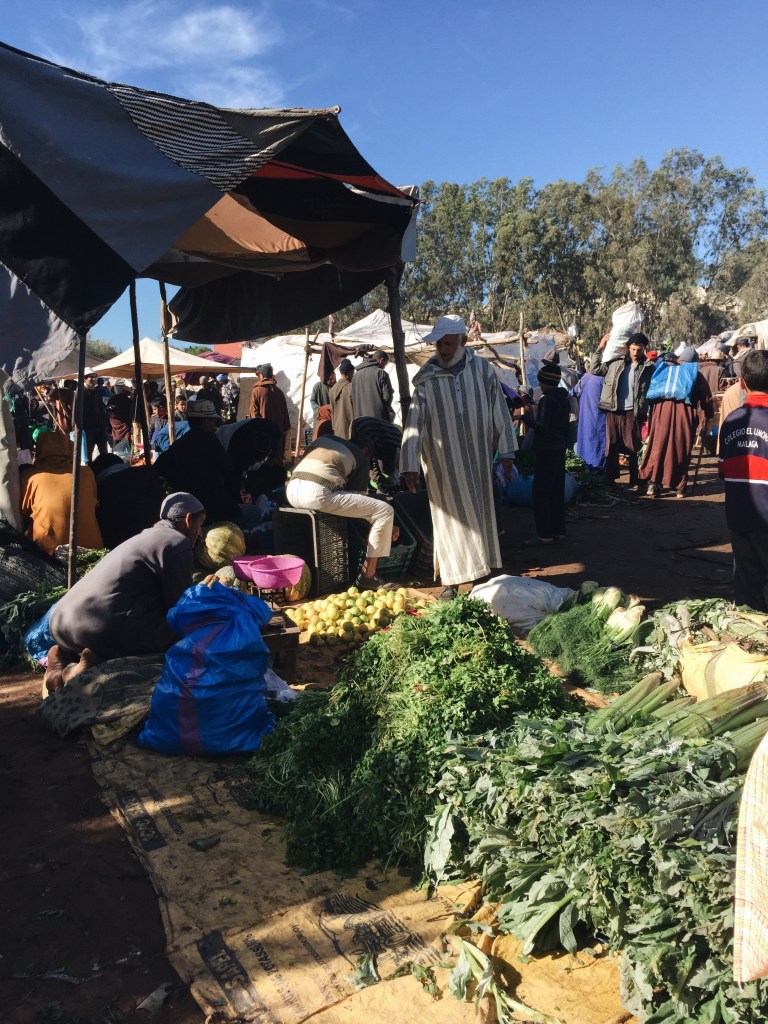
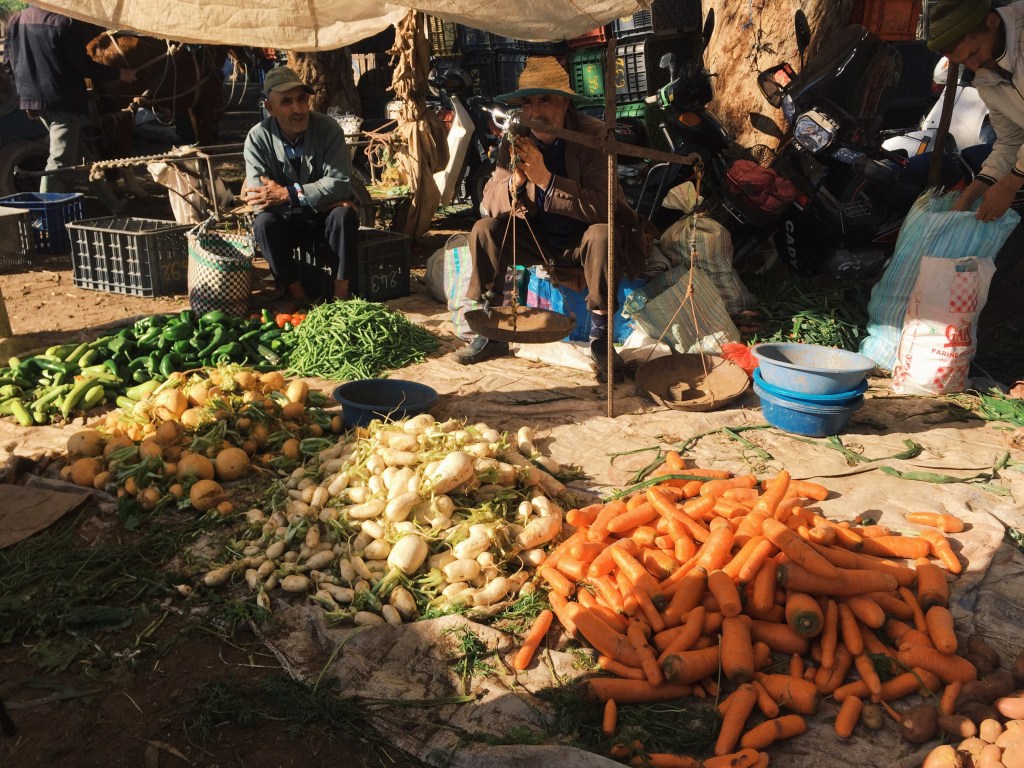
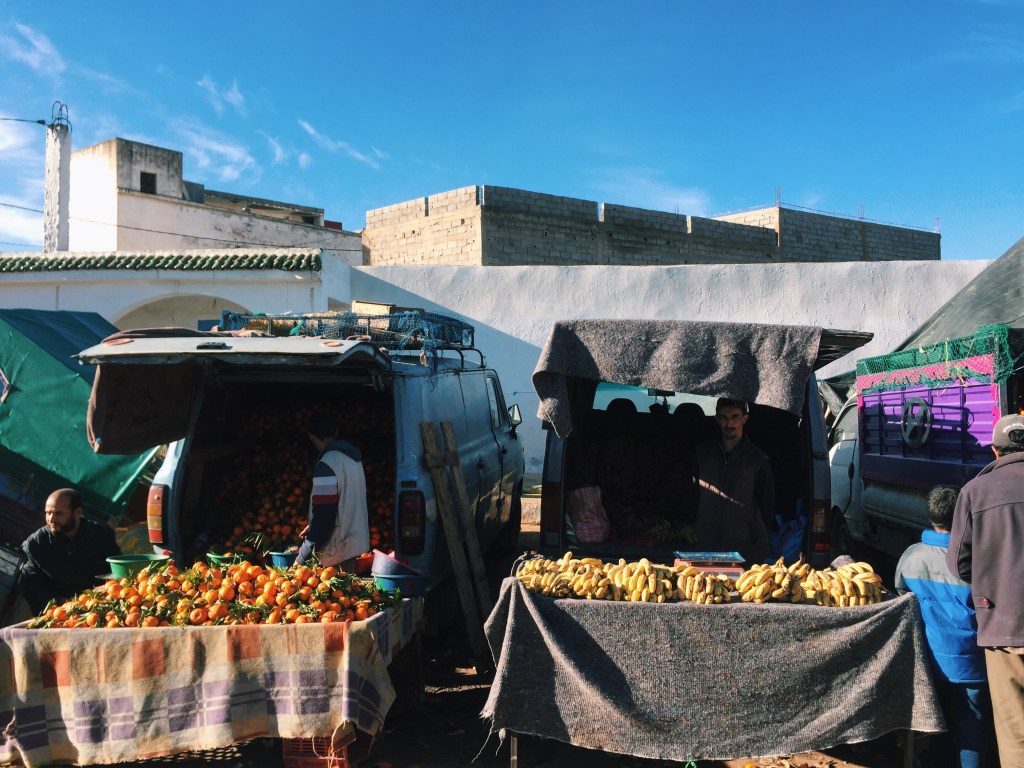
If this were a meal, this would be amuse bouche. The appetiser is a muddy, mucky obstacle course of a road kept soft and dangerous to your shoes by animal dung, dozens of human footsteps and the hooves of donkeys, horses and cattle coming and going. We hopscotch our way to the main course: a braying, mooing, neighing bazaar of livestock waiting to be carted off by purchasers that had been here bidding away since the crack of dawn. This was not a sight for any animal welfarist. In front of me, a grizzled old man tugged at a rope tied around a defiant calf’s neck, while his three sons heaved their collective bodyweight against her rump. My path gets cut off by a pushcart of goats trundling past.
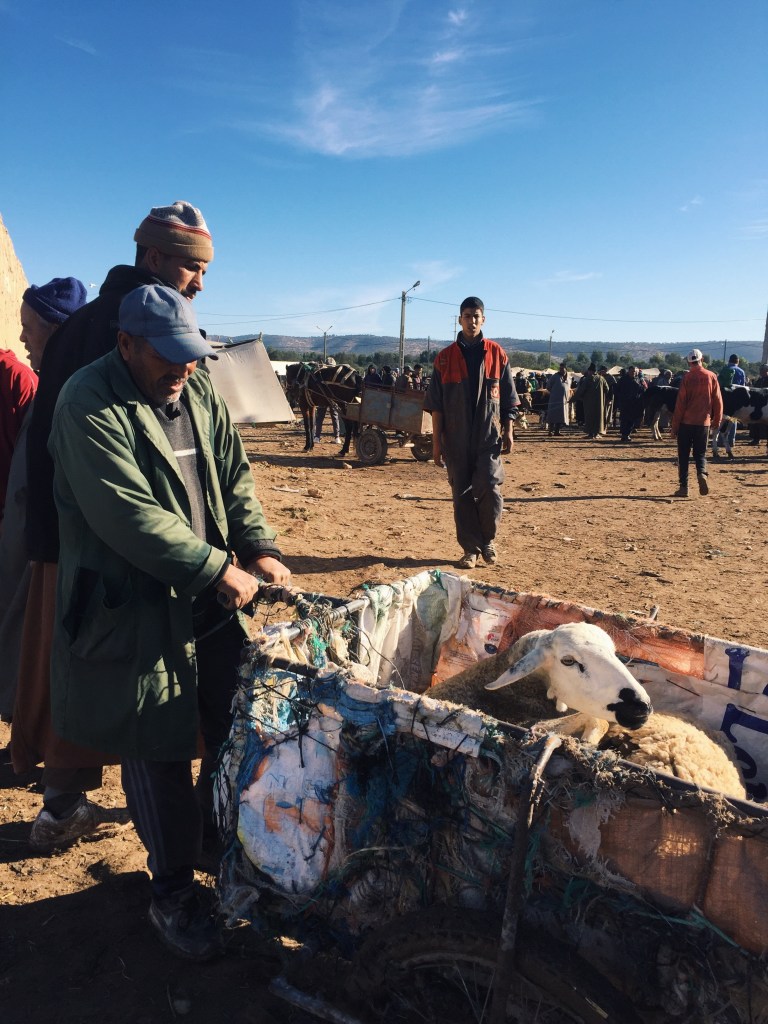
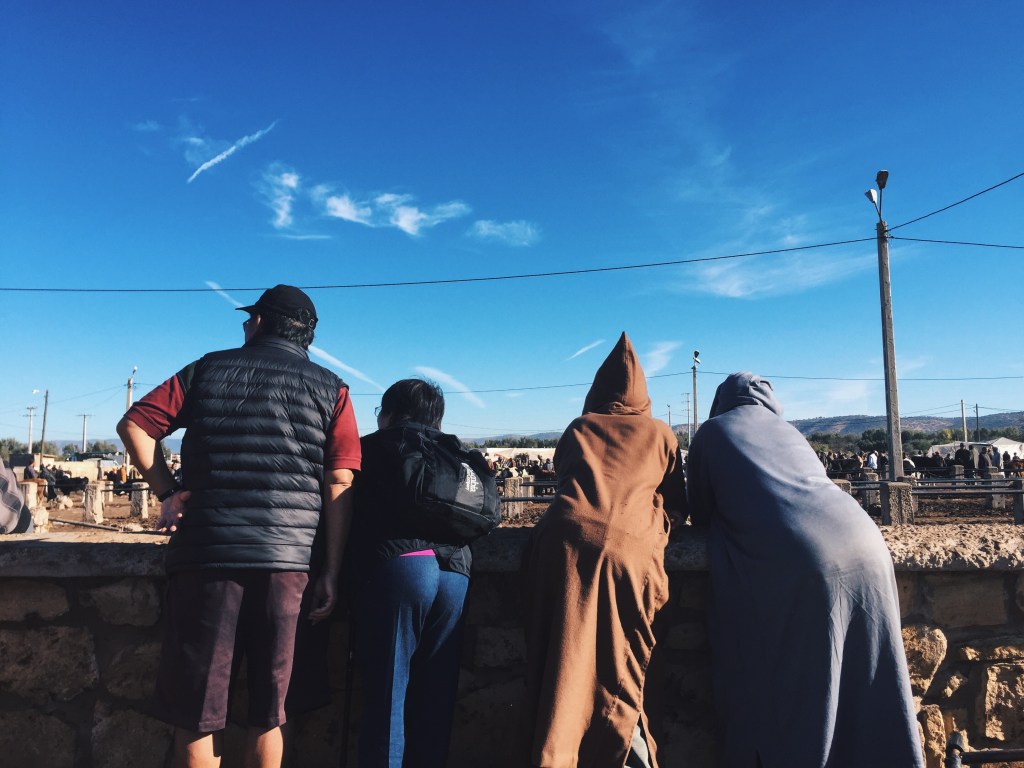
All around, men mill about talking shop while they keep their herds/flocks of livestock close. More men sit sipping mint tea in the shade. The absence of the fairer sex is striking — perhaps because Had Draa not only represents the weekly shop, but also a public forum for socialising and economic activity. The story goes that this very market was a site of slave trade serving the Barbary Coast (though I couldn’t find any evidence proving this).
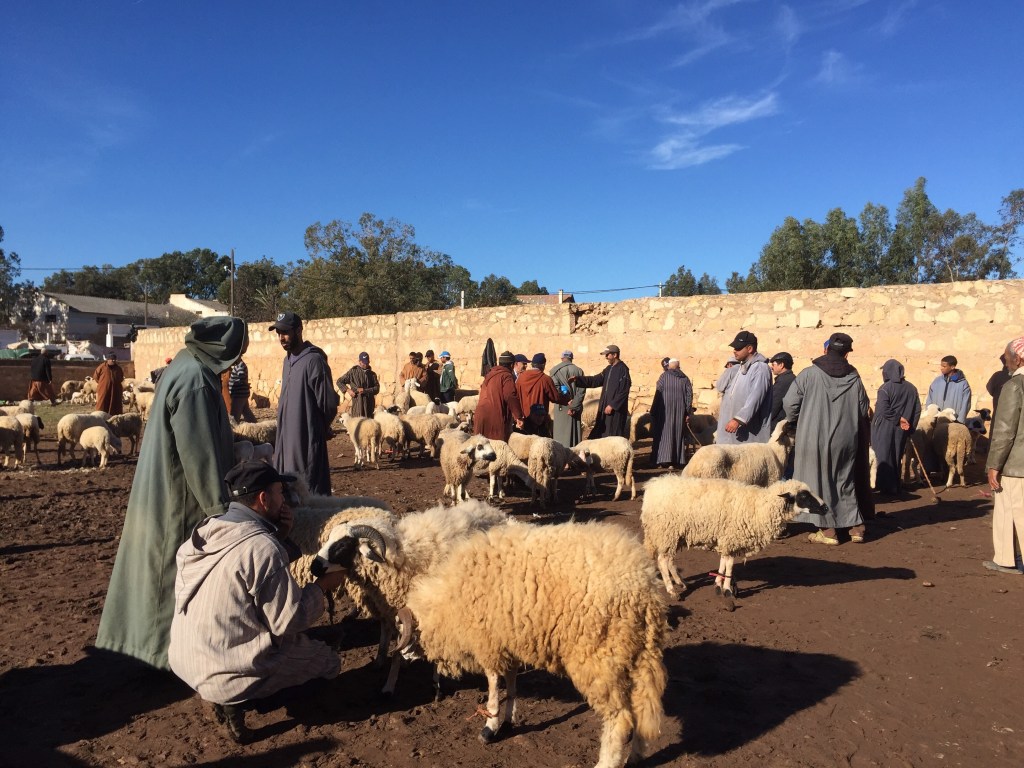
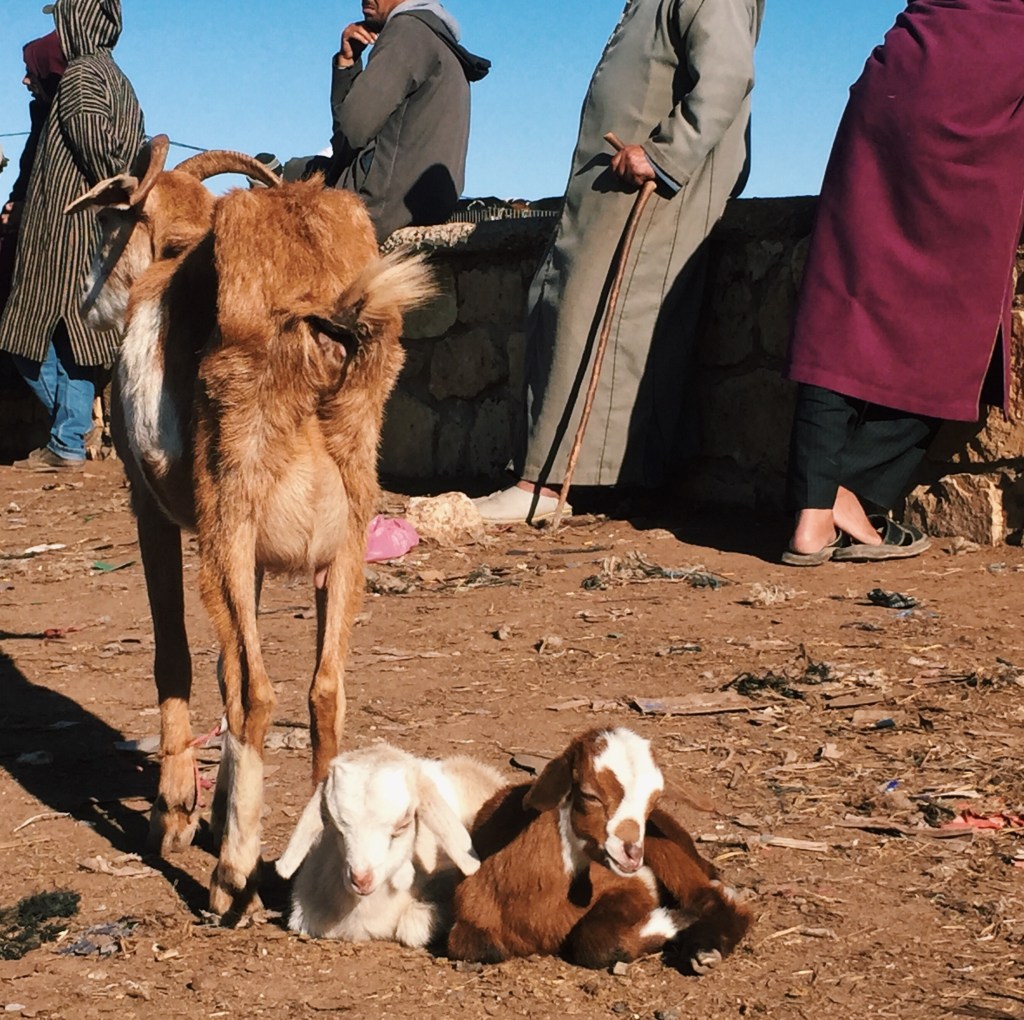
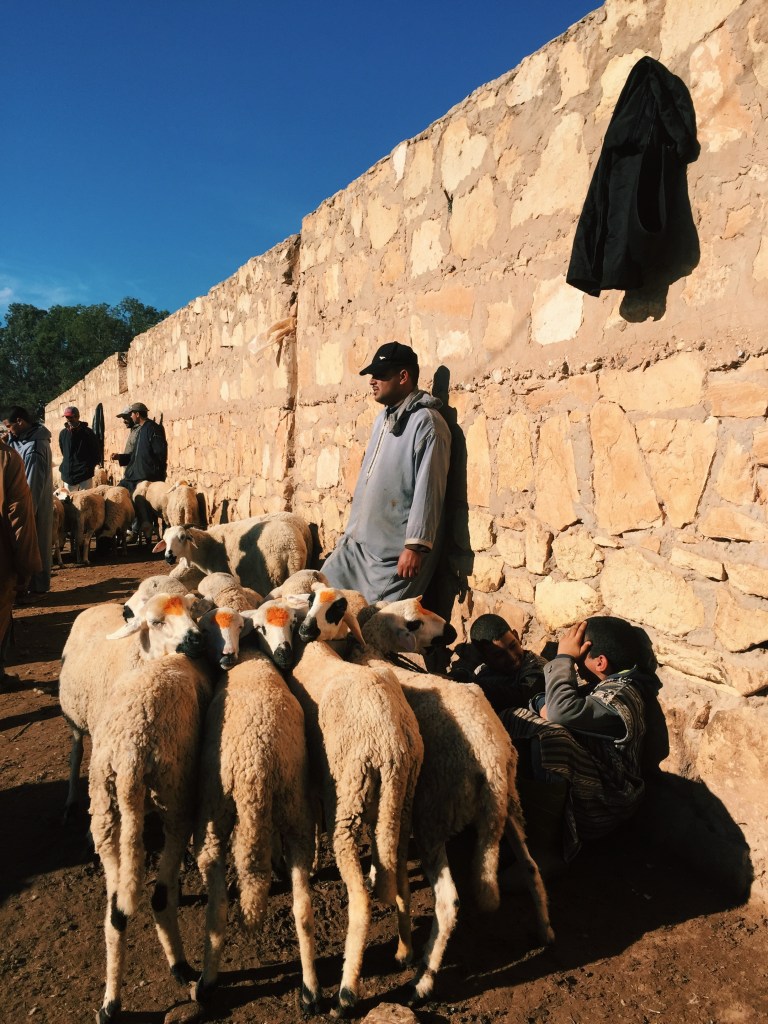
It’s a scene to behold, of course. Something that ought to be captured in wide-angle lens, with all the people and animals infinitesimal figures like in a landscape by Brueghel the Elder. Watching the action is not only entertainment for us, but it seems the market frequenters too. For us, the fascination is in the novelty; for them, maybe surveying the price of goats that other people are getting.
Our driver for the day, himself an Amazigh, follows behind us in his leather jacket, loafers and a bemused smile on his face. I bet no other tourist has asked you to take them here, I joke with him. We head out back to the appetiser.
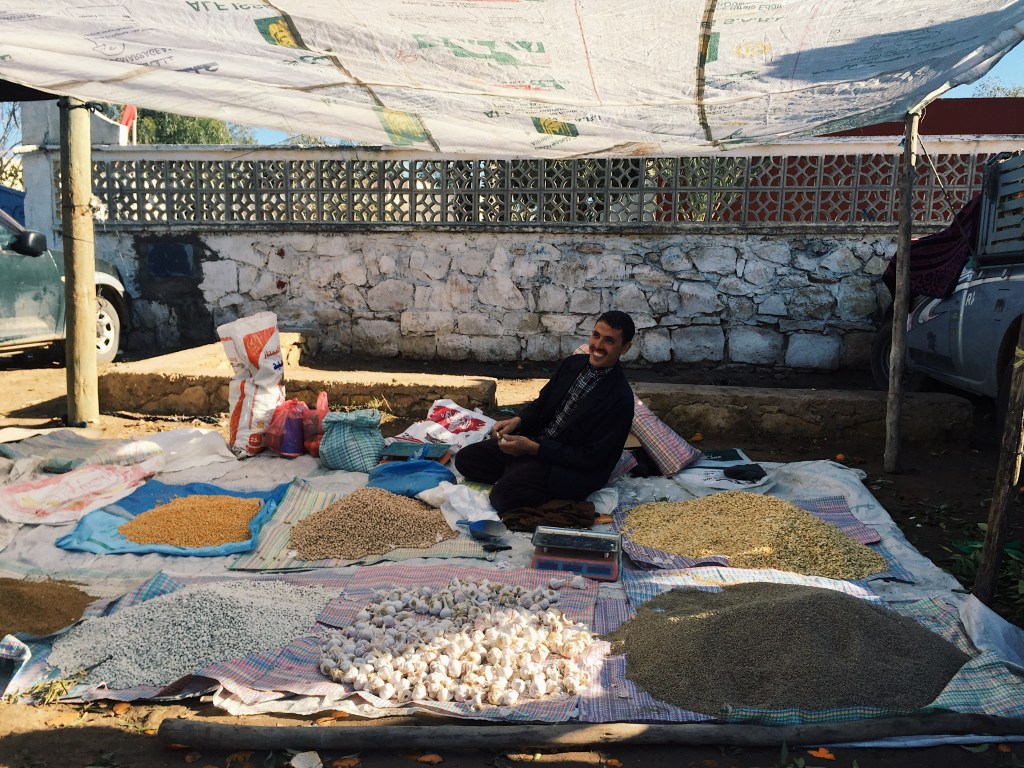
Stall keepers crouch over their produce, yelling banter at one another between haggling with their clientele. They blink back the sun, seemingly unperturbed by its scorch. There’s so much beauty here: the way light animates the food, making it leap out of my photographs. The flourish of djellebas, the kicking up of copper coloured dust. Next to me, Mom busily points at veggies and, through an exaggeration of hand gestures and head motions, invariably hands a big bag to me, her Porter-in-Chief.
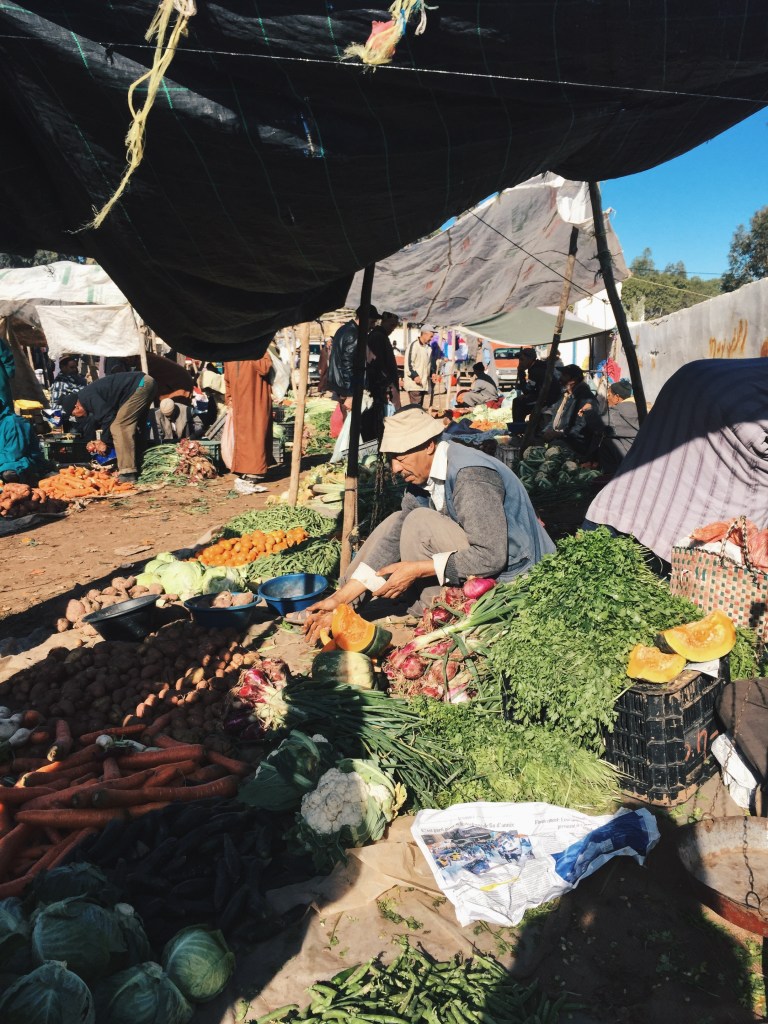
When we head back to the car, arms heavy laden and offer a bag of nuts to share, our driver laughs and shakes his head. These crazy Chinese people, he must be thinking. I wonder if I might have essentialised his people and their livelihoods by whipping out my iPhone and snapping a picture. I wonder if he essentialised me and my family when he saw the colour of our skin, if our candid conversation in the car might have been any different if we where white. I wonder if walking into a market like that together did anything to bridge the many gaps that separate us.
 Market Survey