Well, well, well, if it isn’t the oldest, most storied, most featured-in-popular-media market in Seoul. Earlier in 2024, a dear friend from university invited me to her wedding on Christmas day, in her home country. Several months later, a dear friend from work announced her wedding, just two days after, in Singapore. After processing that shuttling between weddings will probably be my life for the next 10 years, I looked up flights to Incheon Airport, and concluded that a 3.5-day sprint through Seoul was in order. Which returns me to my initial statement — I had time for one market trip, and I wanted it to be good.
A Korean friend in Singapore effusively exhorted the delights of Gwangjang Market to me. I didn’t need convincing. The sprawling city of Seoul is literally littered with markets — a quick skim of Google Maps illustrates that there must be a market or two within any 5km radius in the city. There are markets that specialise in every type of product imaginable: traditional herbs, clothing, electronics, artist’s markets, flea markets, seafood, toys. Seoul is quite literally a market-lover’s paradise. And upon arrival in the city, that fact is made even more apparent: at every turn, towering shopping malls sprout from the ground like prolific crop fields ripe for harvest. The streets are dotted with flights of subway staircases that lead to – you guessed it – underground shopping malls.
Gwangjang Market itself is situated in a major area of commerce. It is surrounded by: Bangsan Market (baking and craft materials), Jungbu Dried Seafoods Market, Pyounghwa Market (secondhand clothes and books), Dongdaemun General Market (an air-conditioned market for clothing and textiles), and Namdaemun Market (household items), and not to mention the famous Myeongdong shopping area. Just looking at the map is overstimulating.
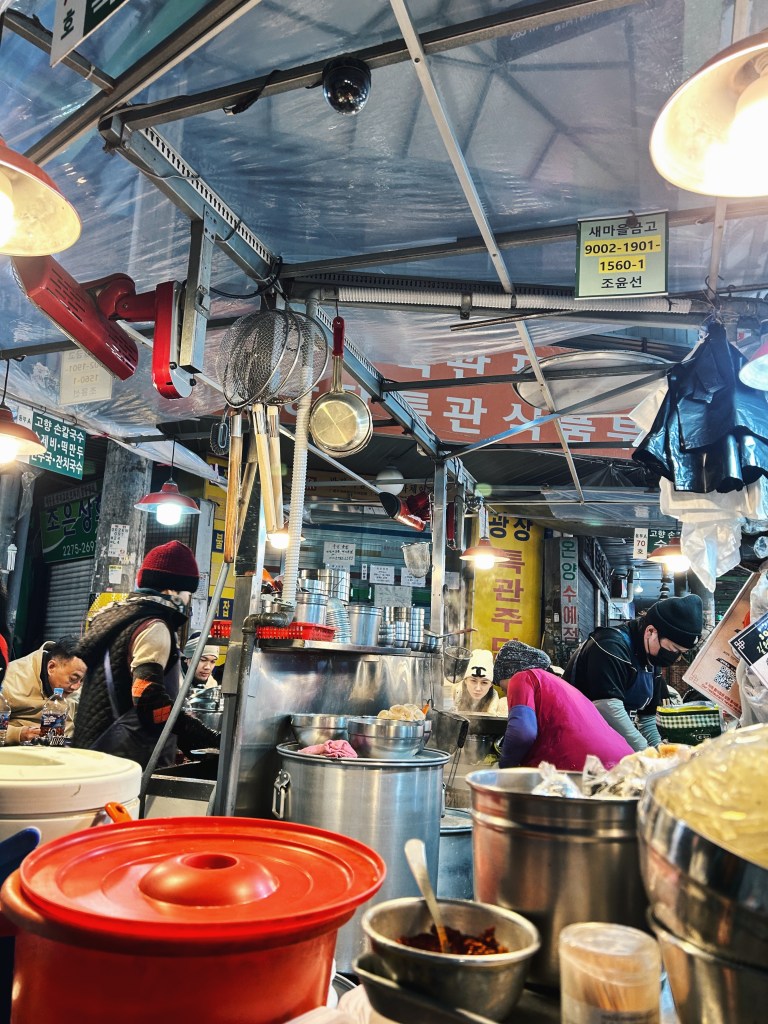
I visit Gwangjang not once, but twice. The first time, my traveling companions and I come in search of dinner. We draw close to the Netflix ajumma offering kalguksu and mandus like flies to a lamplight on a moonless night. My friends are avid Netflix watchers, and this was on their Seoul must-hit list. She’s there in a pink apron, a headscarf holding her greying hair back, bright red lipstick adorning her otherwise bare face. She is non-stop. We perch on electrically warmed benches (so cozy!) arranged around the steaming engine of this culinary hotspot and watch her slice noodles, dunk them into boiling pots of water, and occasionally grace an excited customer-fan (us included) with a quick grin or a photo. My friend calls her attention to us, keys in a message of respect to Google Translate, and hits play for the technology to express our admiration in Korean. She laughs unabashedly, clearly no stranger to these occurrences.
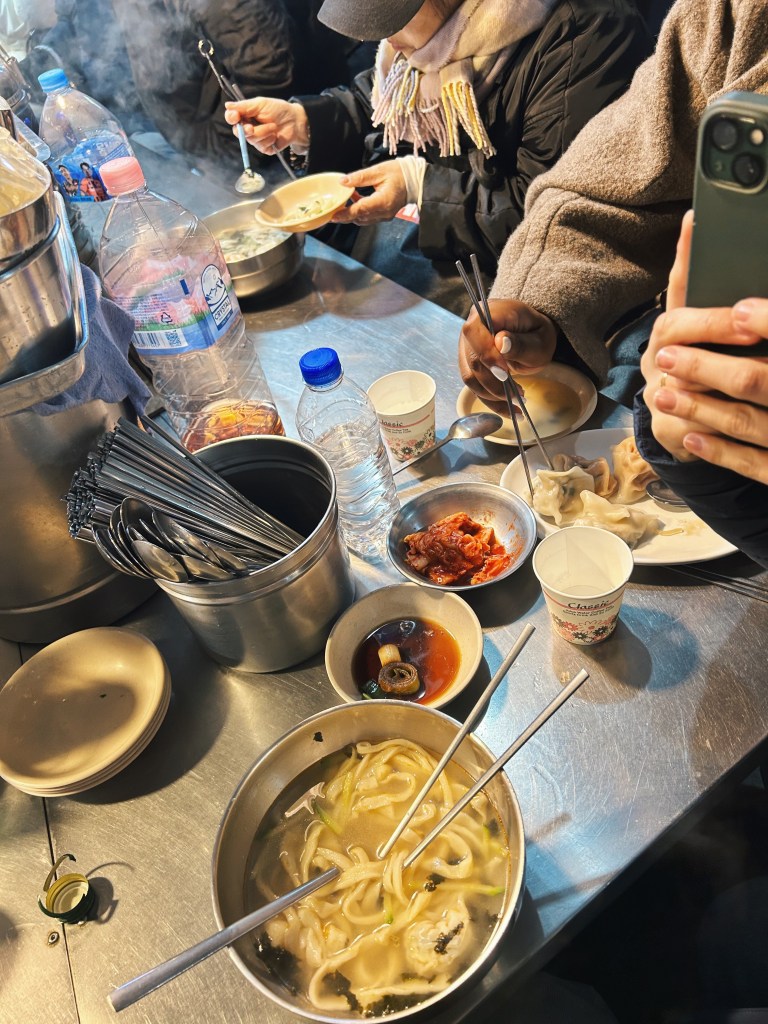
Bowls of kalguksu and platters of kimchi and pork mandus all around, accompanied by dishes of Korean soy sauce with massive slices of scallions, which is more delicate and sweet than its Chinese relative. A bottle of soju to share, for good measure. The food was preceded by ubiquitous little plates of kimchi. The kalguksu broth was clean and sweet; the noodles rough-cut, chewy and robust, like udon’s rustic cousin. The mandus – well, what has been said in the history of food that has not been said about dumplings? The mandus were ingots of juicy, umami goodness. They were pure pleasure.
After the fortifying meal (and a polaroid with the ajumma), we stalk off in a nameless quest for amusement.
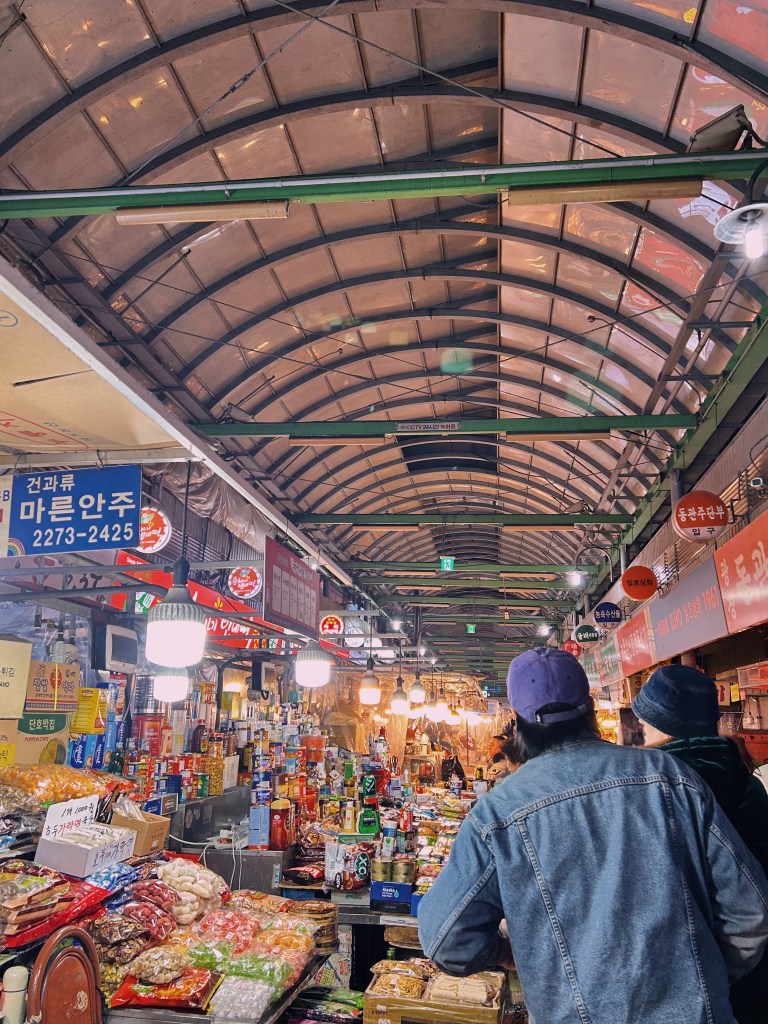
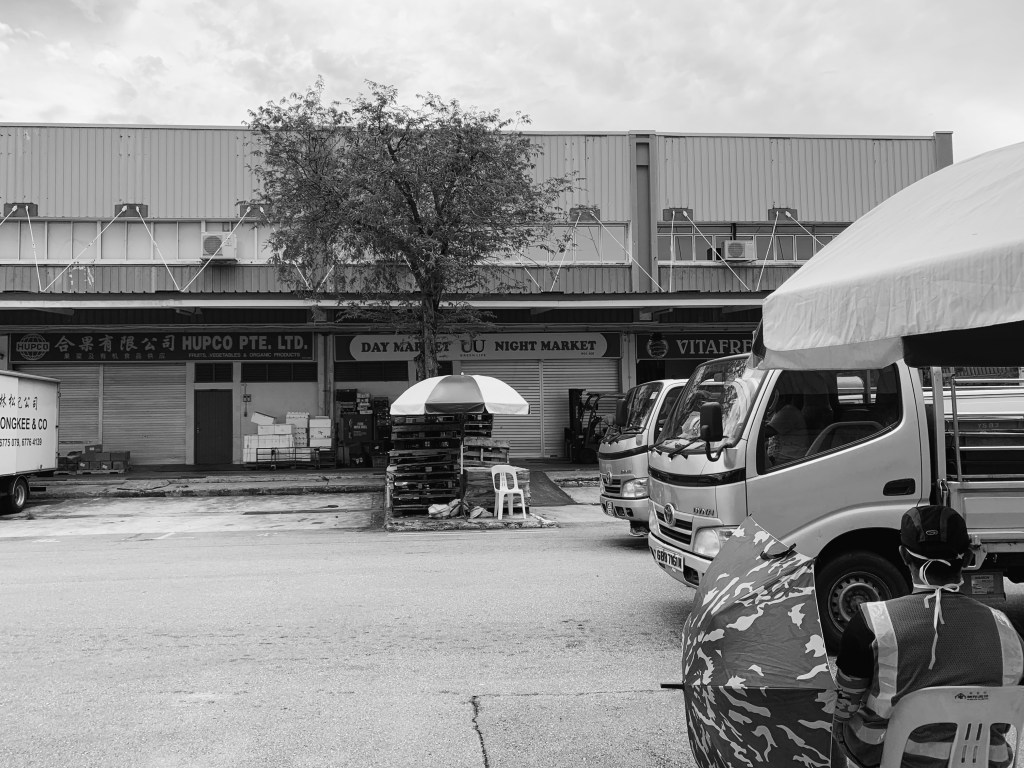
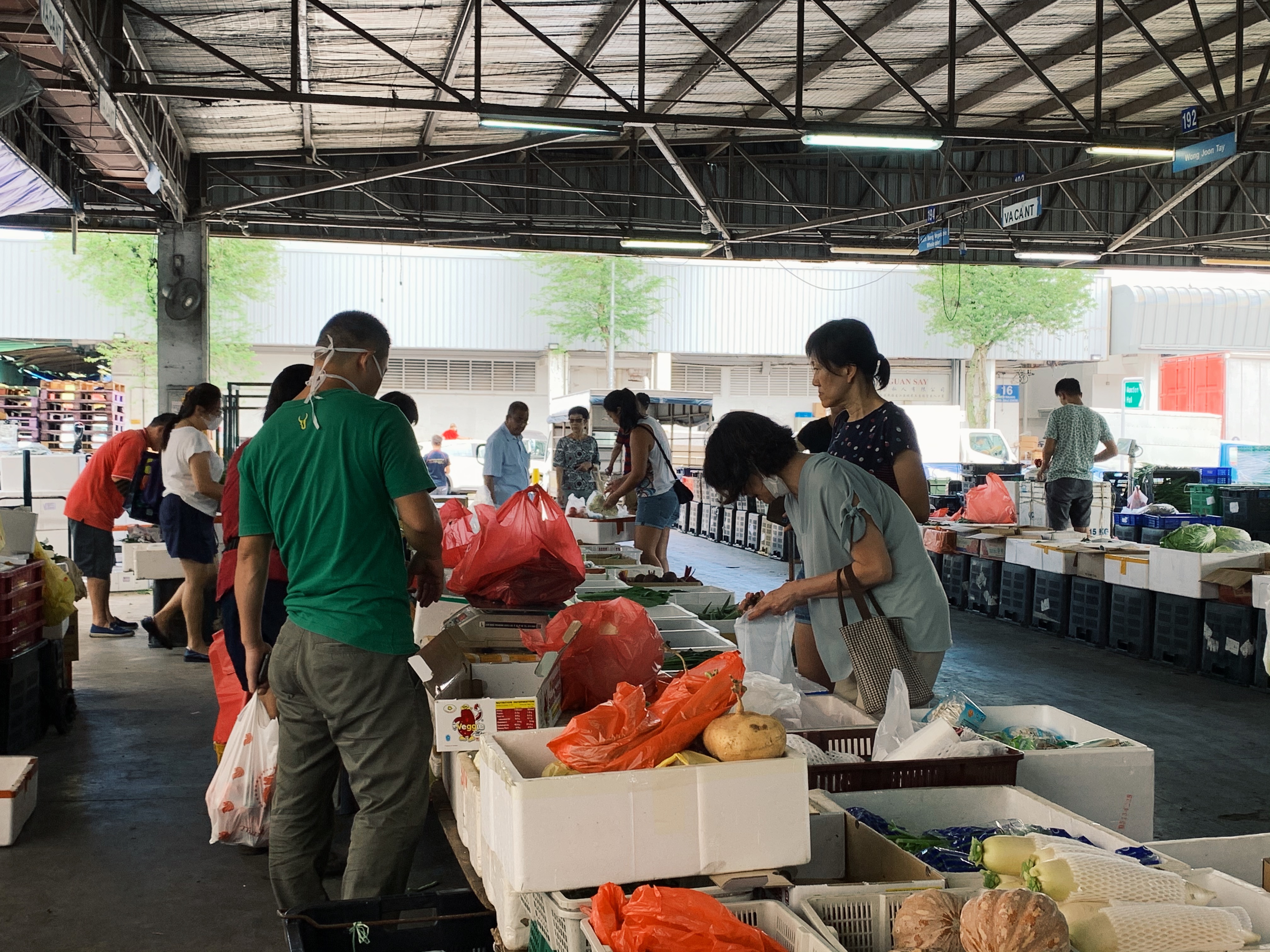
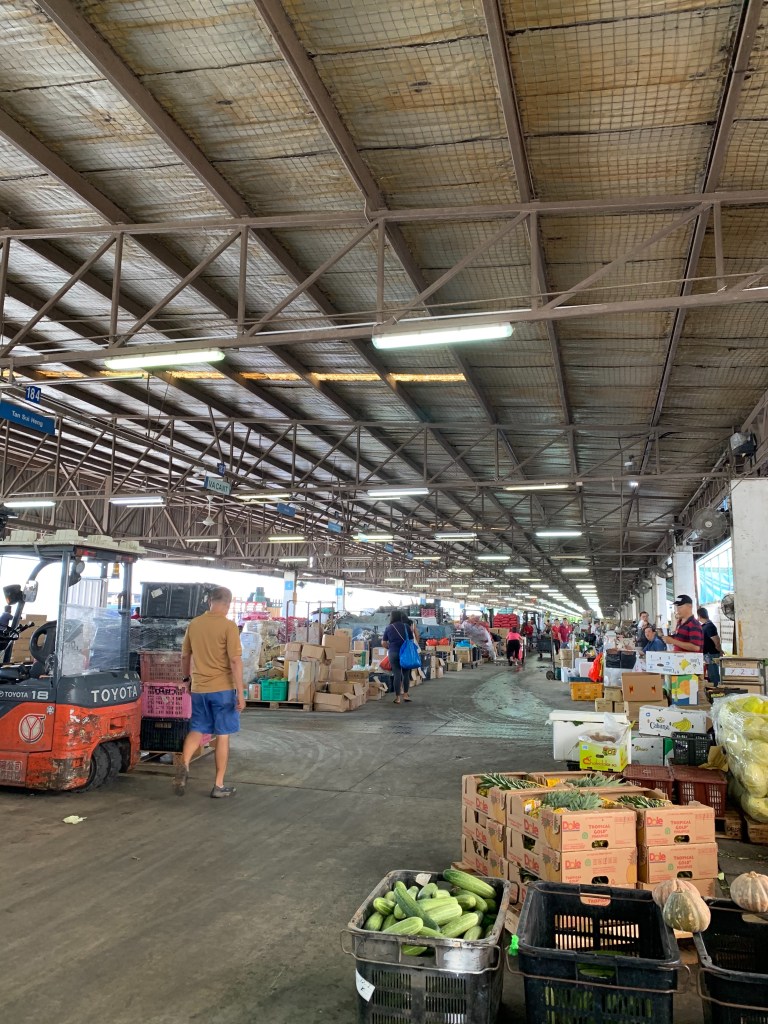
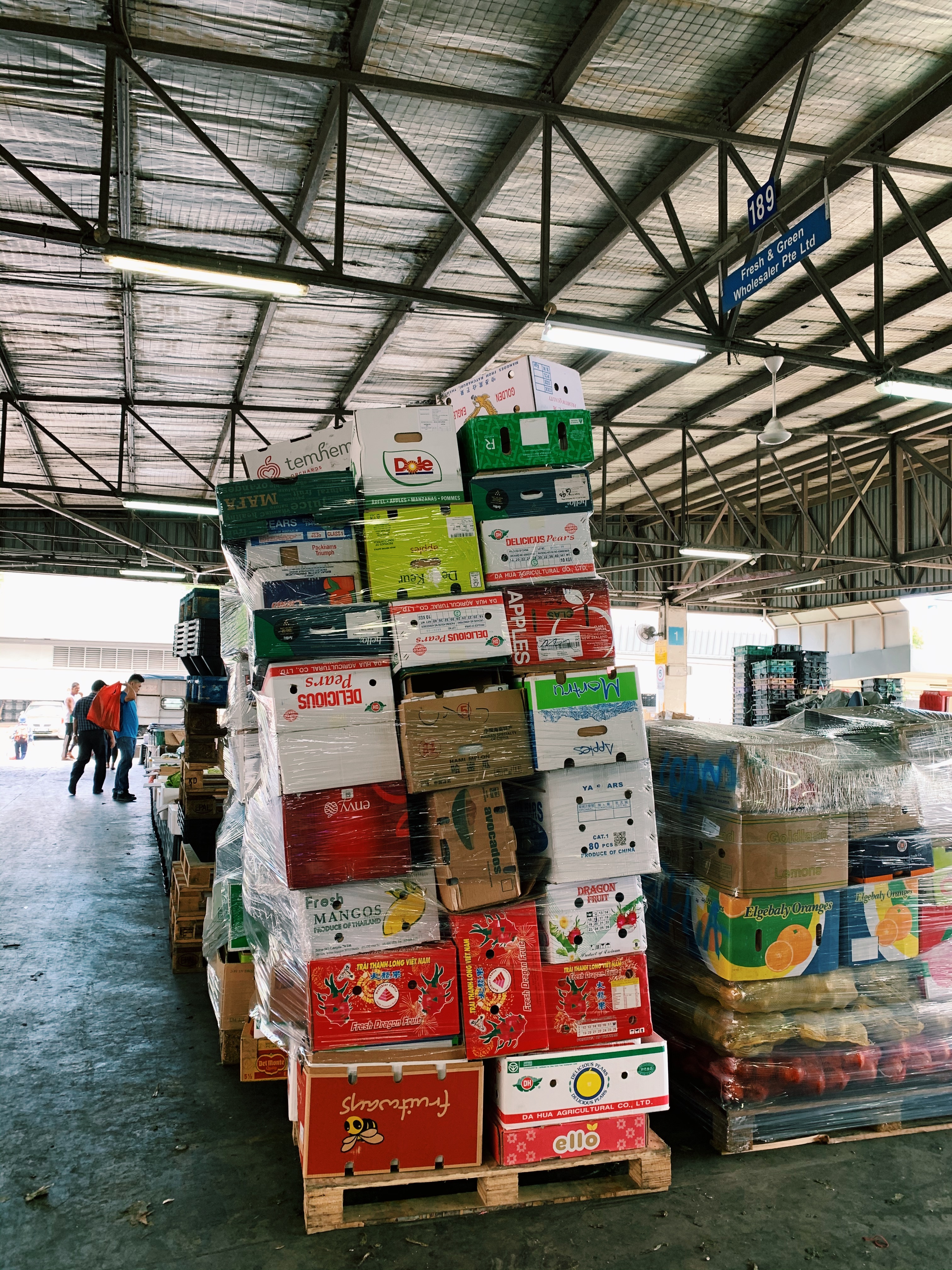
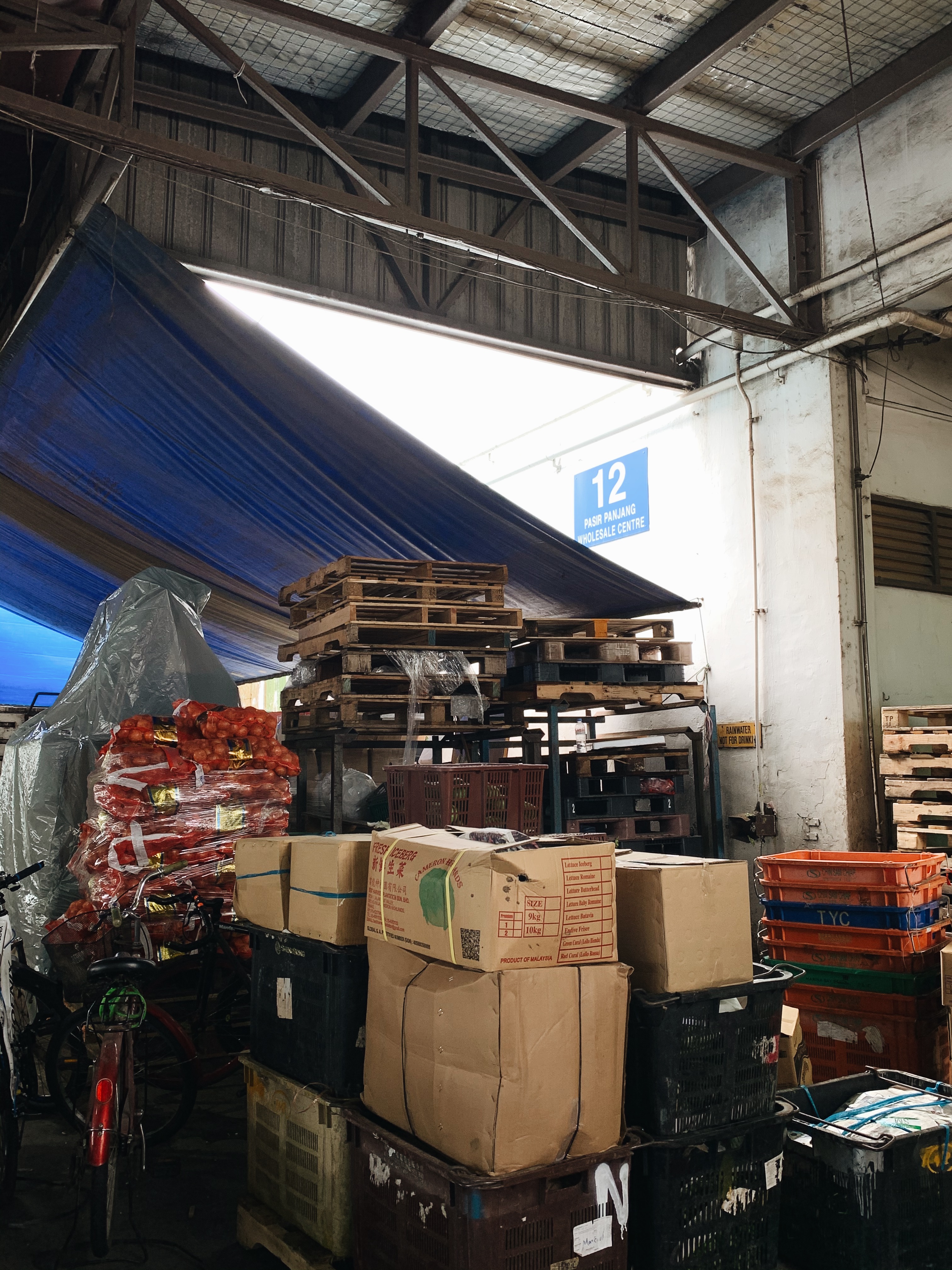
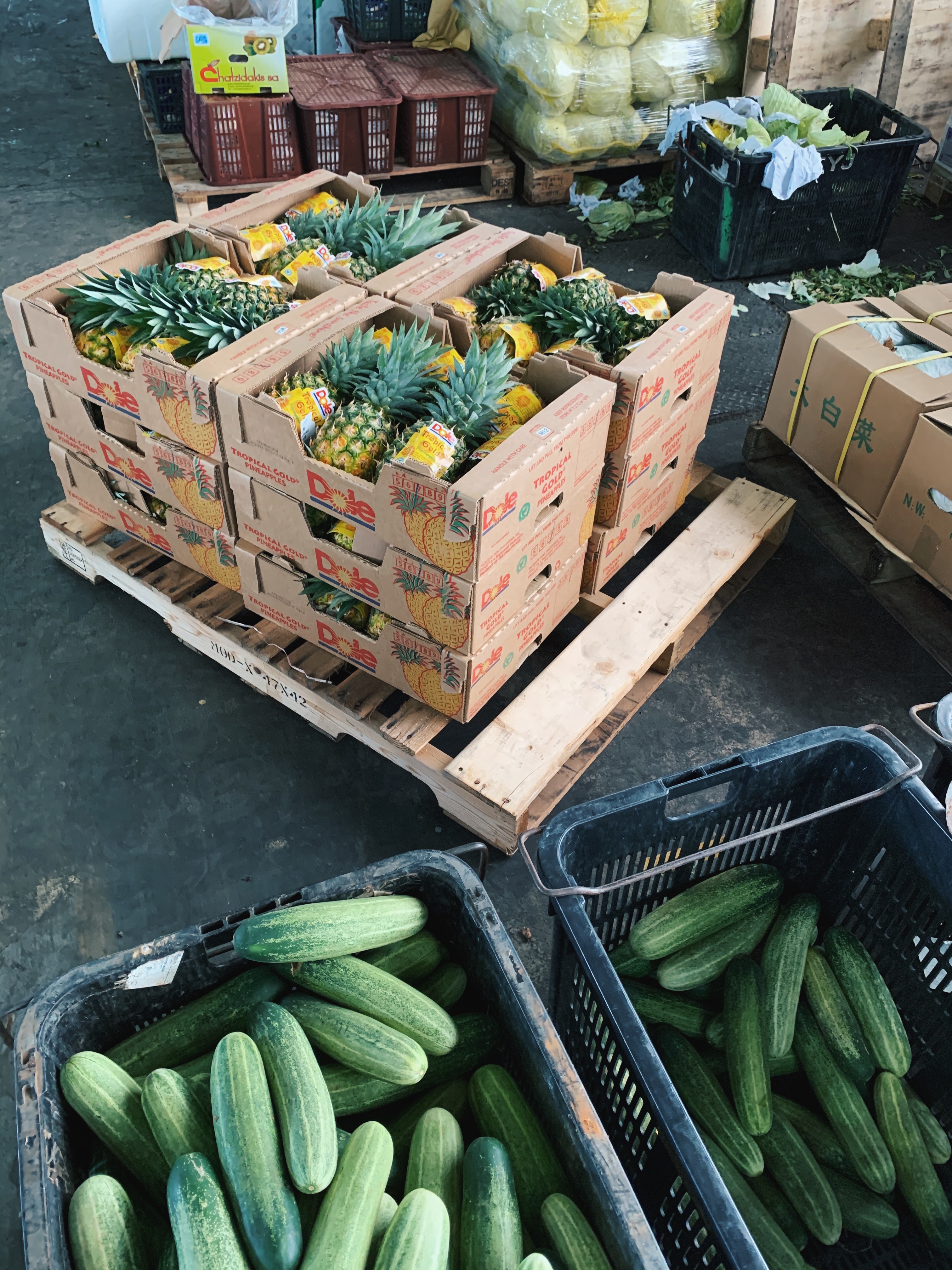
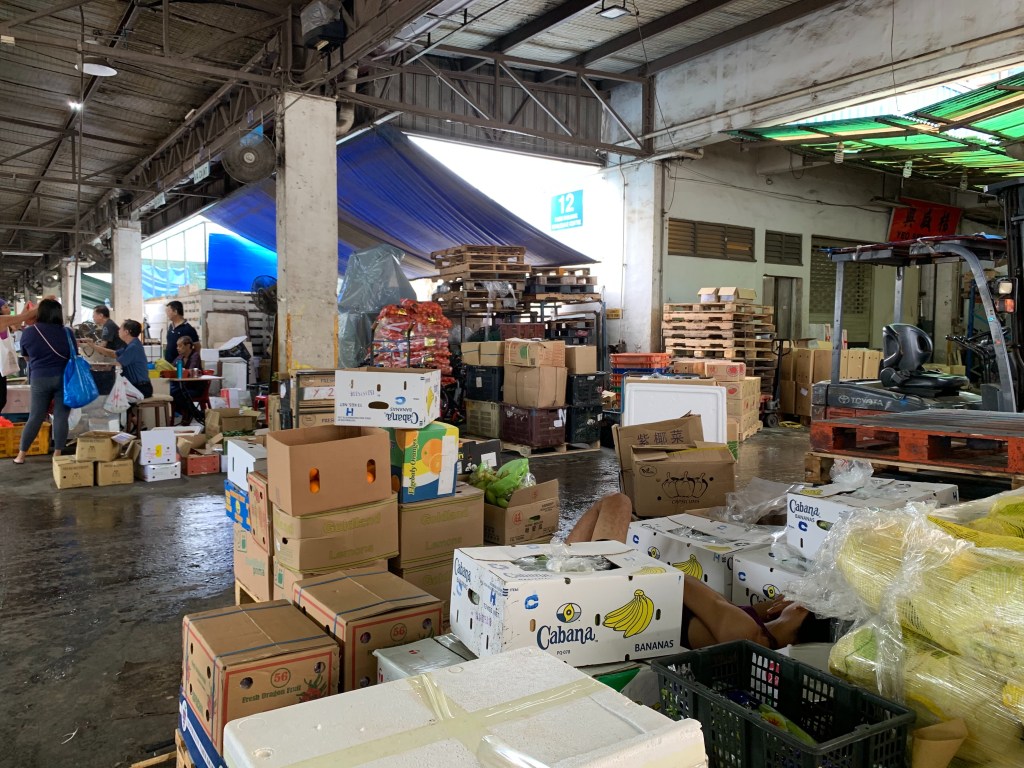
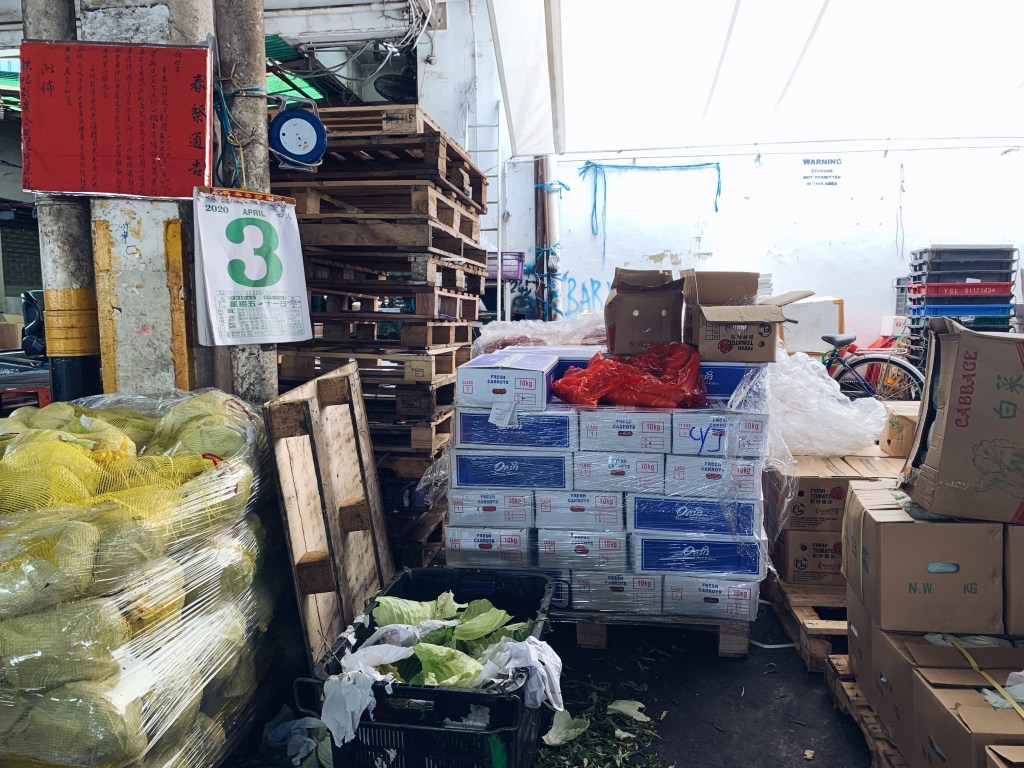
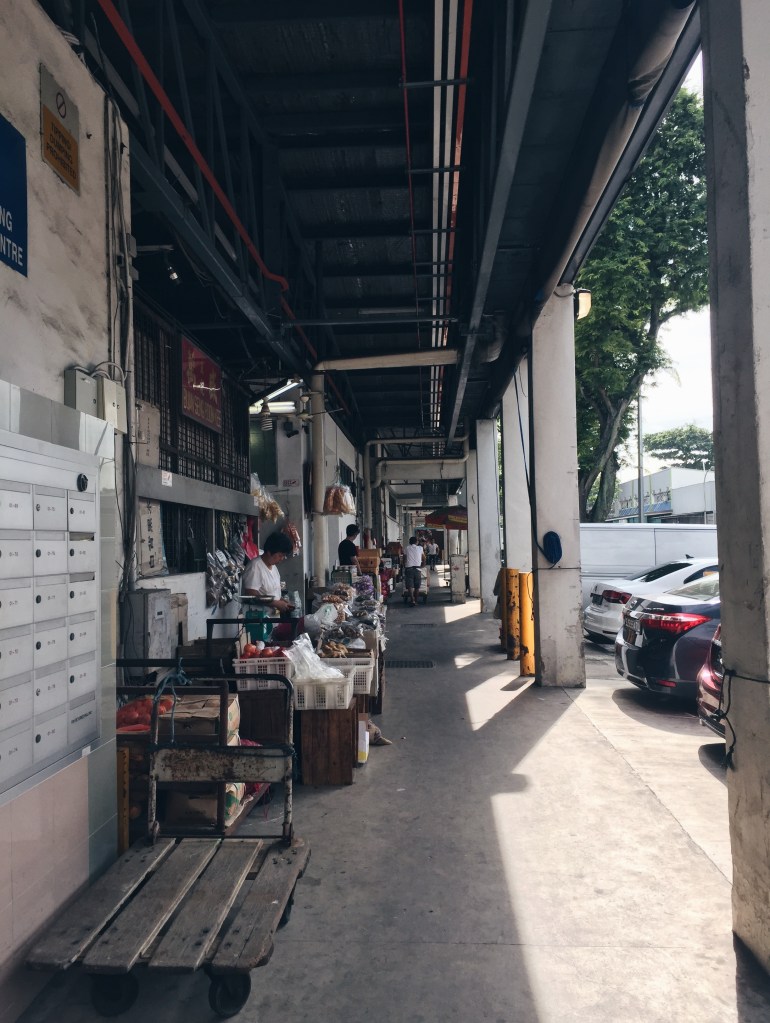
If one visits markets often enough, one begins to notice patterns. Like Pasir Panjang Wholesale Market, the main street in Gwangjang Market is a bustling thoroughfare, except instead of cardboard boxes of vegetables, there are two parallel rows of open-concept food stalls, jockeying for the attention of locals and tourists alike. They carry much of the same types of foods — mayak kimbap (crack kimbap – it’s called that because it’s so addictive), bindatteok (pan-fried mung bean pancake), tteokbokki. There is more exotic fare: soondae (pig intestines filled with noodles, barley, and pork blood), pig trotters, seasoned raw beef. On either side of these two rows of food stalls, there are larger restaurants in more permanent spaces; outside each one, the service staff stand sentinel, ready to welcome a potential customer at the slightest hint of a second glance.
At the North gate, a queue snakes onto the main road for sought-after twisted donuts (I go for some hotteok from a less popular stall instead. I fall in love). I buy some yakgwa (a delicious oil-and-honey cake that has the texture of a really dense brownie) and seaweed crackers, and the night ends there. My friends and I are tired and the market is winding down for the night. But all those delicacies remain untried, and I know I must return.
Two days later, I do. Wedding festivities have come and gone. The morning is brilliantly bright and bitterly cold. I am fighting an excruciating throat ulcer. Armed with throat spray and painkillers, a friend and I make our way to Jongno district again. The market adventure begins before we reach Gwangjang. We pop in and out of curiosities along the street: a record shop, a vegetable shop, a temple with a koi fish frozen solid in its shallow pond. Even before we get to the market, my arms are already laden with plastic bags — one has a carton of dried persimmons, another contains an LP.
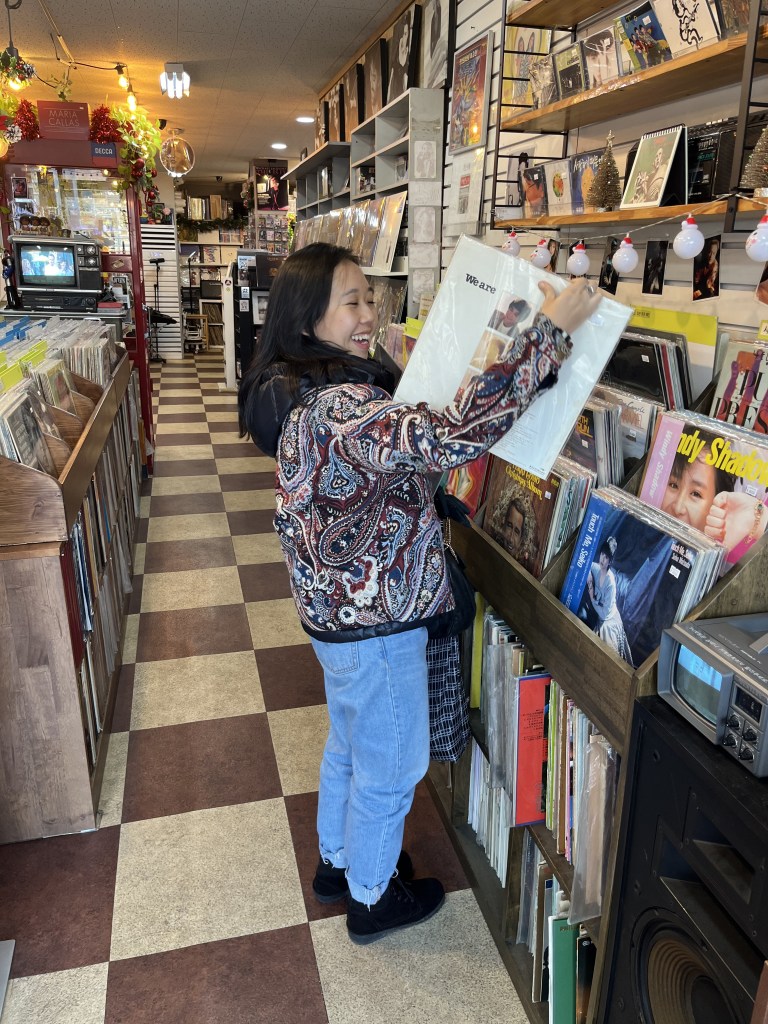
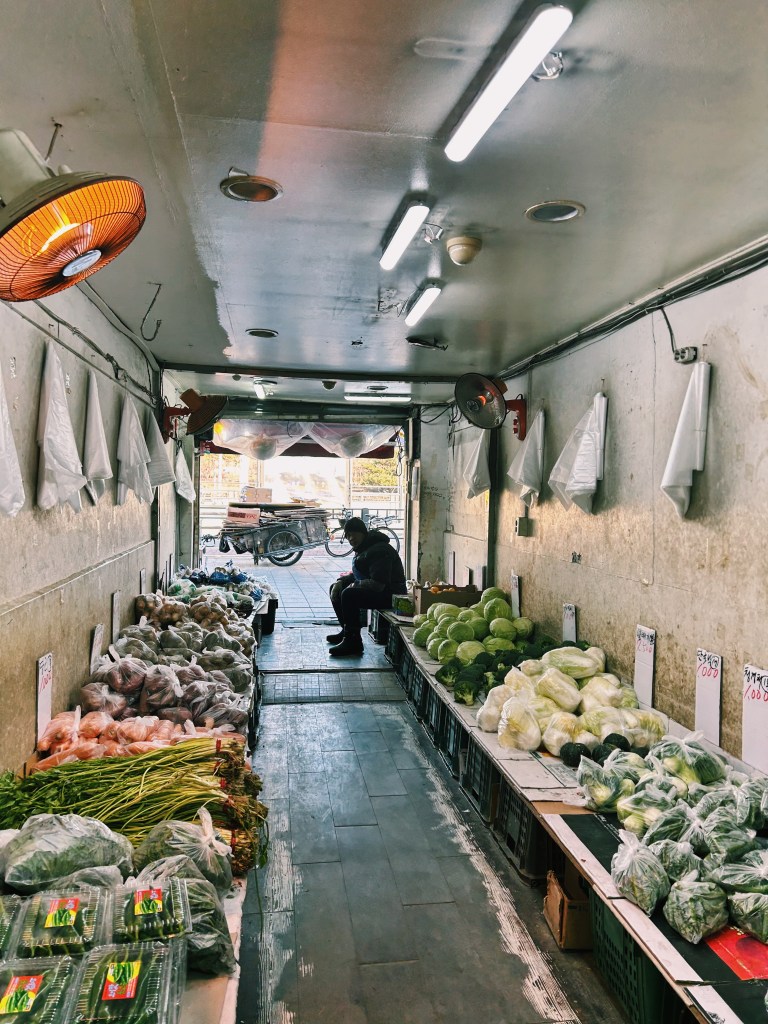
When we reach Gwangjang Market, the day’s hubbub is already in full swing. Time cannot be wasted, especially since my flight back to Singapore was in the evening that day. We plunge into the maze-like market sprawl.
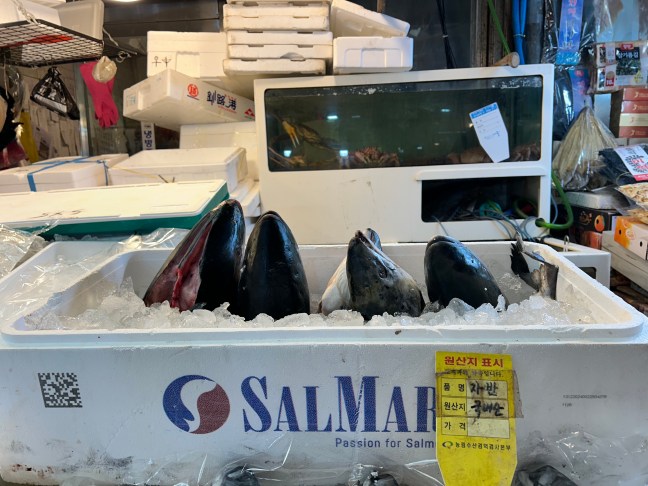
The main street is a rushing river branching out to specialised tributaries. One alleyway peddles exquisite Korean quilted textiles, another a row of fine tailors, yet another is lined with shops offering exclusively beef tartare. Queues of dried mackerel hang from the ceiling of one shop; a group of aunties sit outside their seafood shop scaling fish; plastic-wrapped bowls of crab marinate in soy sauce at another stall.
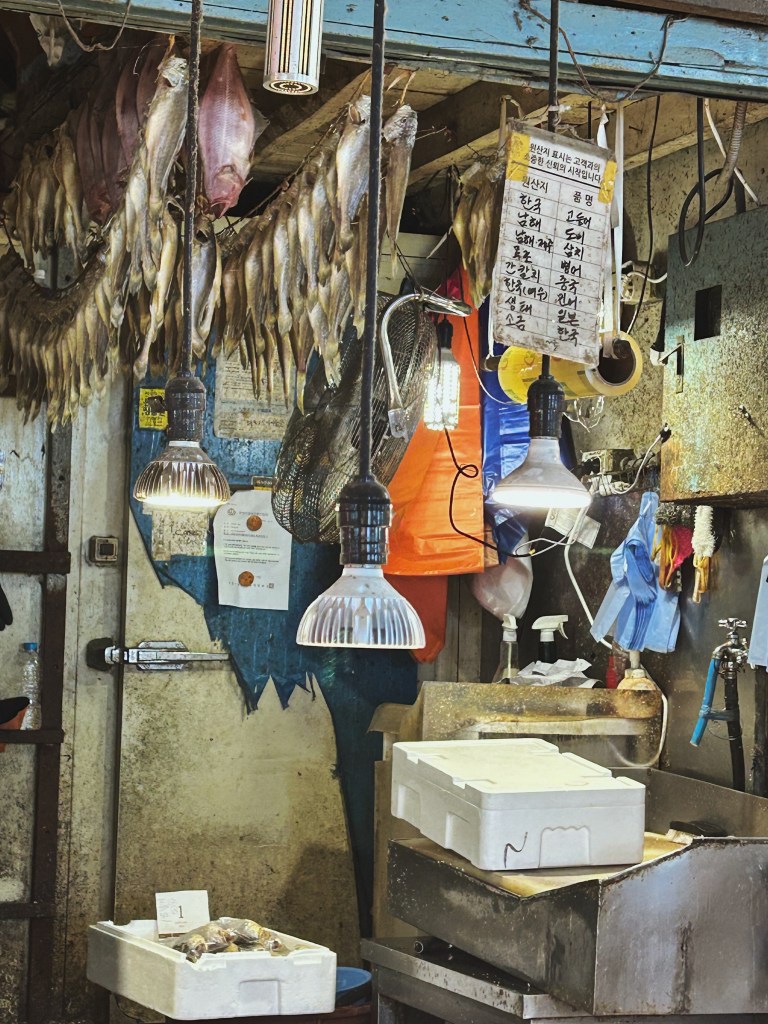
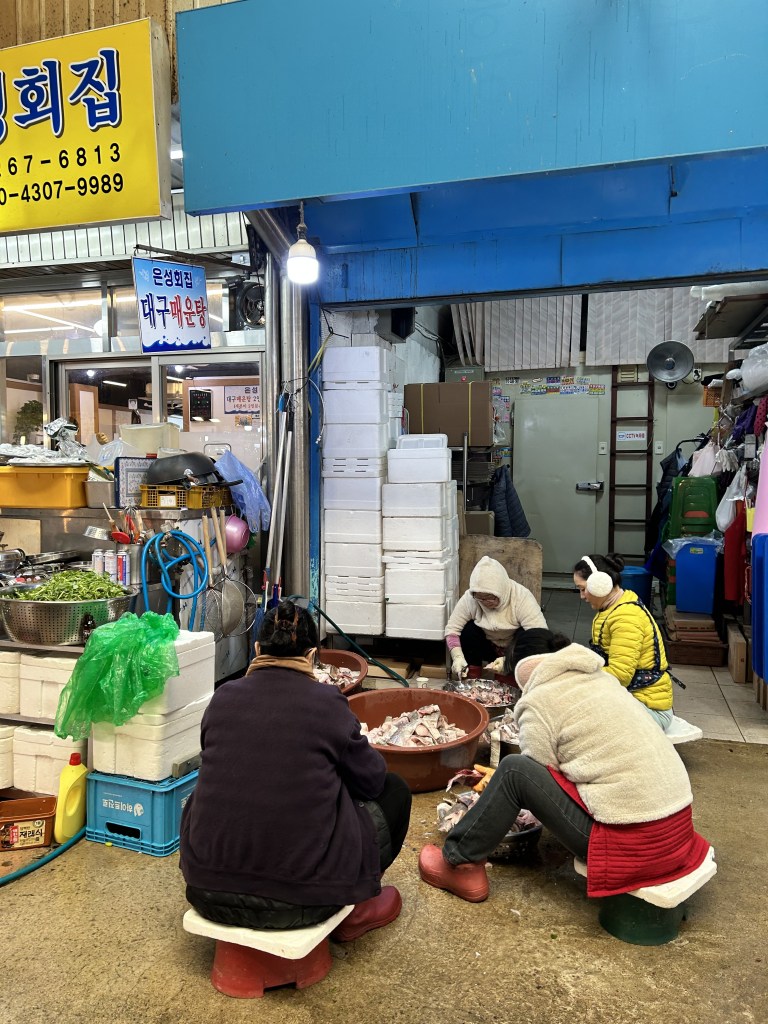
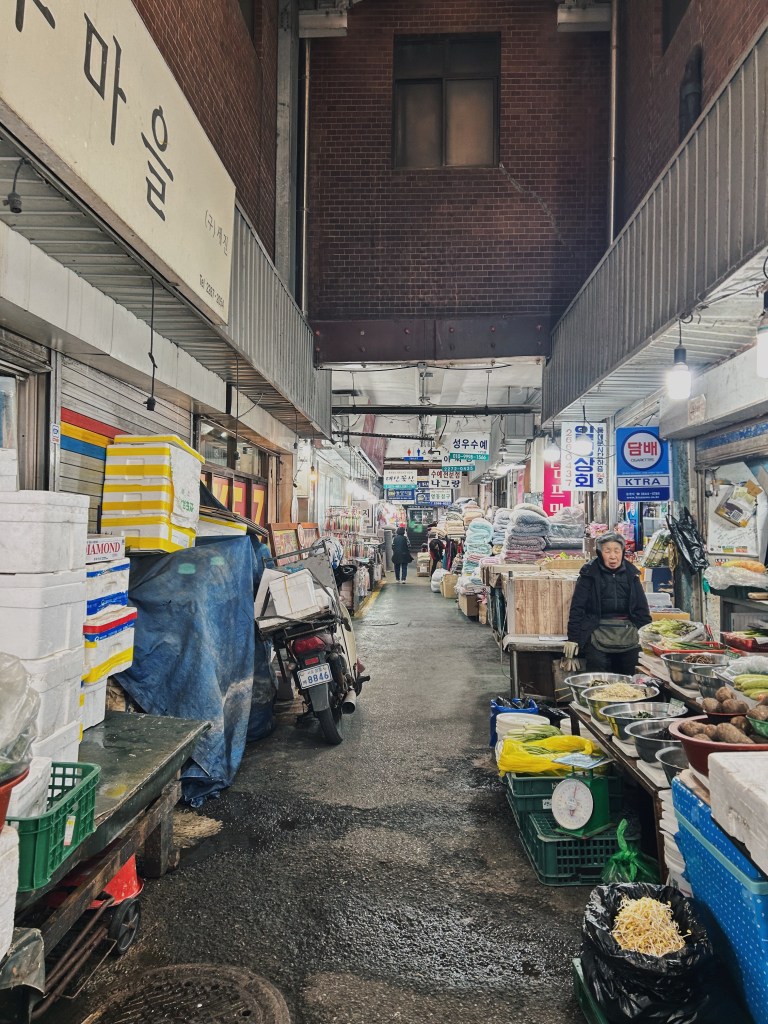
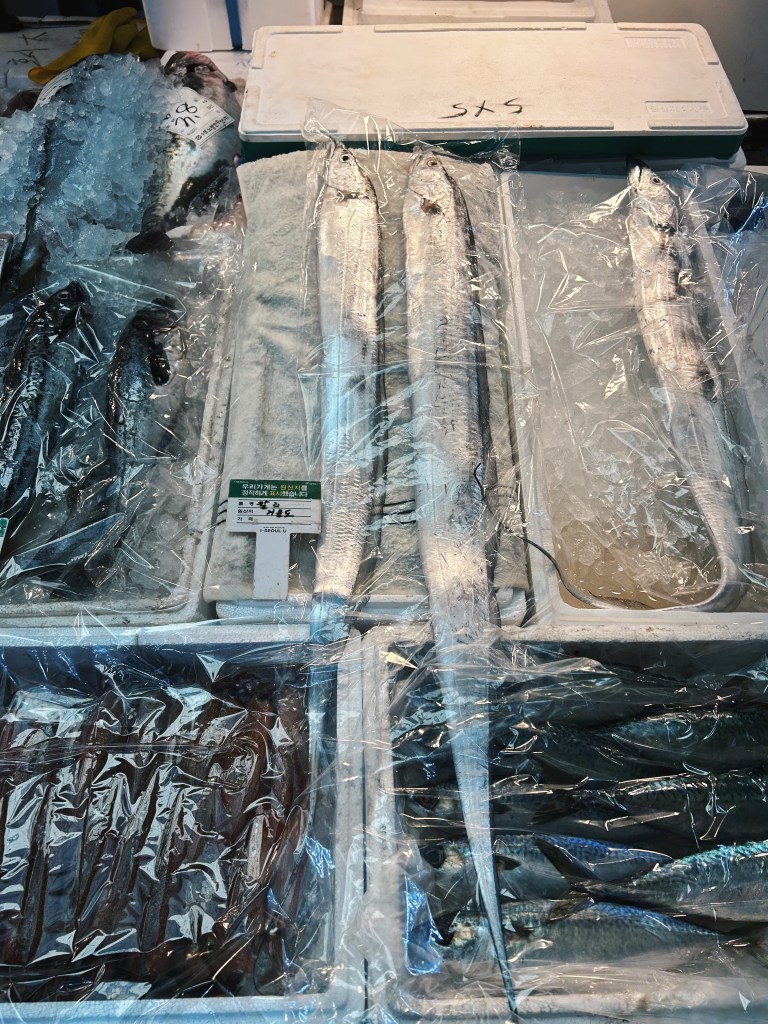
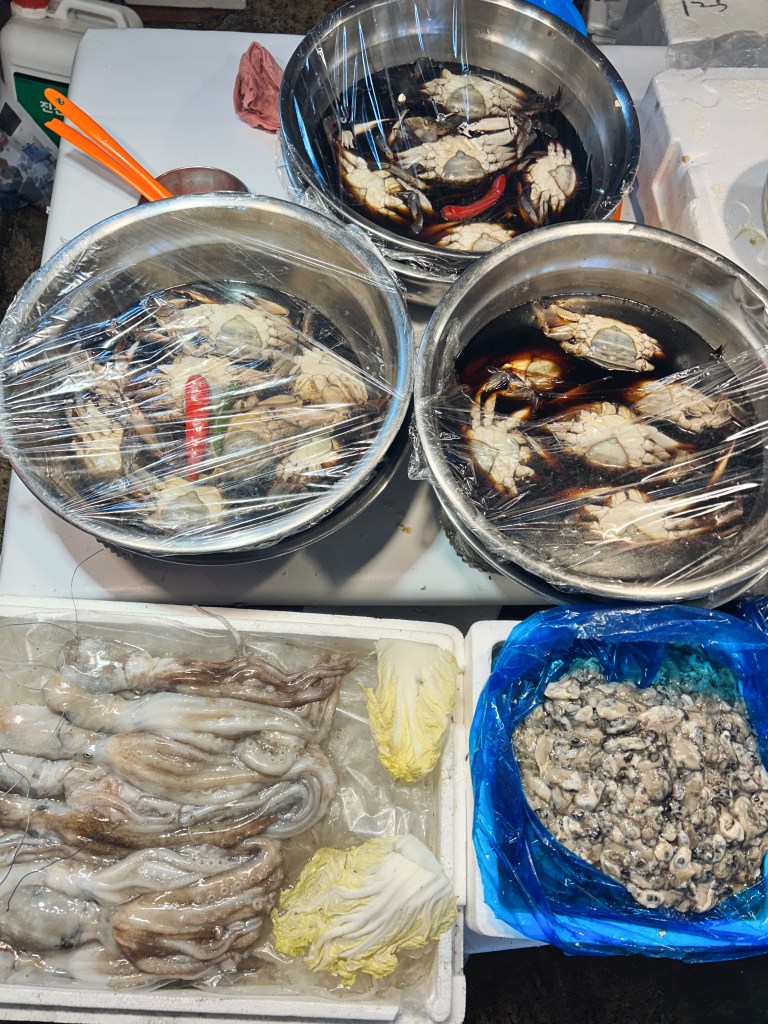
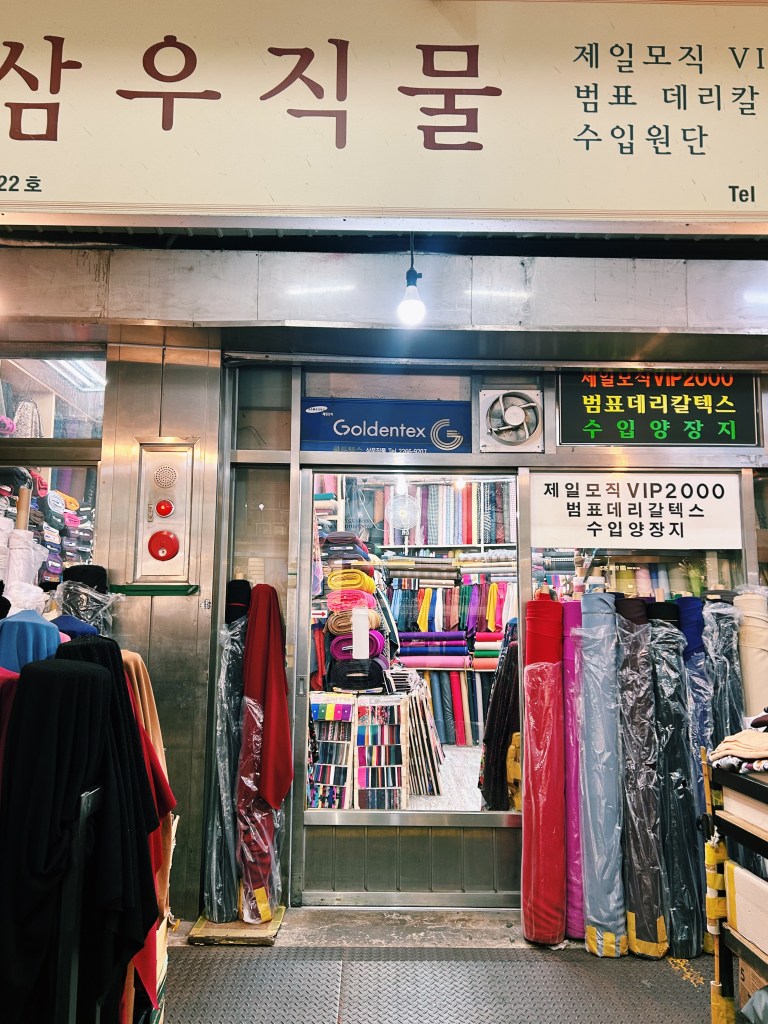
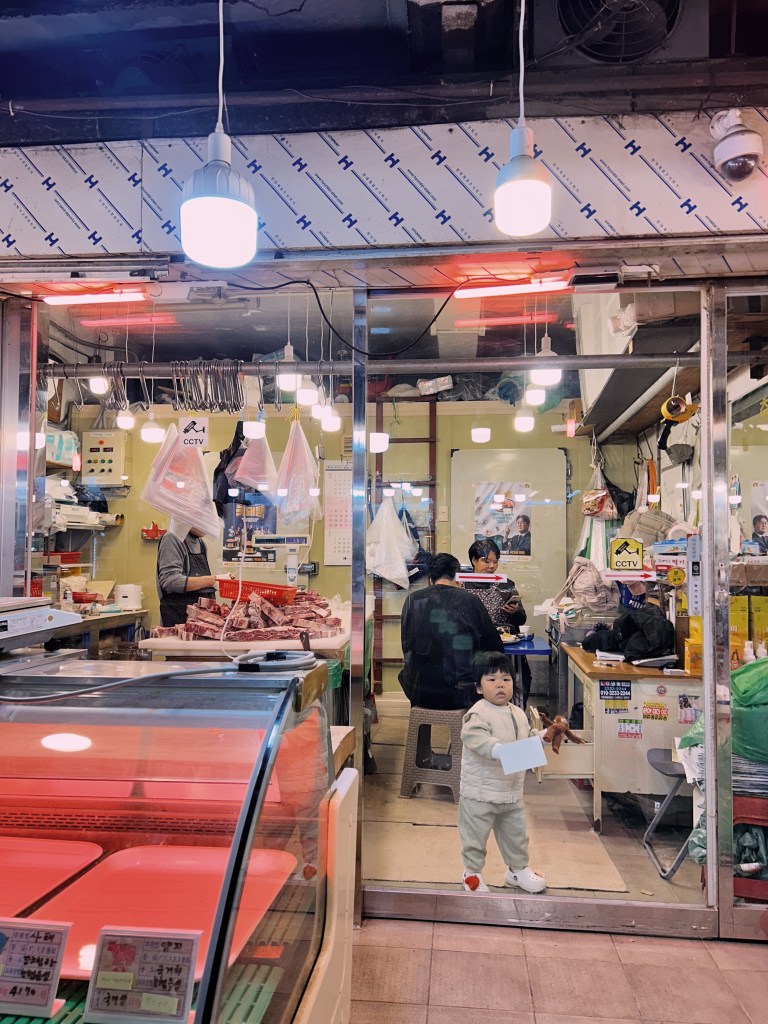
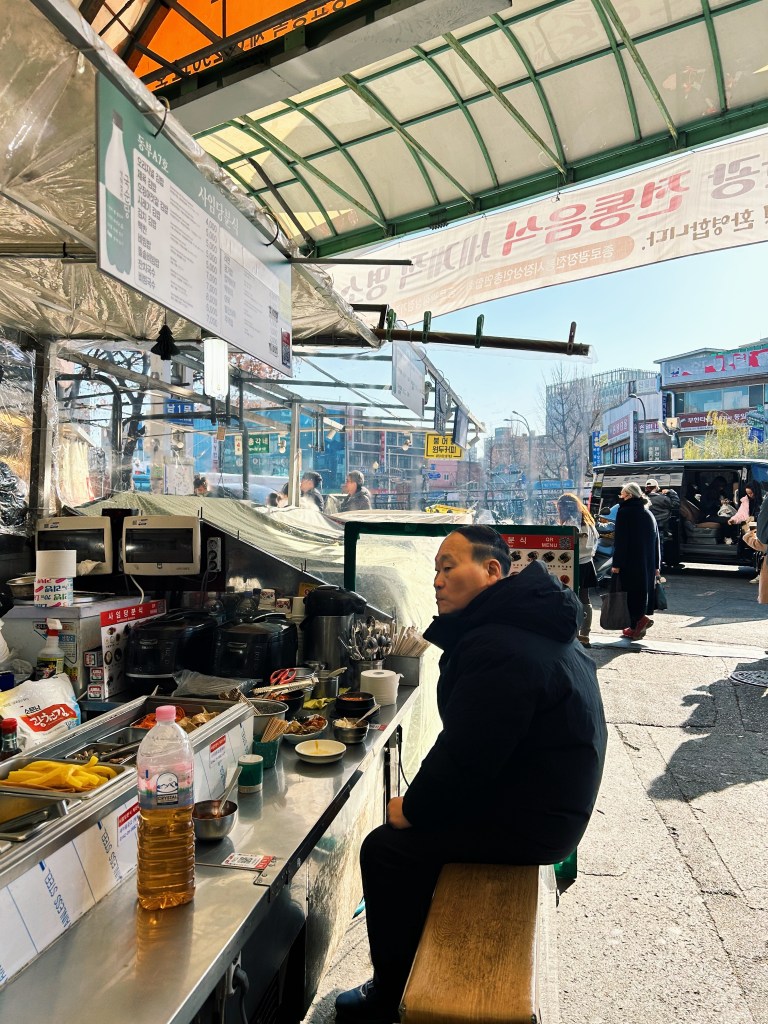
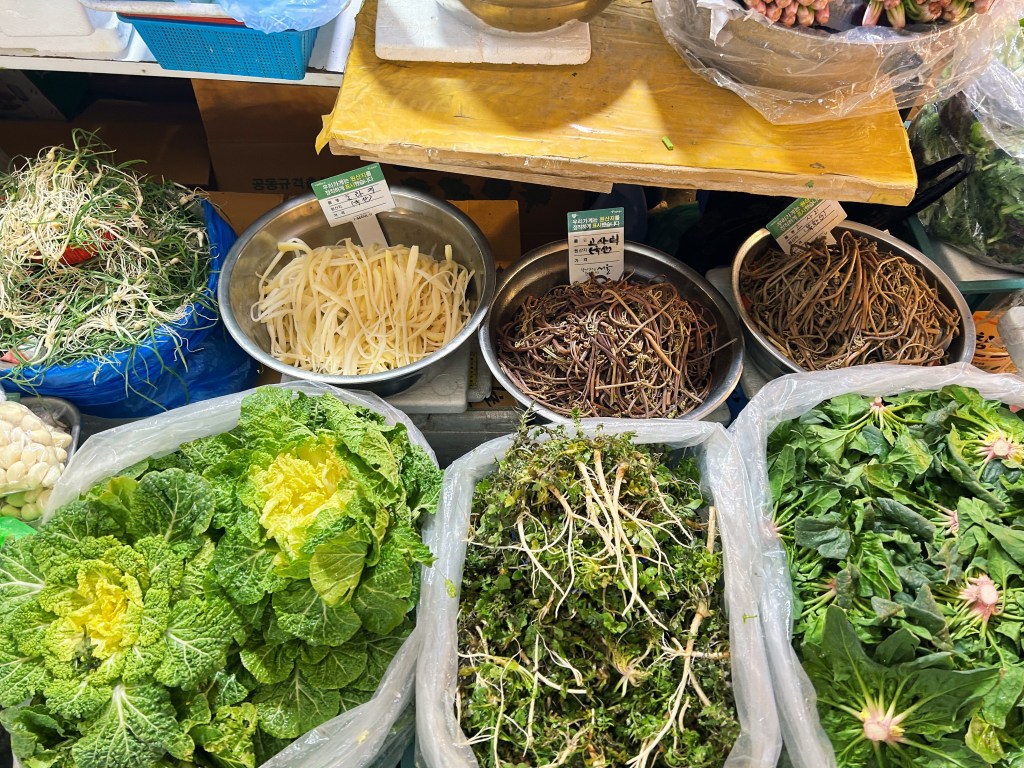
Having done a bit of Googling, I realised that Gwangjang Market is a bit of a tourist attraction, especially after it’d been featured on Netflix. That said, there are glimpses of local life everywhere one looks: in the butcher’s child left to play alone while the adults do the accounting, the fernbrakes (gosari) used to make banchan, the solitary man having his first meal of the day. I enjoy those sights as much as the whimsical ones for the tourists.
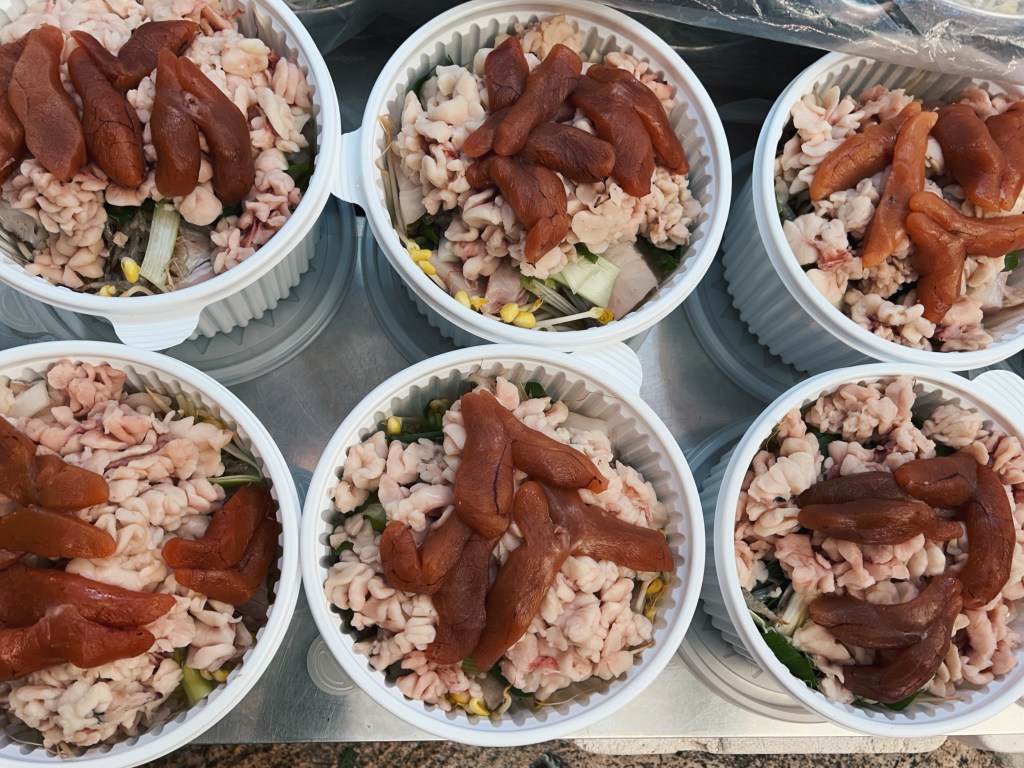
Often, I set out to markets in search of authenticity, whatever that means. I’ve been trained by my parents to chase after a type of travel that’s off the beaten path, for the locals. I think the heart of that elusive quest is the disavowal of commercialisation of a culture, which is well and good, for I am as skeptical of neoliberal capitalism as the next woke young thing. Of course, nobody likes to be ripped off or taken for a fool. But to delimit the authentic from the inauthentic, dismissing one body of experience as touristy, may end up impoverishing the way we encounter the unfamiliar. This world is ripe for experiencing. Whether previously featured on Netflix or not, the first bite is assuredly still as succulent.
 Market Survey