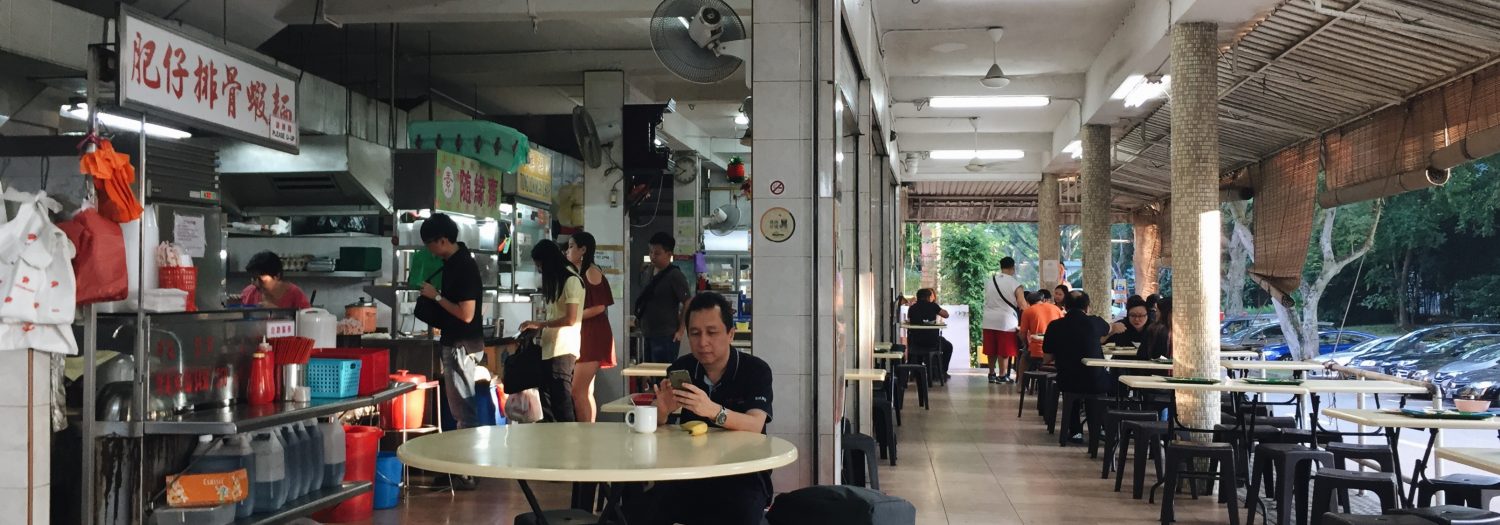
What sets one Singaporean wet market apart from another?
Singapore is both small and well-resourced enough that supermarkets and wet markets dot our tiny map like leftover grains of rice on a toddler’s dinner plate. Concerns of food deserts, our country does not have. They are mostly similar to my unschooled self (but ask my mother and you might hear a different story). But one name is roundly recognised. One name rises from the riffraff, gleaming, like the meat carving station amongst stainless steel trays at a recently-opened self-service buffet spread (too much? ok). In the past few months my mother has returned home toting her own stories of the storied Tekka Market – the largest in Singapore, located in the heart of Little India, a wet market, food centre and retail shopping all contained in a monumental complex. She says you can get all sorts of increasingly rare groceries there – freshly desiccated coconut, sugar cane, and buah keluak – the black diamond of Peranakan cuisine (more on this later). I, guiltily conscious of my neglect of this virtual space, make a mental note to visit at the next opportunity.
My chance arrives in a fortuitous alignment of public holidays in Singapore – Labour Day and Hari Raya Puasa. Office workers, myself included, behold the gorgeous prospect of a four-day weekend. Any reason to put off doing the thing one always said one wanted to do has melted in the merciless midday sun. So I commit to being curious, get into the car with my ever-faithful market shifu (my mom), and head to Tekka.
Because it is Hari Raya Puasa, the market is open for only half a day, and half the stalls – the ones run by Muslim stallholders – are closed. No matter – I have already failed to follow seasoned-marketer SOP by visiting in the late morning, rather than at the crack of dawn, and anyway, the woman’s gotta enjoy her holiday at least a little bit.
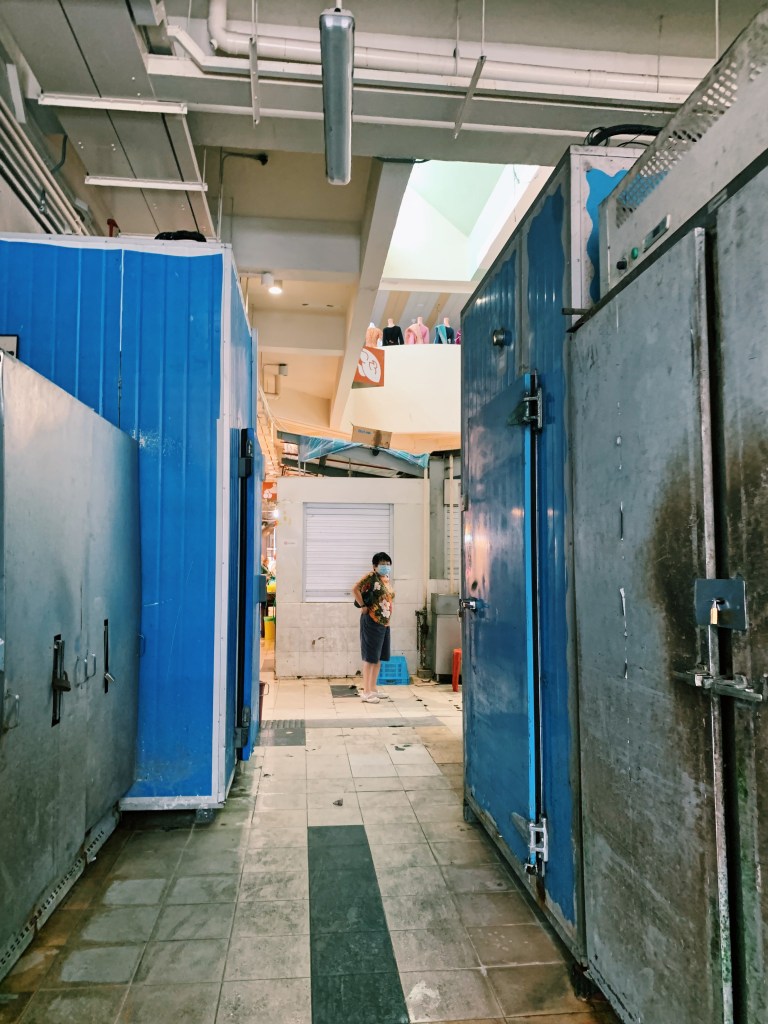
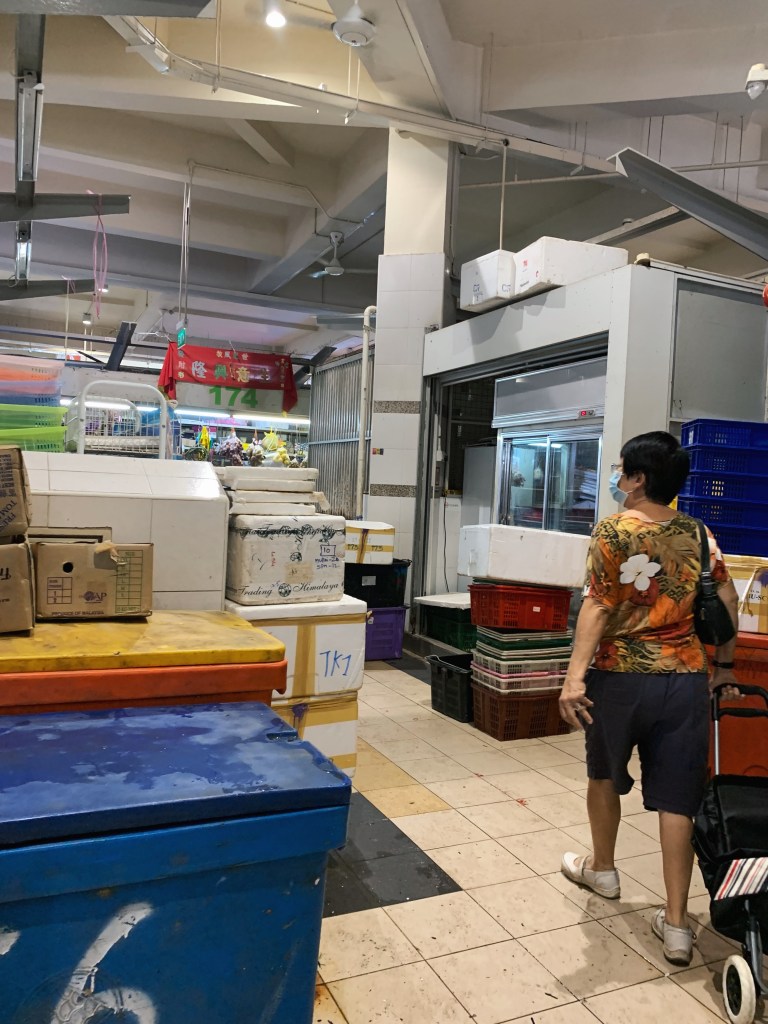
The walkway leading into the market is flanked by towering refrigerators. The air is animated by the odour of raw meat, so I know which section of the market we’re entering into. I confess that when I was younger, I would avoid the meat, poultry and seafood sections of markets at all costs. The sight of mammal intestines swimming in pails of water, severed hooves on display in glass cabinets, rows of glassy-eyed fish staining a bed of ice chips red with their blood, all while treading on a wet (and often bloody) floor strewn with stray bits of flesh, was just a little bit too much of a sensory experience for sheltered, urbanised me. These days, I fight revulsion with curiosity, and a healthy appreciation for knowing from where and how one’s food ends up on one’s dining table.
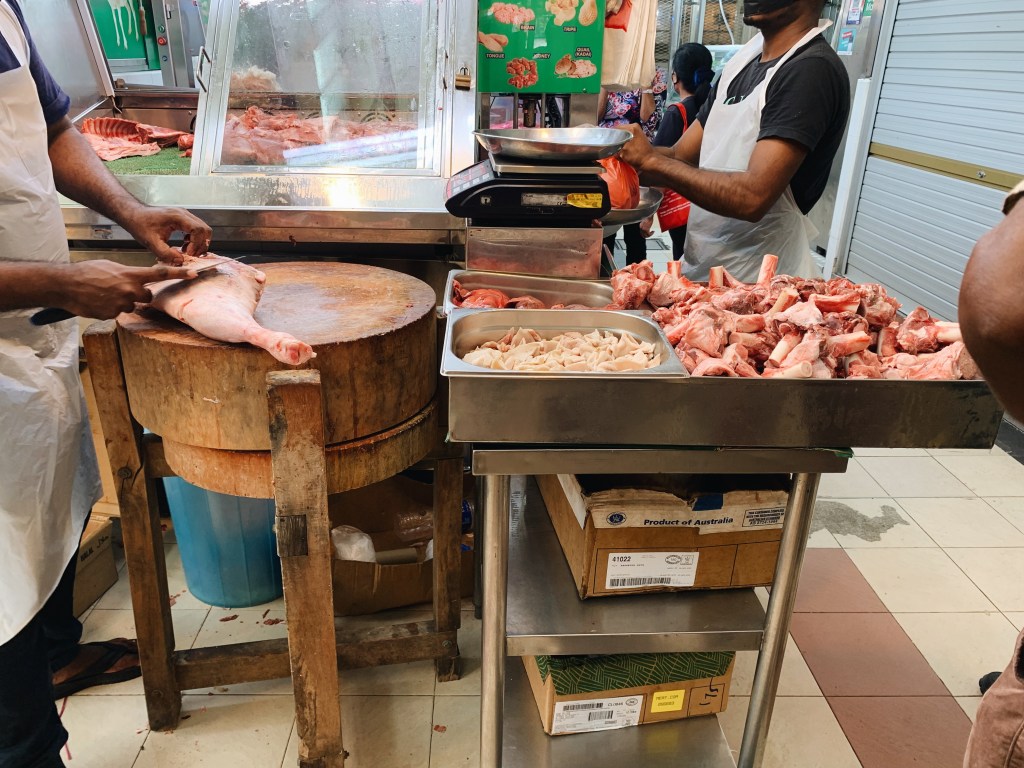
My mother eagerly points out our neighbour’s preferred butcher, who is expertly chopping and slicing away at a leg of lamb. I sheepishly hesitate with my iPhone camera – somehow tourist-like fascination seems out of step with the industrious affair I spectate (on a public holiday, no less). I catch the eye of the man wielding the knife – he continues slicing and skinning, not even needing his eyes to handle the piece of meat – and lift up my phone as a question. A side-to-side nod of the head says yes.
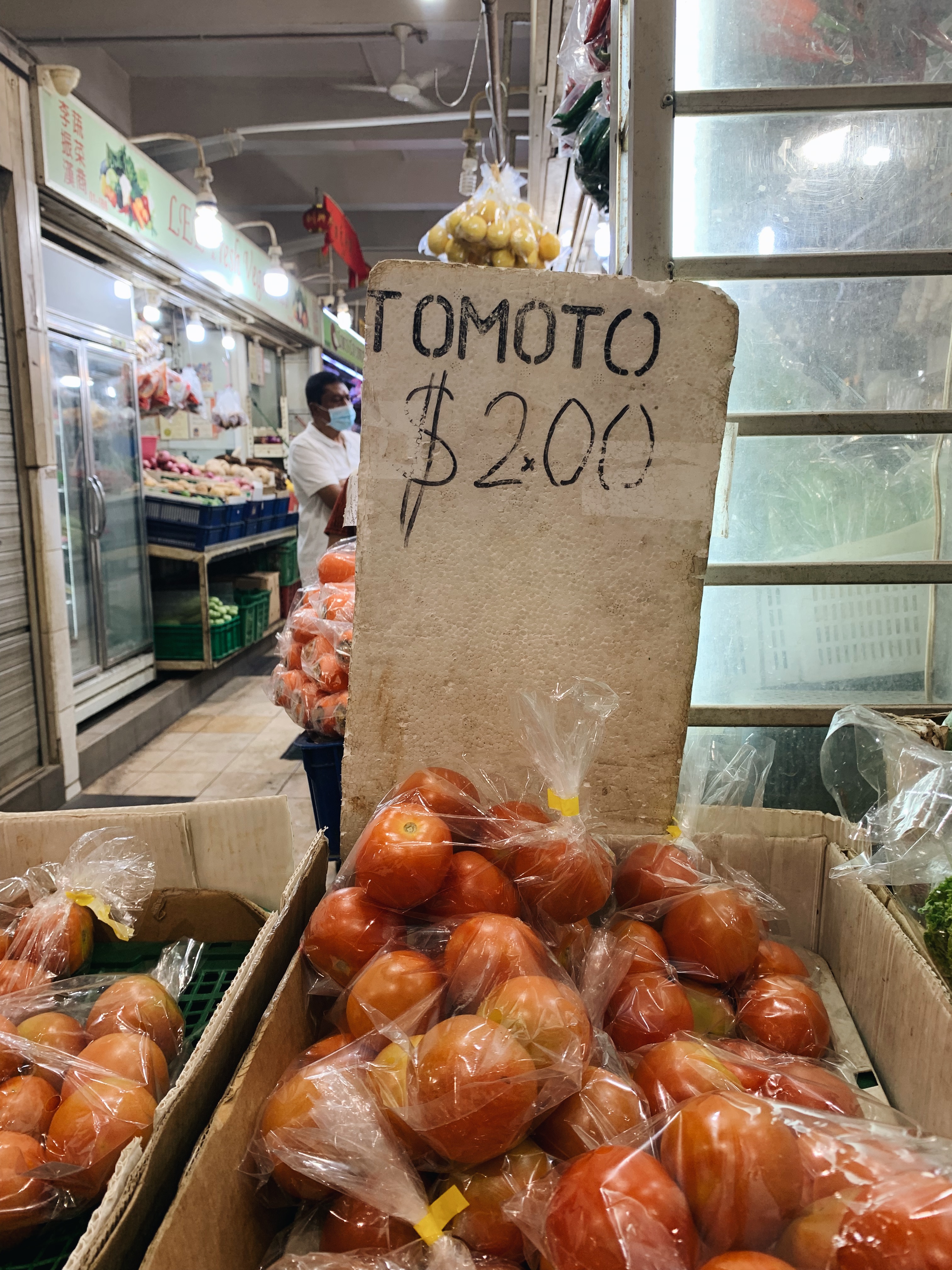
Quite unlike Pasir Panjang Wholesale Market (which has now opened its doors to the public!), Tekka Market is a colourful, cosmopolitan, multifarious place. Whereas the stallholders at Pasir Panjang are mostly racially Chinese, a stroll through maze-like layout of Tekka will bring you through many parts of the world, a testament to the many, many, many palates that the kitchens of Singapore cater to. On one end of the market, Chia’s Vegetable Supply occupies almost an entire aisle, carrying high-end Western produce – vine tomatoes, kale, dill, arugula, and even a refrigerator storing pots of hummus, olive tapenade and sun-dried tomatoes in olive oil. Jazz music incongruously mingles with the hubbub of Tamil and Hokkien. At the end of the aisle is a stall carrying almost exclusively Thai produce – tiny green pea-like eggplants, larger golf-ball sized eggplants, miniature cloves of garlic (more fragrant than regular garlic – whenever my family travelled to Thailand pre-covid, we would come back with at least 20 packets of these zingers), galangal, kaffir lime, and cha-om, a pungent, feathery acacia that resembles dill (delicious when fried in an omelette).
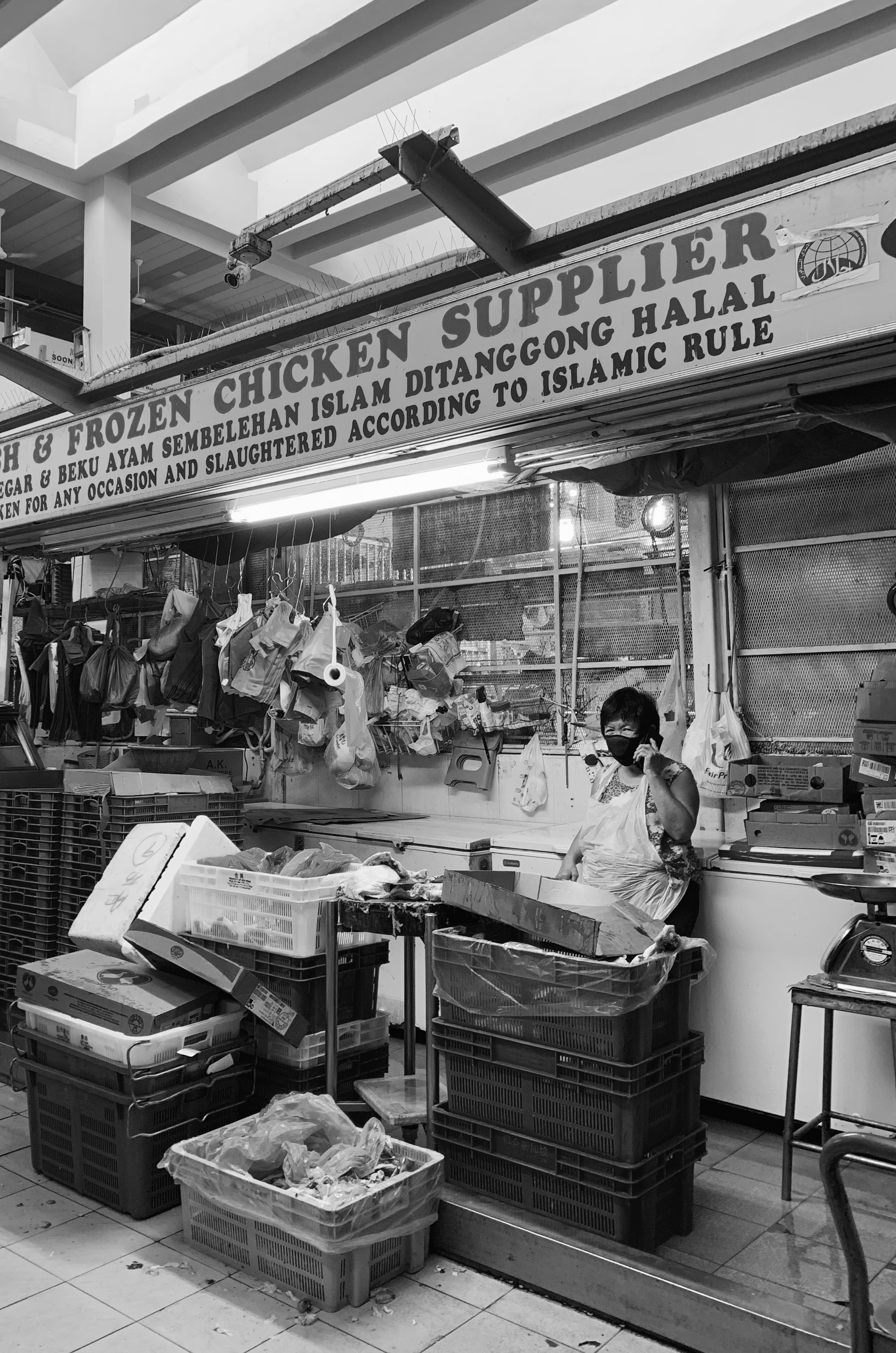
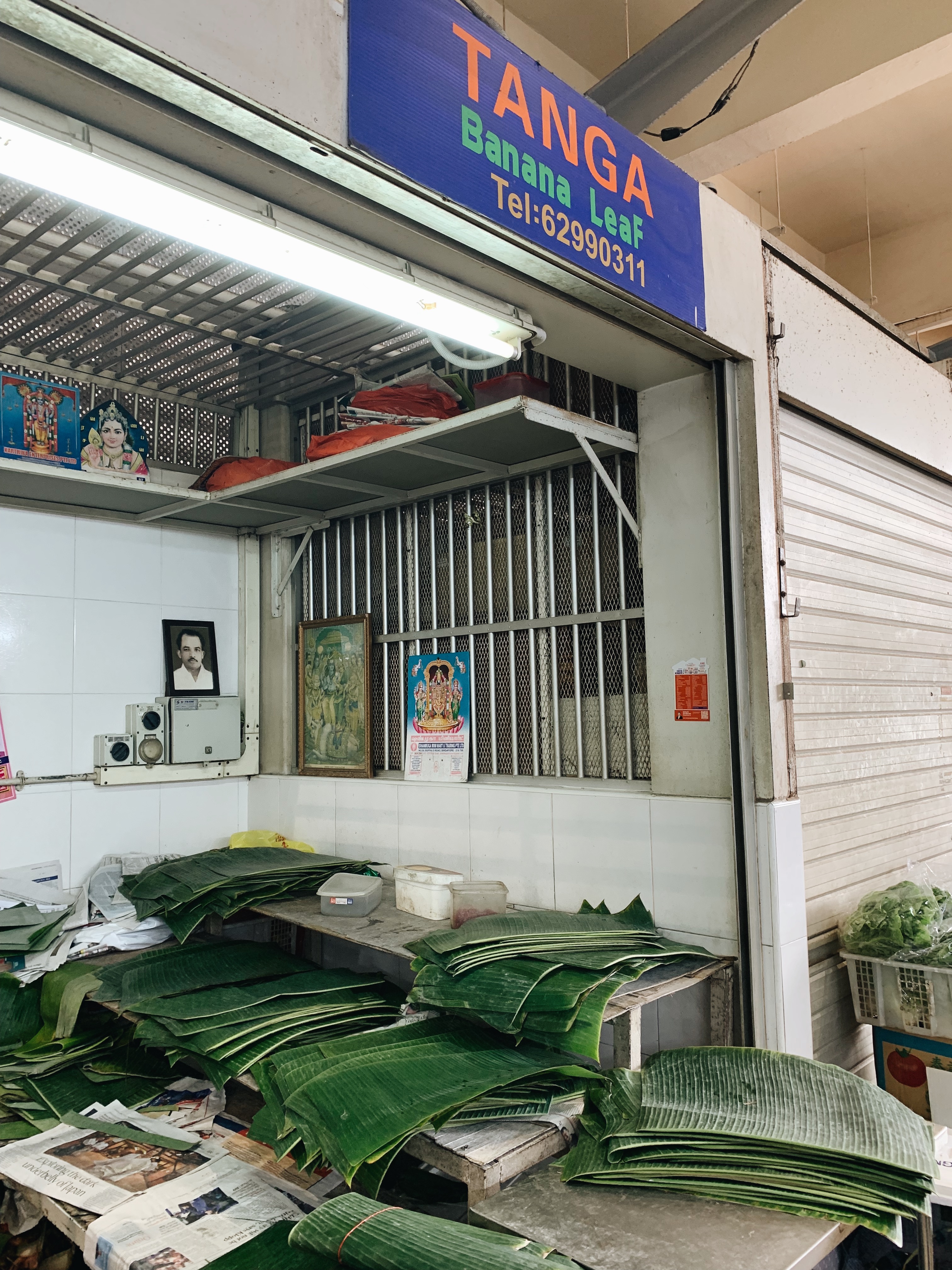
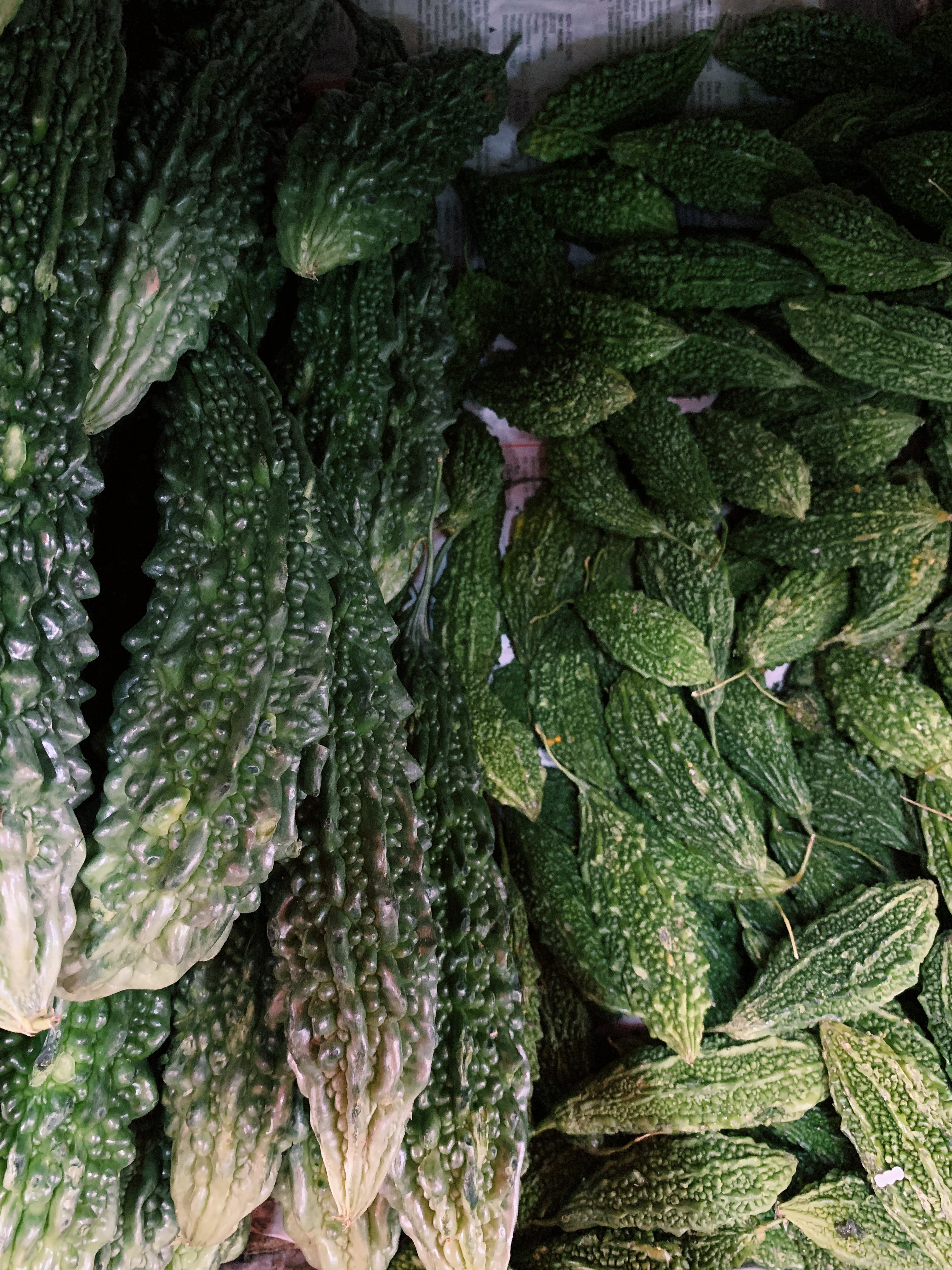
The fishmongers’ offerings are impressive. There are rows of sharks, plump prawns of various sizes, stingray, needlefish, Sri Lankan crabs. There are plate-sized salmon heads ironically displayed in front of decorative fish tanks with tiny pet fish swimming about, happily oblivious to its surrounds (or maybe petrified, I wouldn’t know). My mother makes a mental note to buy some prawns for a powerful shrimp-based stock of Ipoh chicken hor fun (kai see hor fun in Cantonese).
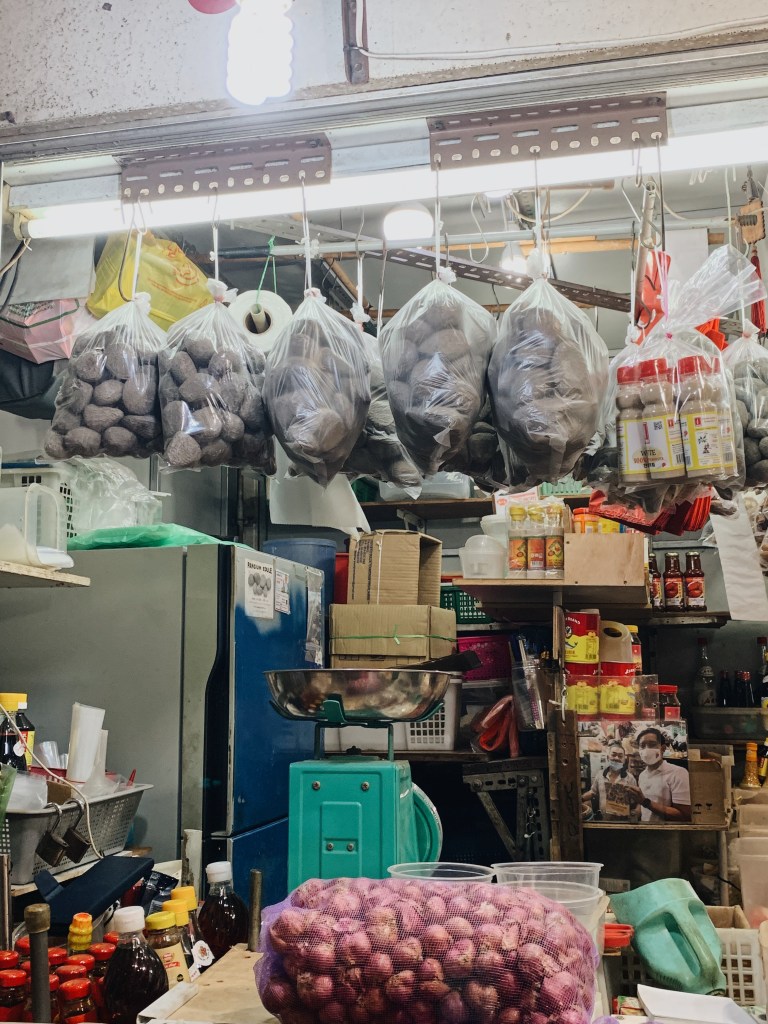
But the main attraction of Tekka Market is its buah keluak offering. My mother claims this particular shop is famous – he’s talked about on Facebook, she says (and I know better than to question the middle-aged, market-frequenting social network). She had visited it before, and had described to me the self-assuredness of the storekeeper, who told her and her friends that they’d be back when they tried to browse the market for more competitively-priced buah keluak. We spend some time walking in circles around the market, searching for this elusive store. When we’re about to give up, my mother seizes my arm and points excitedly at plastic bags of pebble-like fruits, dangling tantalisingly at a store manned by a gruff Chinese man. We’ve found it.
Buah keluak. What is it? My theory is that danger makes the eating exciting. Like fugu (pufferfish) sold in the markets of Shiminoseki (which, by the way, are fantastic and I wish I could bring you there), there is a certain thrill that comes from relishing something you know can kill you. Buah keluak is a fruit born by a type of mangrove tree in Indonesia and Malaysia, and when raw is laced with cyanide. Traditional methods of curing the seed to remove its toxins include boiling, peeling and slicing, and then placing in a gunny sack and submerging in a river (Malaysian), or boiling, blanketing with ash, burying underground and leaving to ferment for 40 days, before washing and scrubbing repeatedly for 3-5 days (Indonesian). Once boiled, the substantial kernel is where the flavour resides – nyonyas, Peranakan aunties, remove the hefty seed, grind it with their granite mortars and pestles (every Southeast Asian household has one), and fry the “earthy, creamy ebony kernel” with an aromatic mix of shallots, turmeric, chilli, galangal, candlenuts, tamarind juice and belacan (shrimp paste – also known as, has a rat died in my oven?), to make ayam buah keluak, a luxurious black chicken curry that’s gritty, rustic and just nuanced enough to betray its complexity as a dish. These days, fancy new fusion restaurants have taken buah keluak into new territory, so to speak, incorporating the desired ingredient into burgers, ice cream and fried rice (my mother does a pretty good version of keluak fried rice at home that doesn’t cost $40).
The fun thing about Southeast Asia is the raucous collisions of cultures that this chapalang (Singlish slang for haphazard) region produces. Buah keluak is, predictably, not only claimed by the Peranakans, but also the Portuguese Eurasians — both of whom are rojak cultures, i.e. mixed cultures.
This day, all that colourful heritage has spiralled into a compact little plastic bag of veiny, golf ball-sized seeds, over which my mother and the Chinese shopkeeper now haggle over. My mother says she’s come here before, uncle, and last time I buy a lot, you gave me better price. Uncle is insulted that she would dare to bargain down the price of such supreme quality buah keluak. Mine is the best in the market, he says. You see if you can find such good ones anywhere else. My mother eventually concedes (the man’s Facebook credentials don’t lie!). She buys three bags. He finds out that we are a family of Malaysians, and begins to tell us about every last one of his friends who has recently made a trip across the recently reopened Causeway.
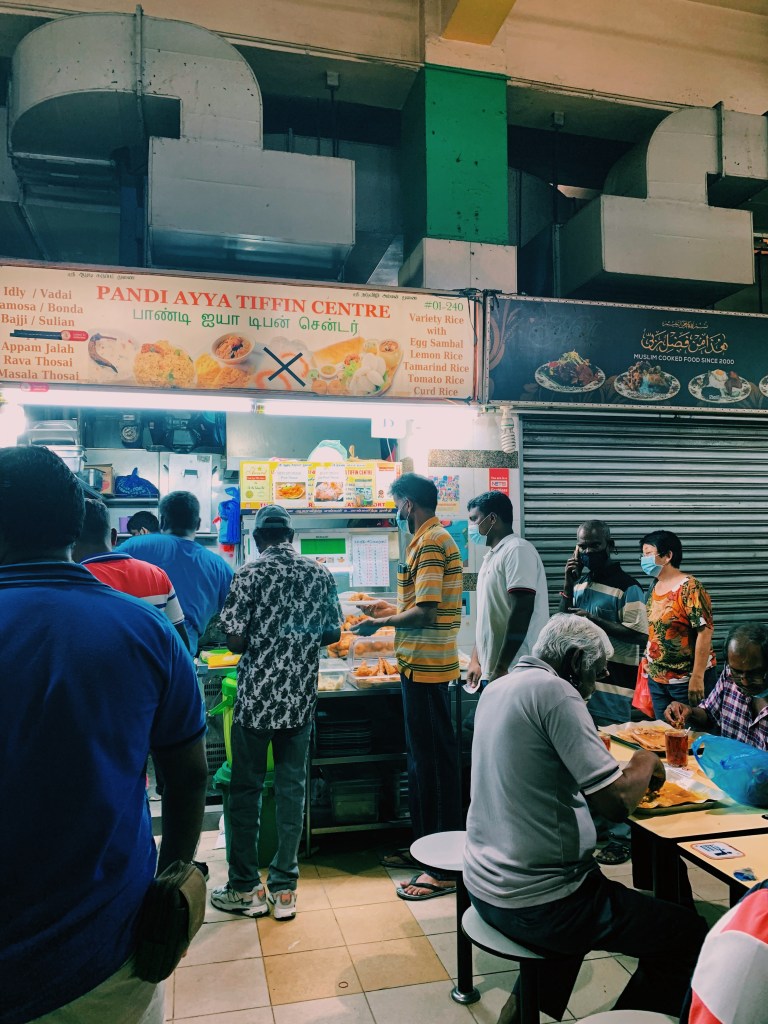
We eventually extricate ourselves from the conversation. Before we leave the market, one last thing is in order: food, of course. (My camera roll has a notable vacancy at this part of our journey — though I am an explorer, I am a local first, and it seems my localised belly took the lead in sensory intake at this juncture.) Apart from fresh produce, textiles, and money remittance services, Tekka Market offers a dizzying array of food options. There are impressive legs of lamb ensconced by gargantuan mounds of biryani, innumerable types of curry, and long, long queues for poori (puffed up fried dough), dosai (thin fermented pancake), and vadai (savoury fritters). People take away plastic bags full of idly (savoury rice cakes), perhaps for the week’s breakfasts, or to share with a couple of friends. My mother and I share a table with an Indian man and several females. From their body language and conversation, I gather that he is dating one of the women, and the rest are her friends. My mother and I order a plate of kashmiri naan (naan dotted with gems of dried fruit) and an eye-wateringly spicy curry, and eat efficiently and silently with our fingers, trying to ignore our lack of tissue paper and drinking water. We don’t stay for long — people are always on the lookout for empty seats.
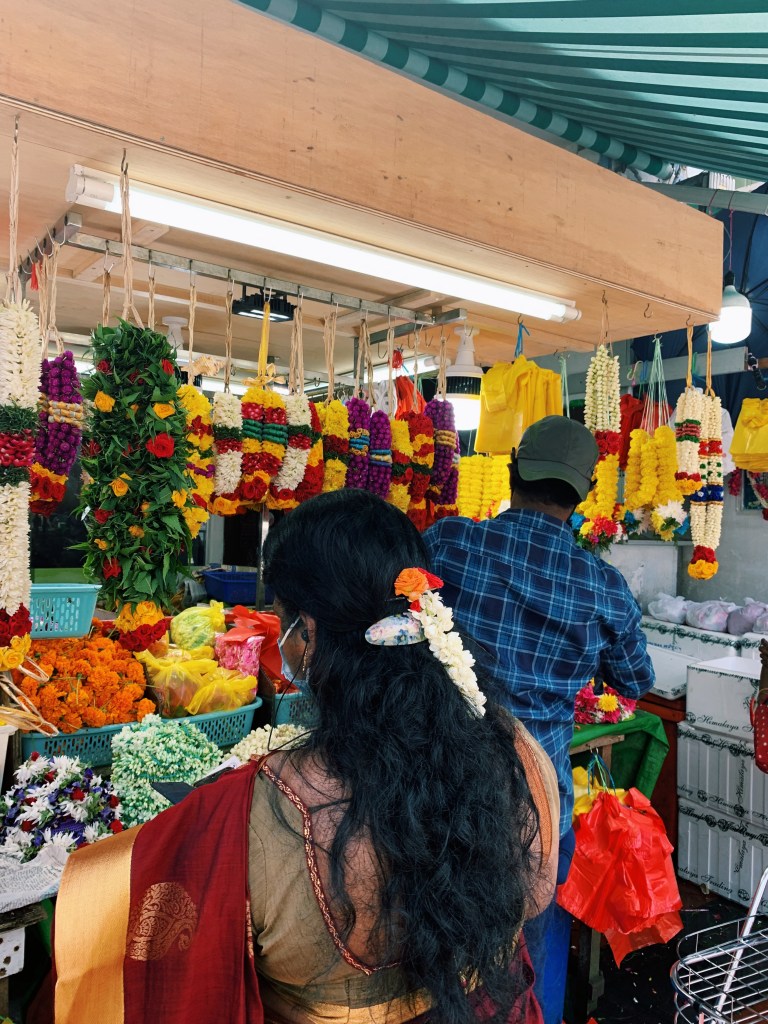
One final stop is to the street across from Tekka, which is lined with vendors selling gorgeous garlands of fragrant fresh jasmine buds, roses, orchids. Sari-donning women and men throng these shops to buy flowers for their hair and worship of their gods. We buy a garland of jasmine buds for our helper, who is Thai, and has a great cultural affinity for such adornments.
Finally, my curiosity sated, our stomachs full, our energies quickly being sapped by the relentless sunlight, we make our departure. Serangoon Road is a messy chaos of queued-up cars and South Asian men trying to negotiate their way across the flow of traffic. Here is a microcosm of the Indian subcontinent, its cultural force so powerful that even the usually rigid rules of traffic bend. And yet, this is unmistakably Singapore: the Chinese stallholders, the aspirational piped-in jazz music from Chia’s Vegetable Supply, the Indian-Filipino couple we shared a table with, all say so.
As we turn into Bukit Timah road, the long road that seamlessly connects Little India with the rest of the city, traffic becomes less halting, more continuous. The feeling is palpable, but if one were to zoom into these two roads on Google Maps, you’d hardly be able to tell them apart. We accelerate down the straight road, getting further away from Tekka Market, less Little India but not less Singapore.
 Market Survey