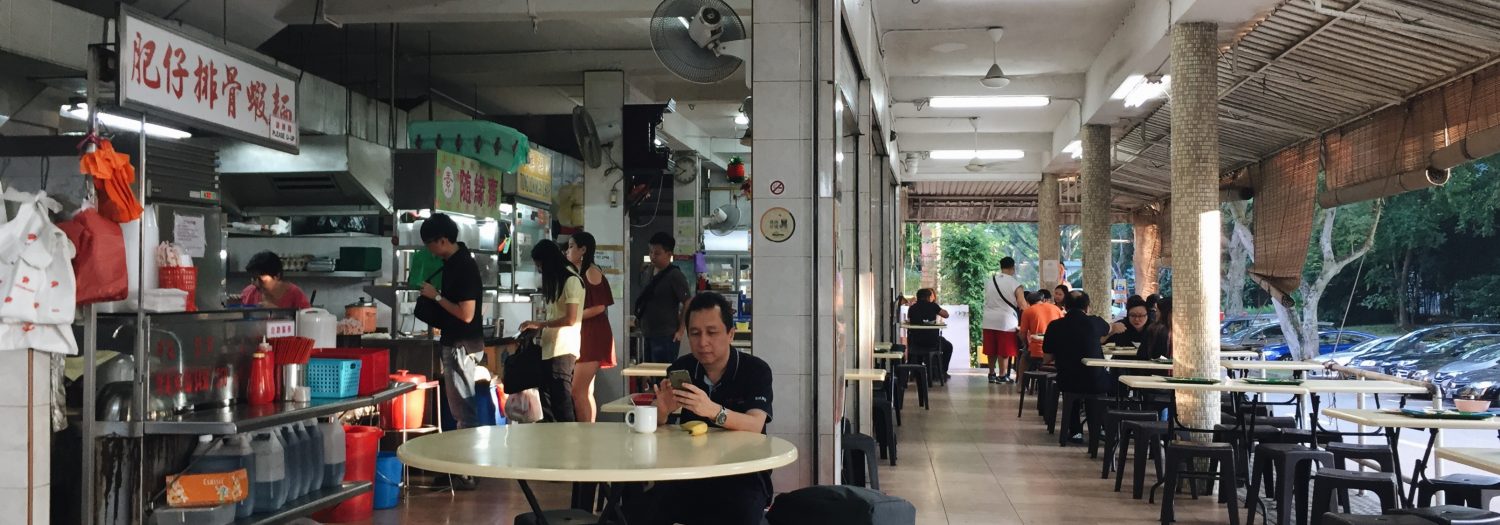
There are several telltale signs that a market is nearby. I am a hunter of the urban variety: I watch for hands clutching plastic bags, bulky food produce sticking out of baskets, mouths chewing something freshly made. The one that brings deepest joy to my heart: the sight of an old lady pulling her trolley, hat in hand, hobbling forward as fast as her little legs will go.
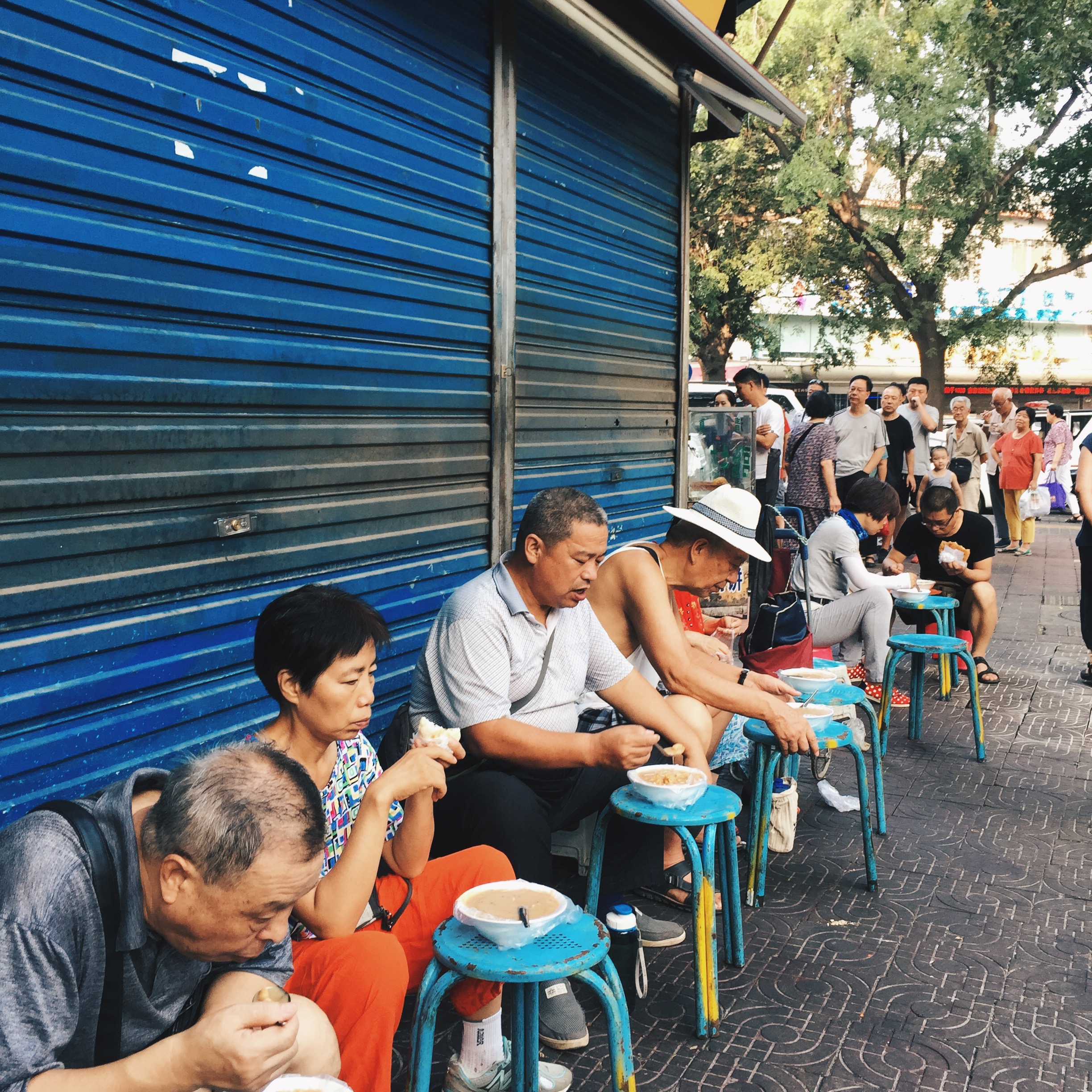
7am, Xi’an: My mother and I rise just before daybreak with a singular mission. We tail a particularly fast-moving granny as the city wakes to July sunlight, slanting in at 40 degrees celsius. More old folk join our woman, in motorbikes and slippers and plastic bags, and when we arrive at a street lined with grizzled-looking Chinese squatting over steaming bowls of breakfast broth like a welcome reception, I breathe a sigh of victory. We have arrived.
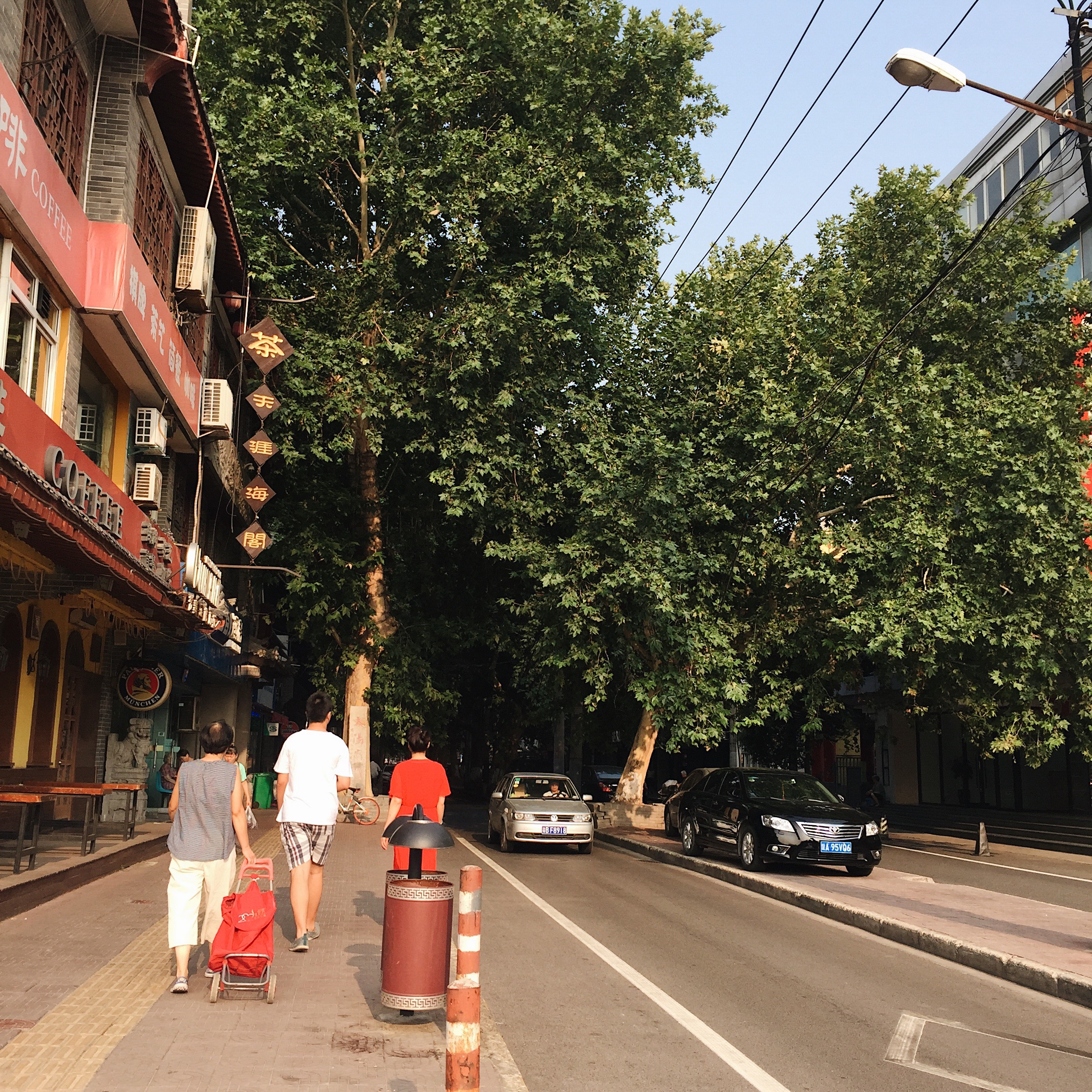
I don’t know the name of this market, and neither do most locals. Upon arriving in this city I was immediately convinced it had to contain at least one impressive market, and fixated upon that objective with hound-like determination. I asked taxi drivers and hotel concierge and tour guides, I googled incessantly and went over TripAdvisor, travel vlogs, etc with obsessive relentlessness. A metropolitan, cultural megalopolis like this — there had to be one. And there was — except no one could name it for me; all they could do was put a circle around the vague locality where it was situated on a tourist map. So yes, Mom and I had a mission. We would not rest till we smelt (chicken) blood.
Maybe that’s why this market memory retains so freshly in my mind’s eye, and why it was this market, almost a year ago now, that gave me the idea for this blog.
*
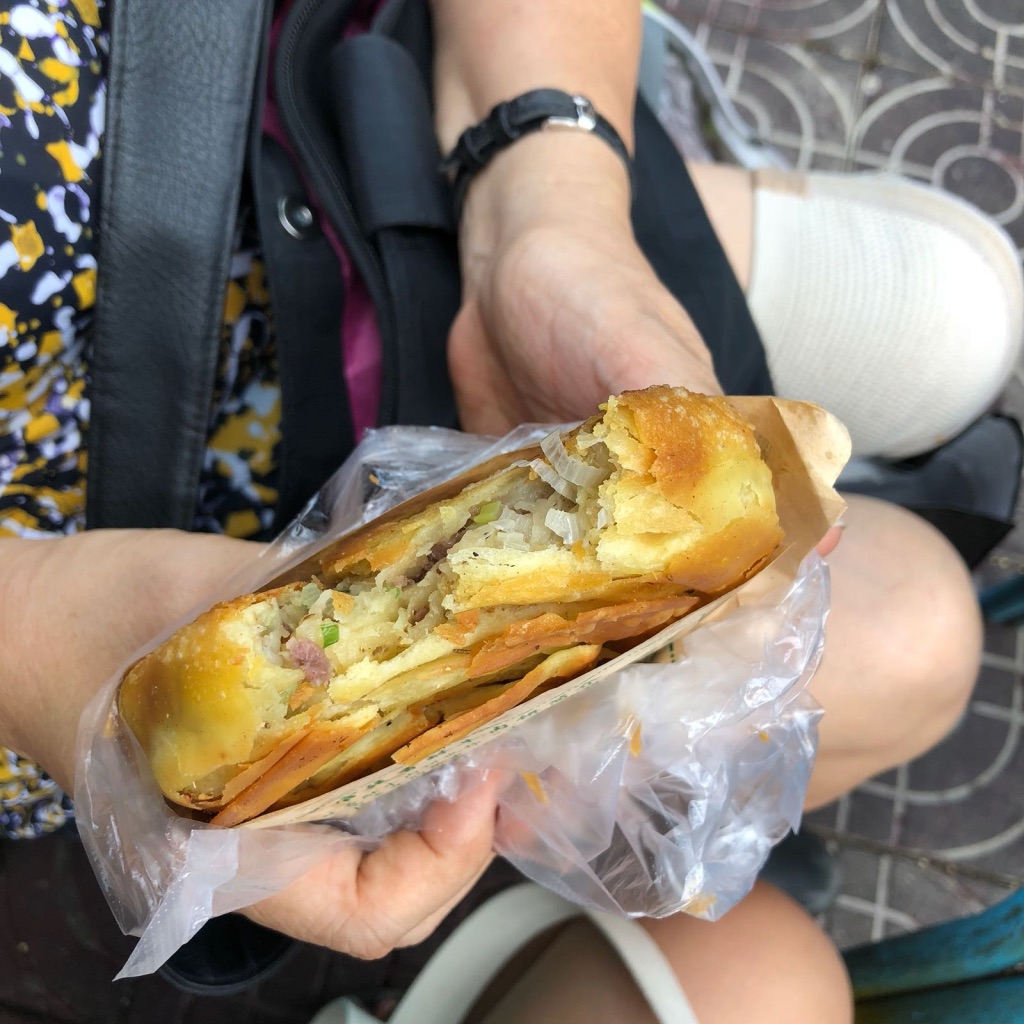
You can’t enter a market on an empty stomach. It’s scientific: to jostle with the crowds, elbow your way to bargain with a vendor, withstand the strange air that hovers over a market (the fragrance of plump fresh fruit, fried street snacks, raw meat and body odour), one must first fortify oneself. Fortification this particular morning comes in many forms (as it often does, truth be told, when one is on holiday): there are freshly steamed baos (steamed buns) and freshly blended soybean milk — thick, creamy, luscious; pan-fried meat pancakes with a constant queue; bowls of brown bean-based broth with fried dough sticks thrown in, tucked in by locals to nourish them for the day ahead (I have to say that this last one was certainly more of a functional dish to me — it was certainly filling, but didn’t taste of much).
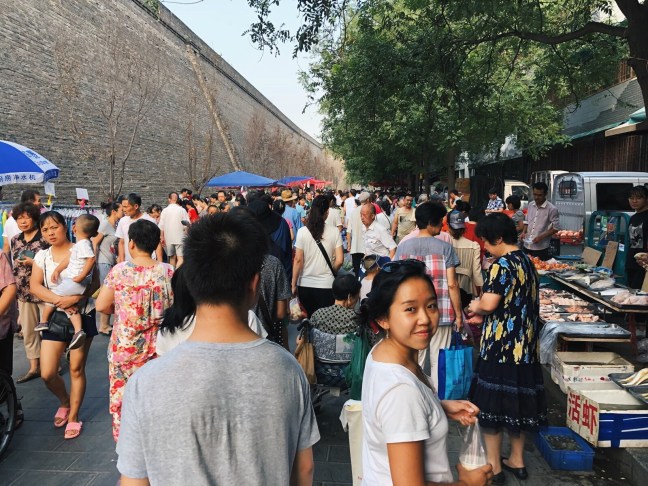
Fed and restored from the hunt for the market (not like we ate breakfast in the hotel or anything…), we advance into the belly of the beast. Even before we enter, I know it’ll be a good one: a narrow street just next to the city’s old wall is packed with every type of vehicle that can fit: lorries and motorcycles and three-wheel carts and bicycles. Stuffed in the empty spaces are people: aunties with their trolleys, harrowed mothers and their rugrats, old farmers touting their wares. And rising above the swarming, chaotic, heaving street is the unmistakable din of haggling, vendors competing for airtime to bawl praises of their produce, children crying, dogs barking, cars honking, bike bells ding-ing. Loudspeakers are in use. Noise and mess: these are the signs of a market worth shouting about.
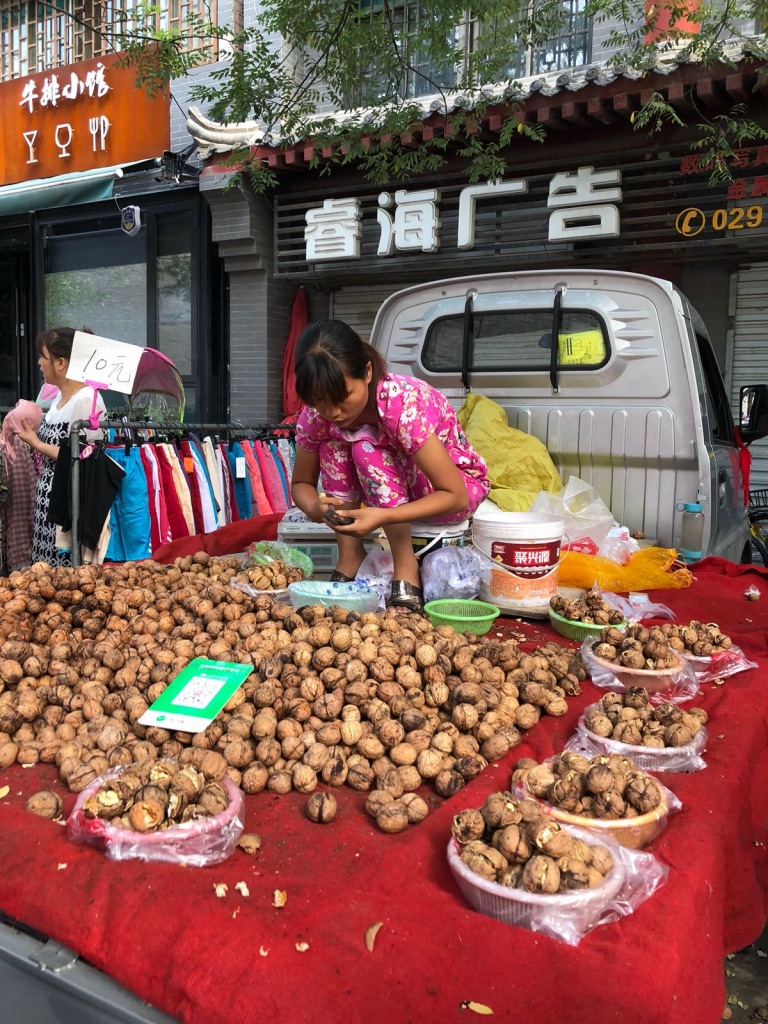
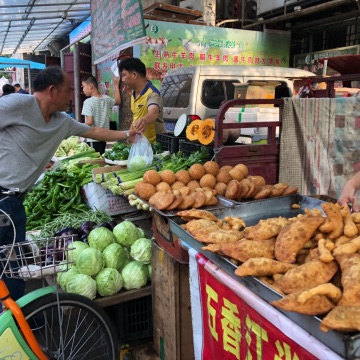
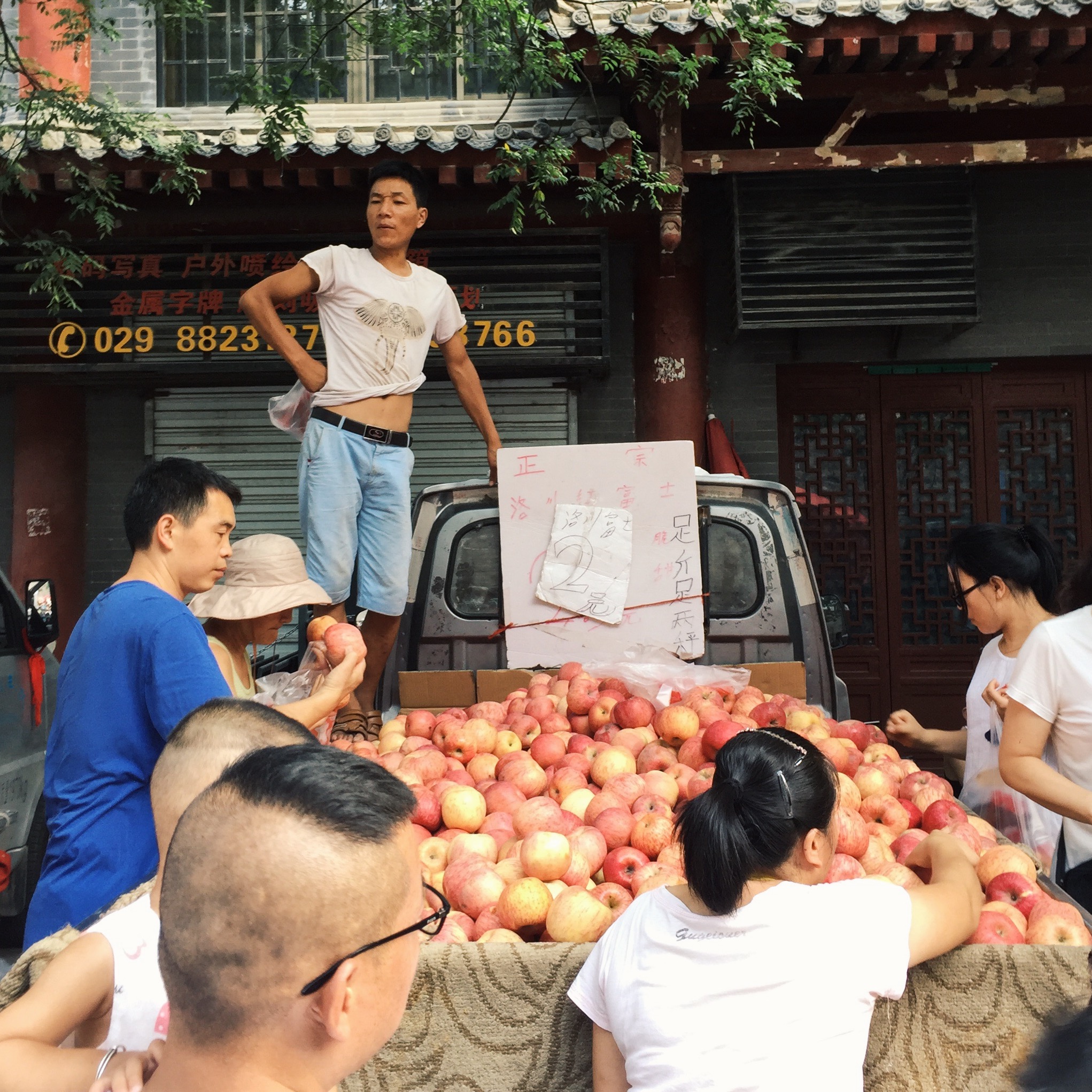
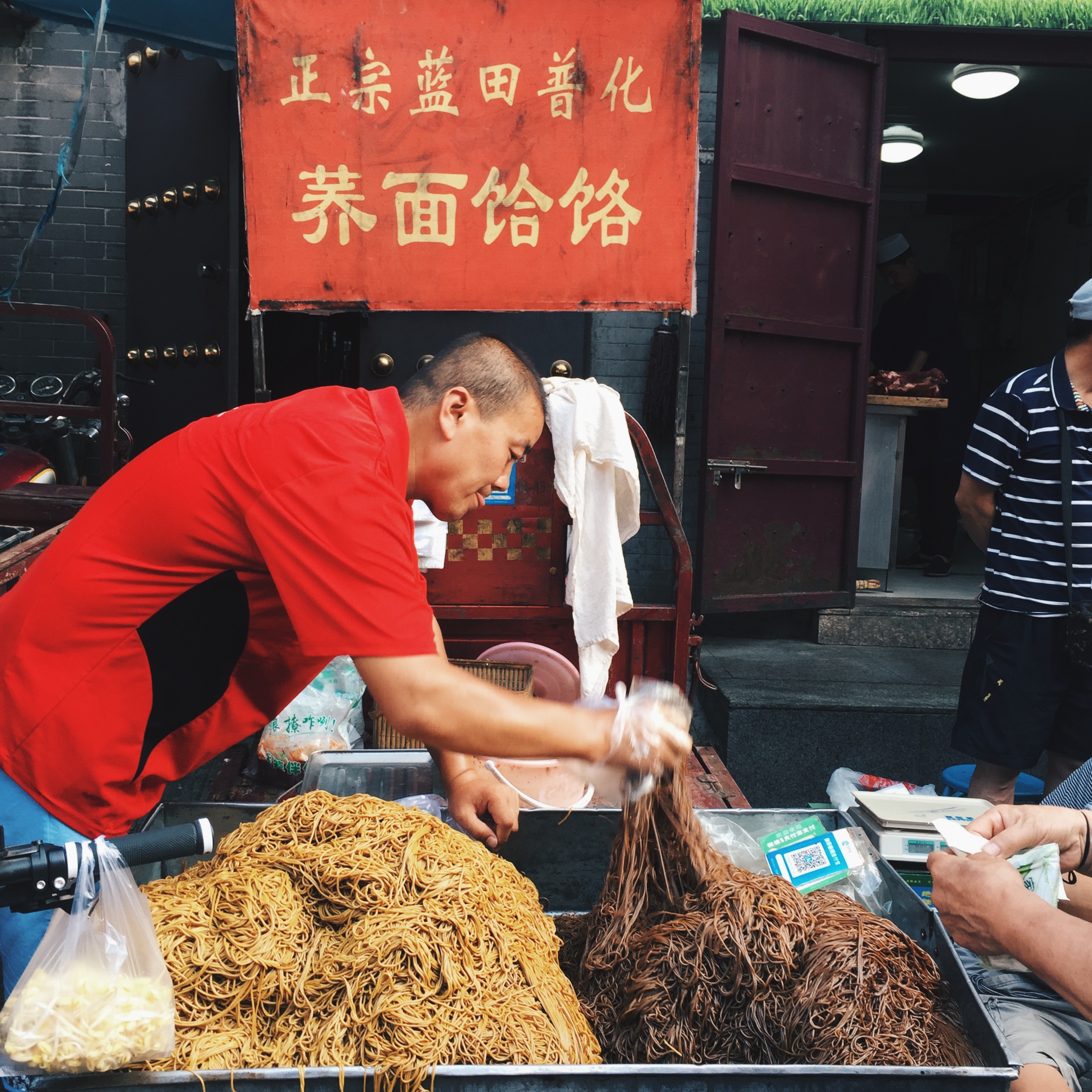
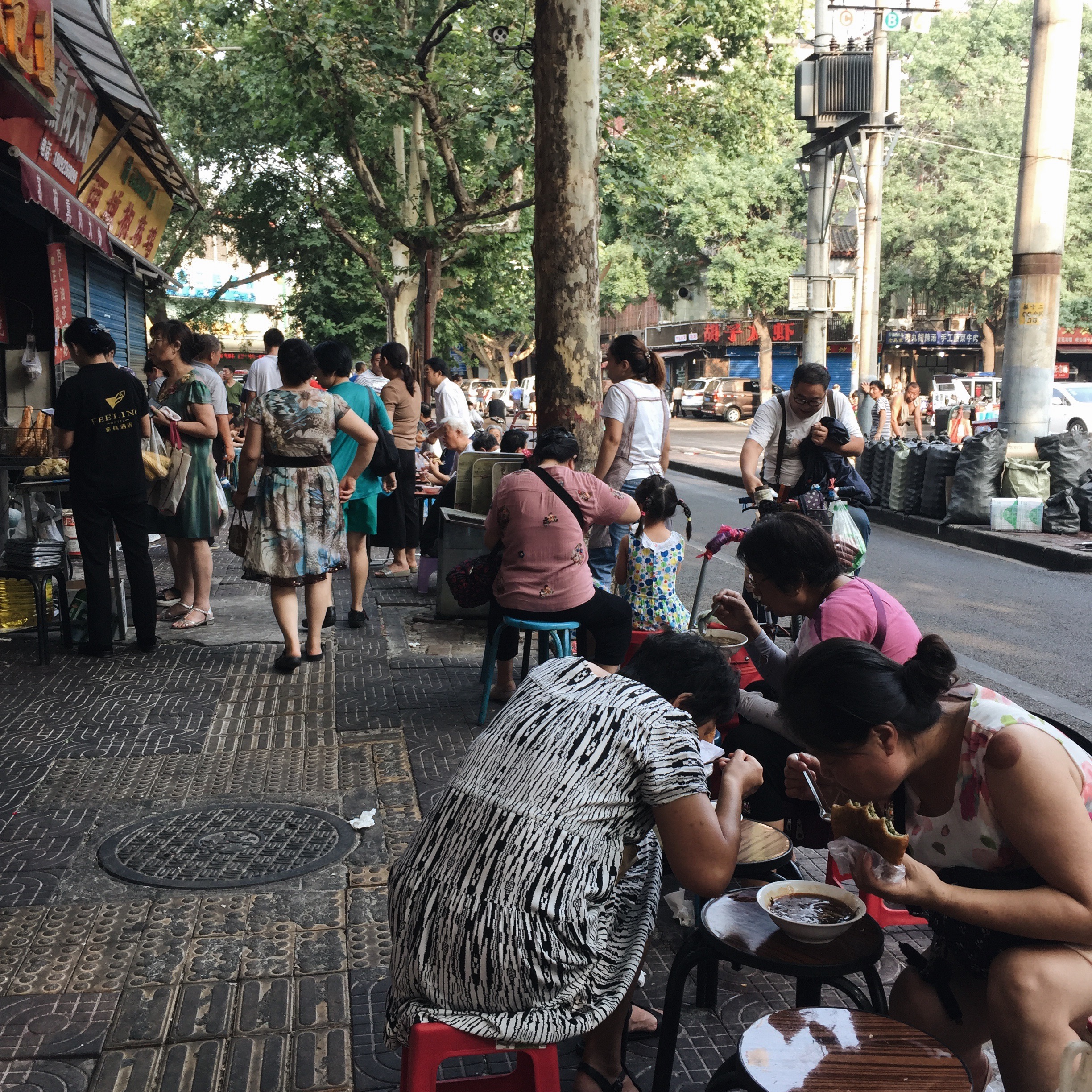
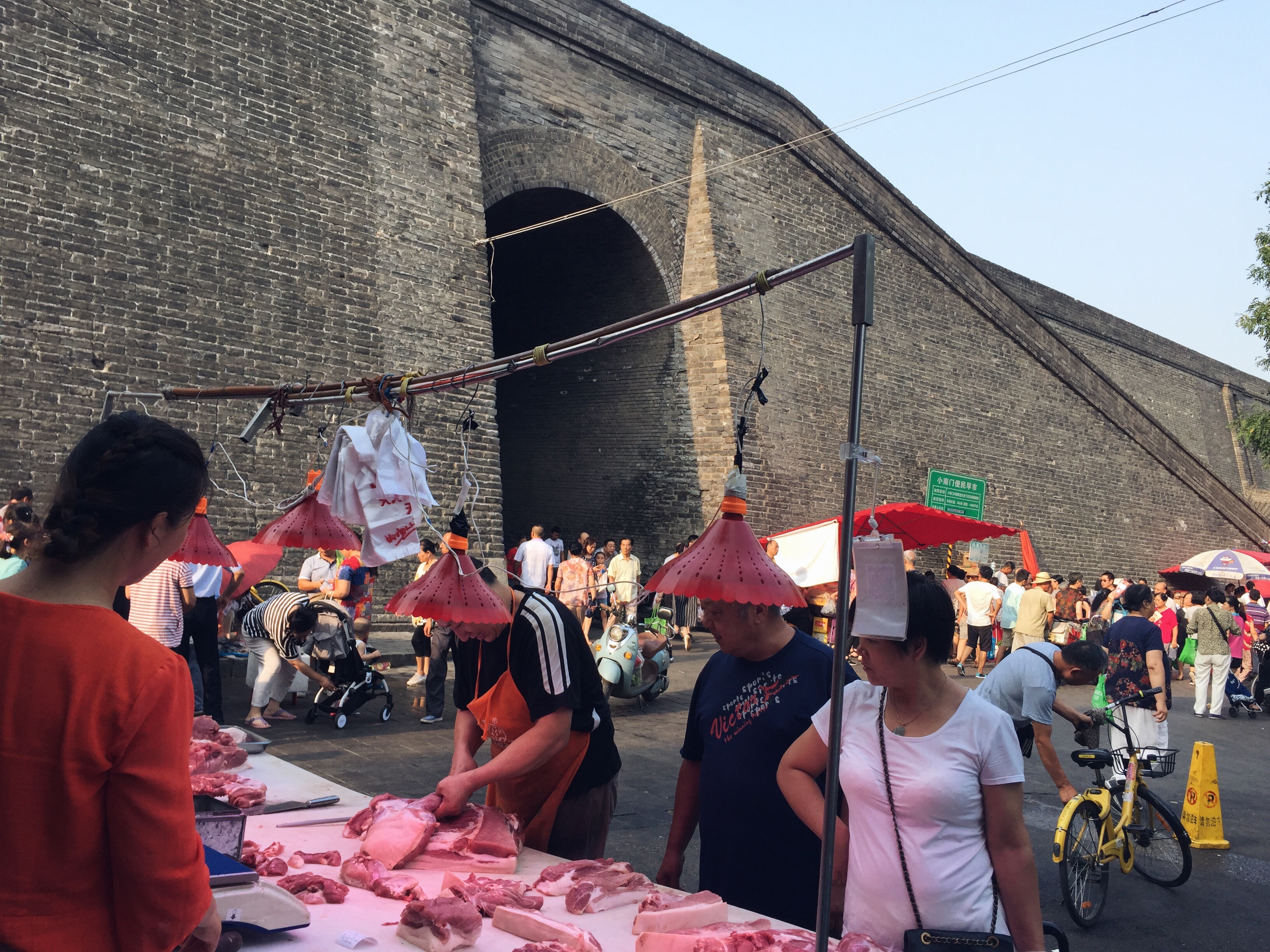
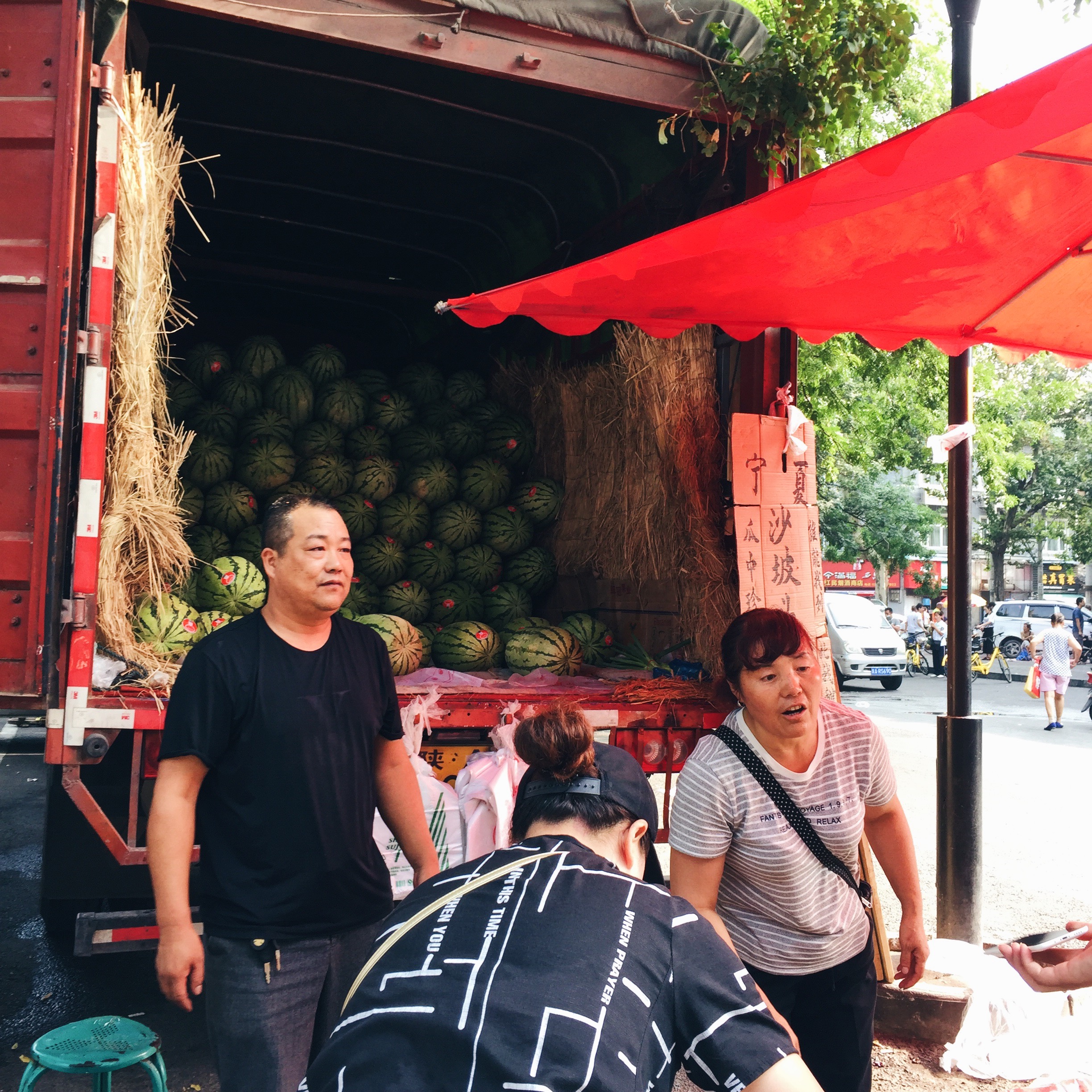
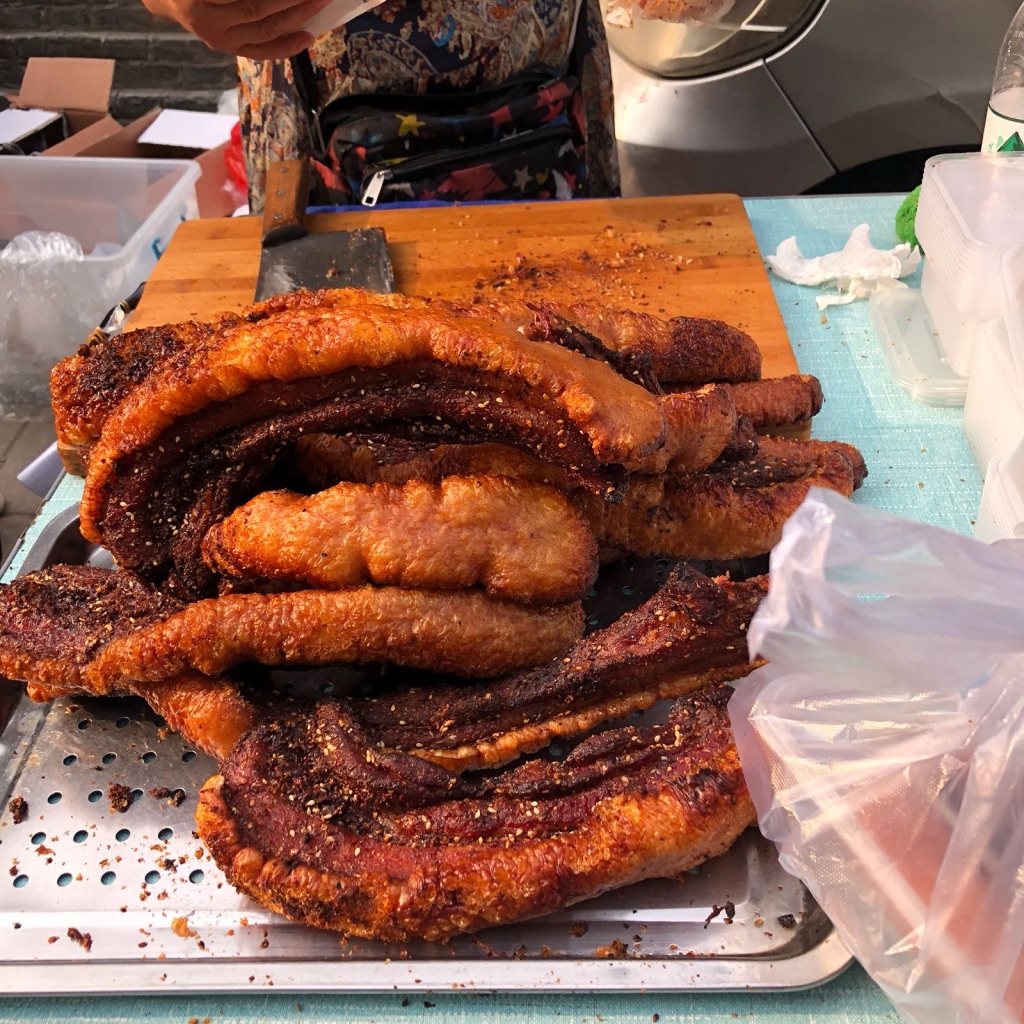
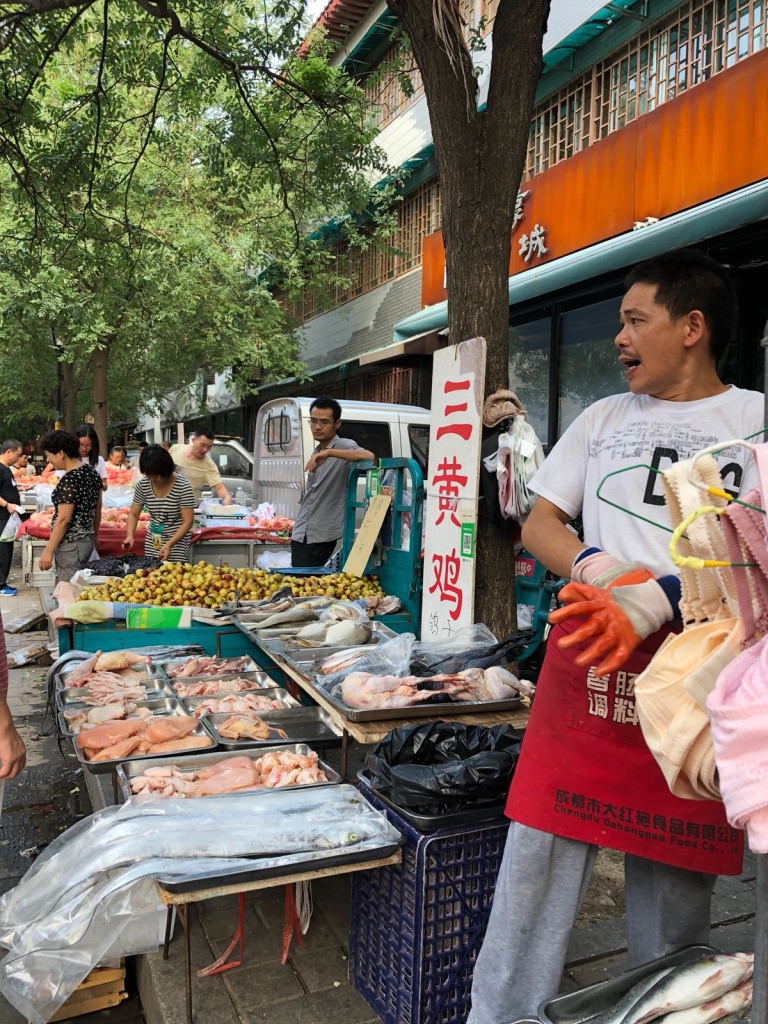
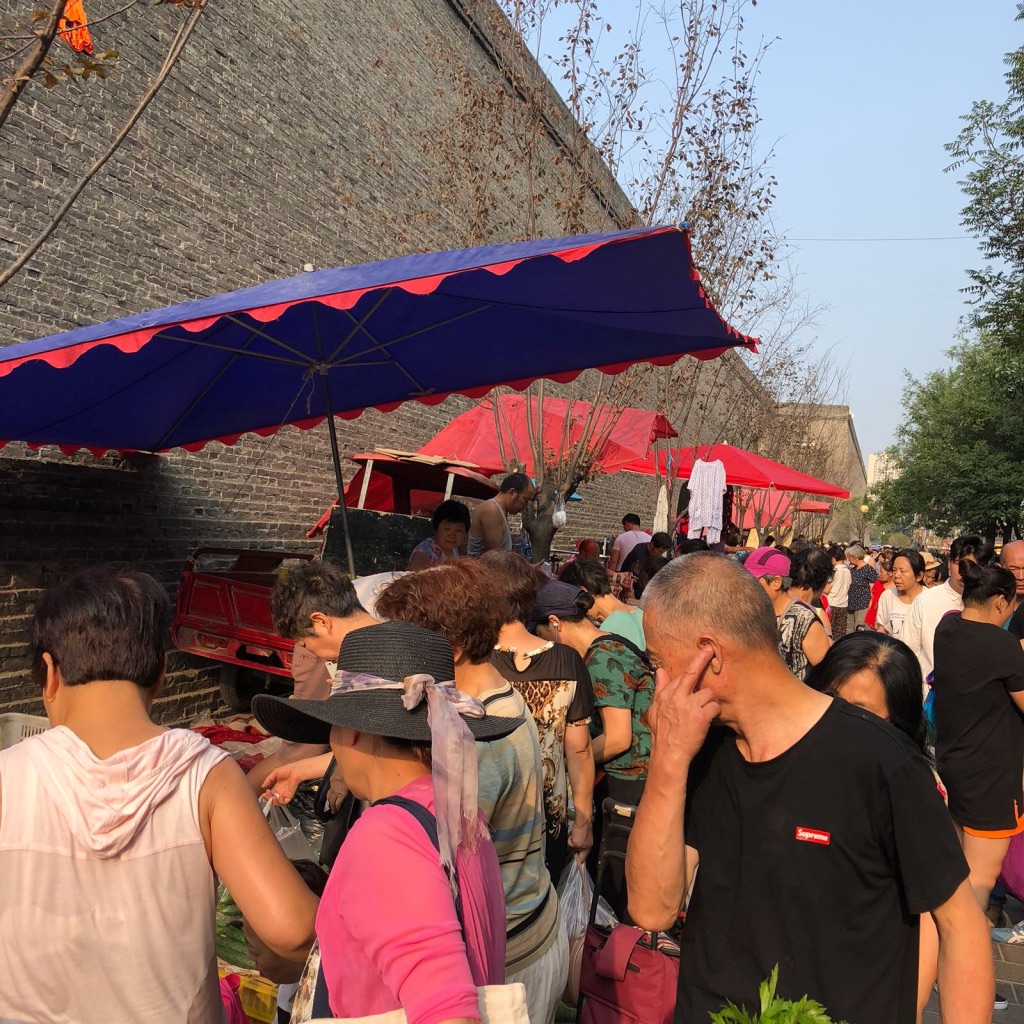
The locals are here for business. They weave through crowds and around bikes, arms laden with plastic bags, point to things and haggle with ruthless efficiency, getting the morning shop in before sending 儿子 (son) to school. They do not browse and stroll, stop to gape and snap photos, as my mother and I do. But how can we do anything but, when there is so much to see and take interest in?
There is little this market does not proffer. Rather than stallholders specialising in general categories like fruit, vegetables, meat, and so on, the farmers come in with lorries loaded with crates of the single produce they cultivate and sell it straight off their loaded vehicles. To say that this single street titillates the senses would be a sore understatement. Beneath the meagre shade that the vendors’ umbrellas afford, there are walnuts in their shells and fragrant freshly-ground tahini and handmade noodles and a plethora of pillowy Chinese breads and fresh chicken and racks of clothing and dough fritters of all shapes and sizes and tea leaves and crispy pork belly and precious dried herbs and ginseng roots and vegetables I do not have the words to name. The no-frills extravagance of this multicoloured affair gives me a rush; I relish its unapologetic industriousness towards catering to its people’s unaffected demand for good, cheap food. Anywhere else, I’d complain about having to jockey with this milieu of people; heat moving from bodies to the brick-laid city ramparts next to us to the burning asphalt like a convection oven. But busy Chinese folk have better things to do, like get a good price for a 斤 (jin, about 600g) of okra. And so must I.
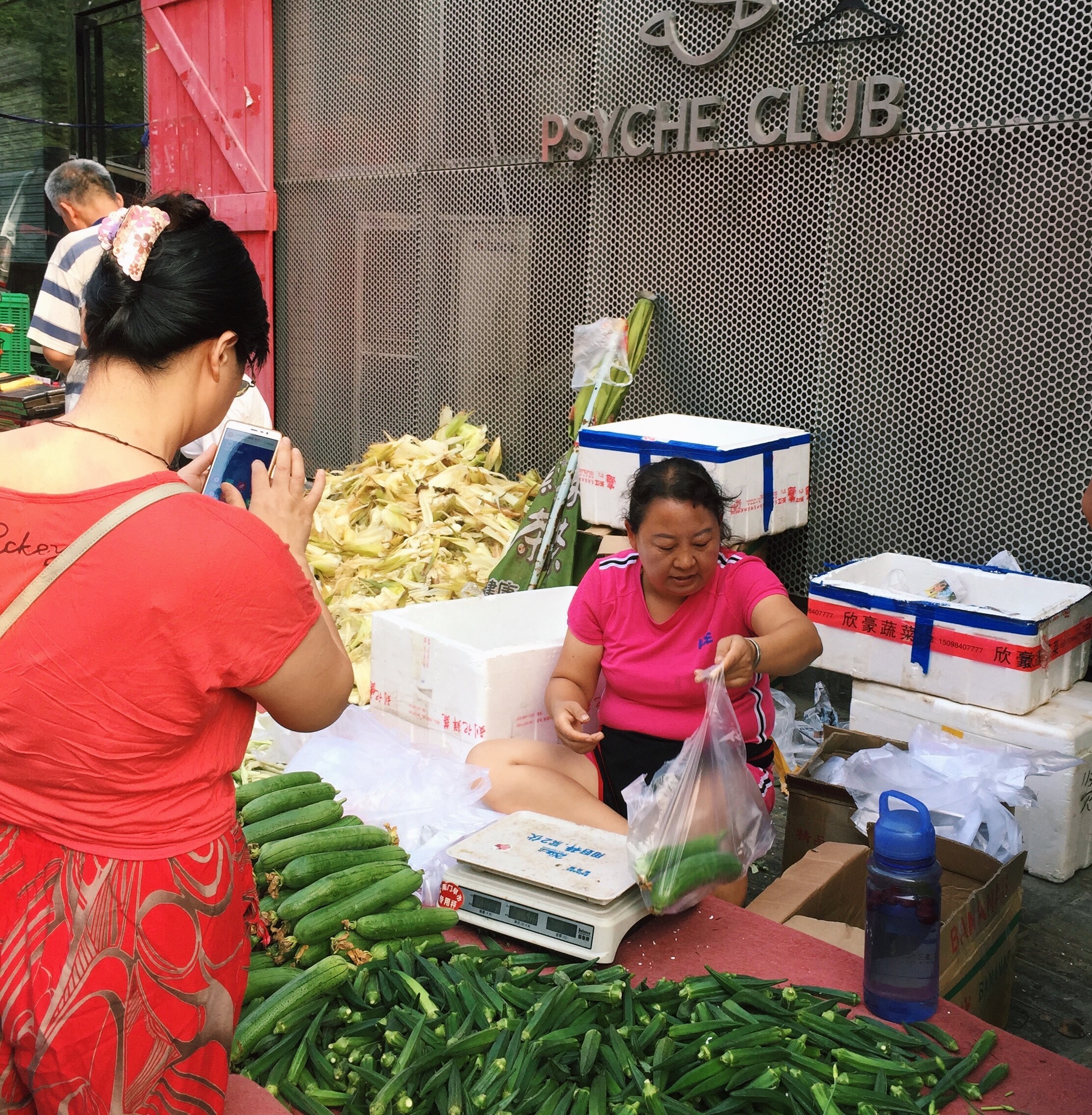
The end of the cramped alleyway marks the end of the market, and that’s how you know it isn’t designed to impress or suck in tourists. But the sights to behold within its modest length! I walk up and down again, reluctant to leave, catching sight of more fascinations with each turn of the head.
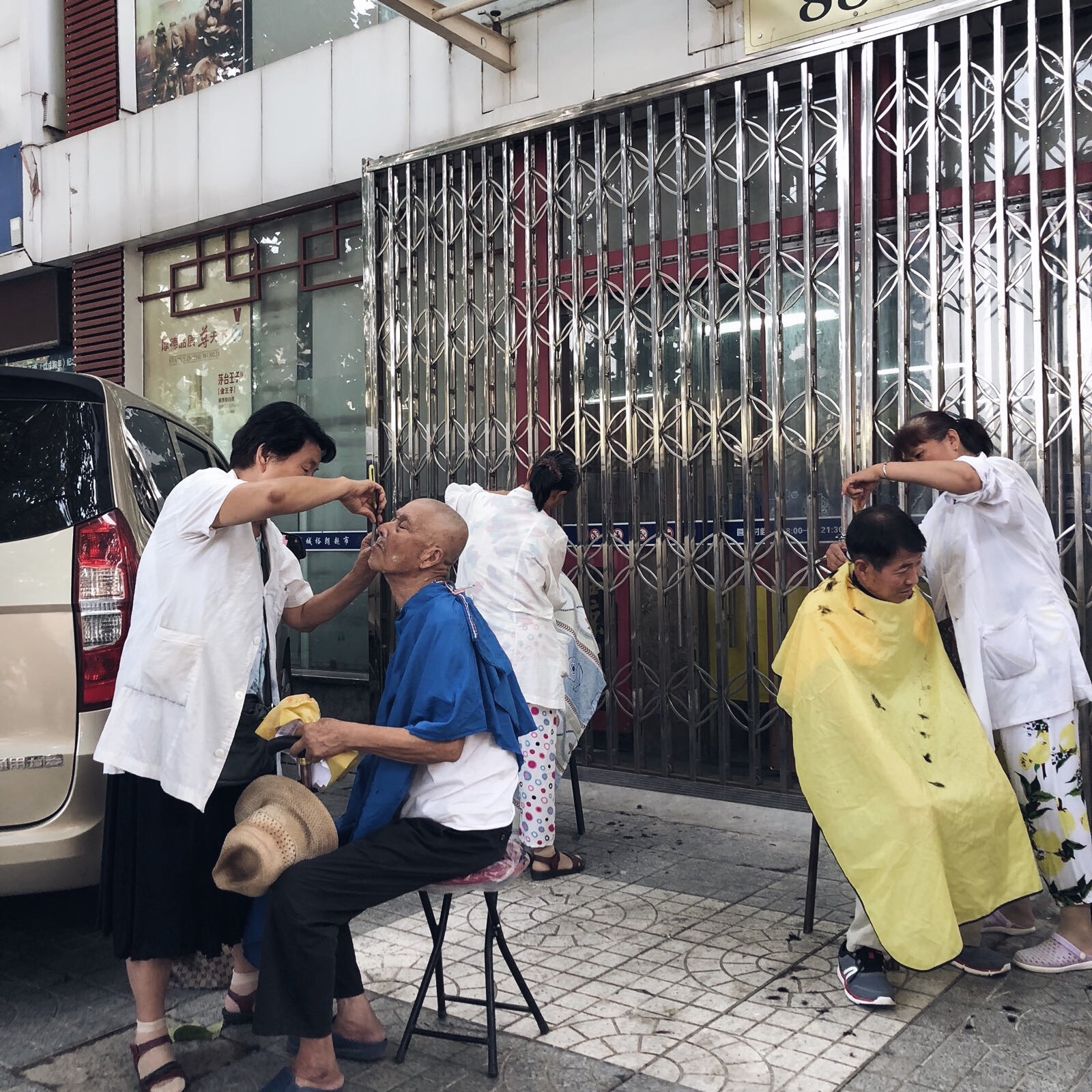
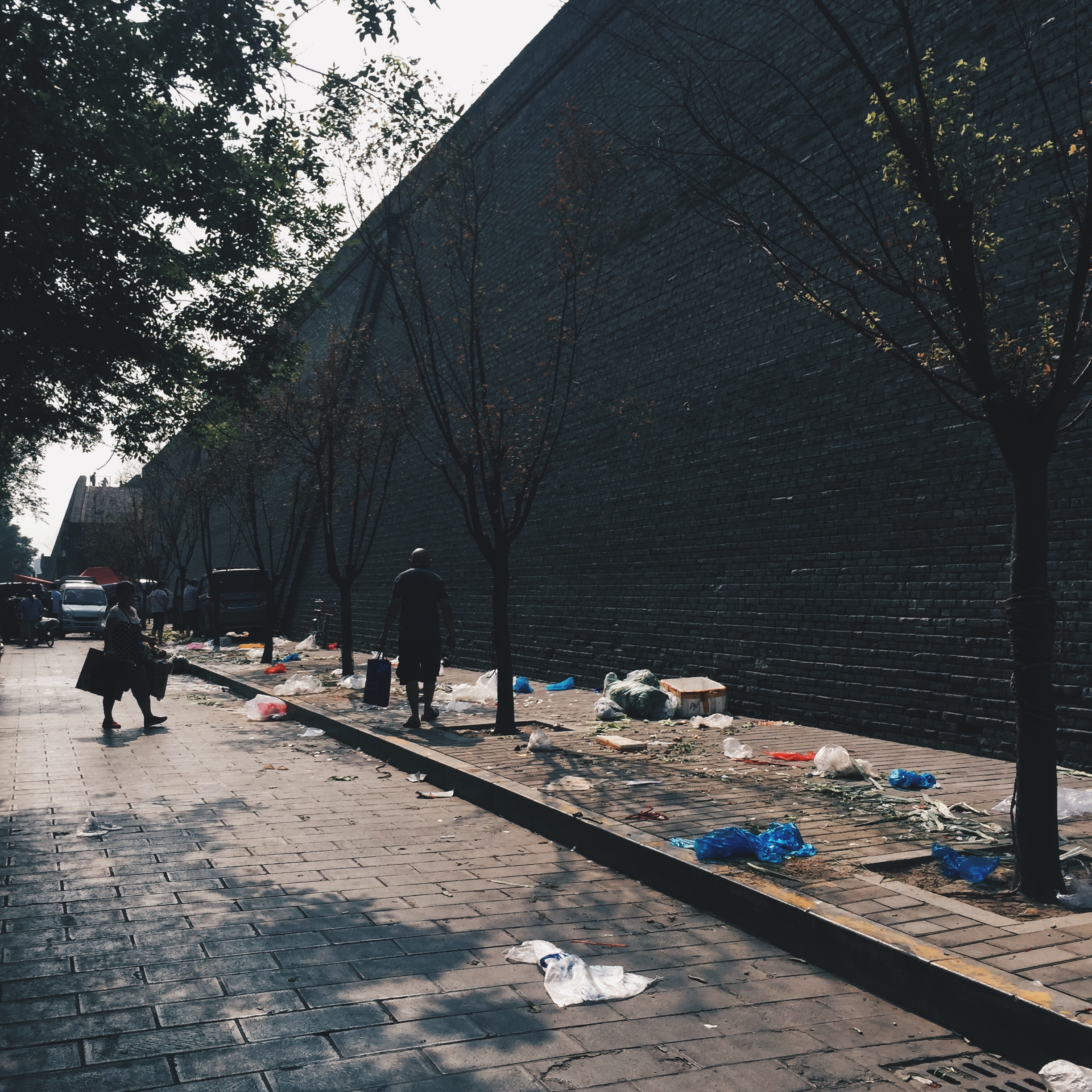
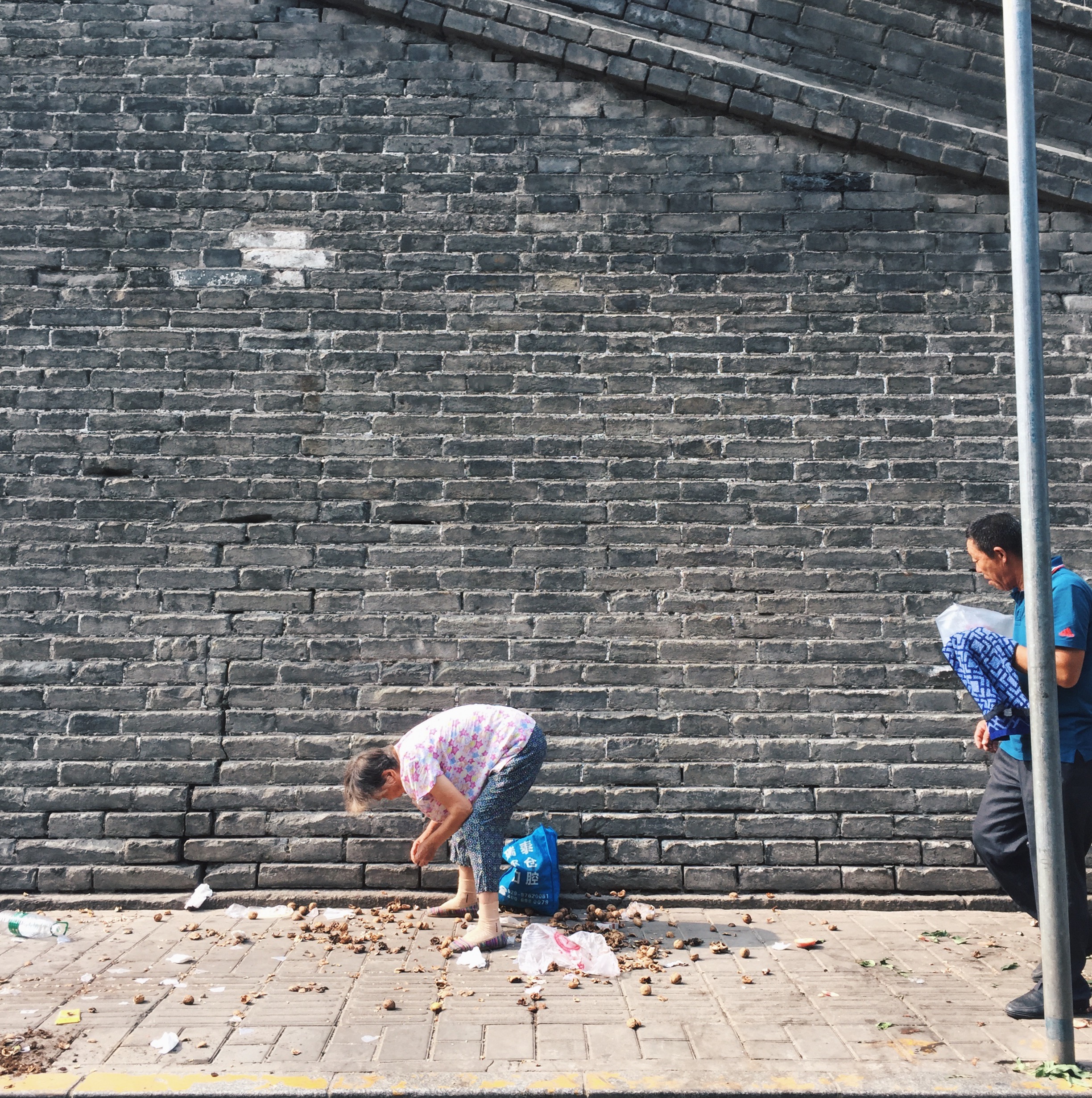
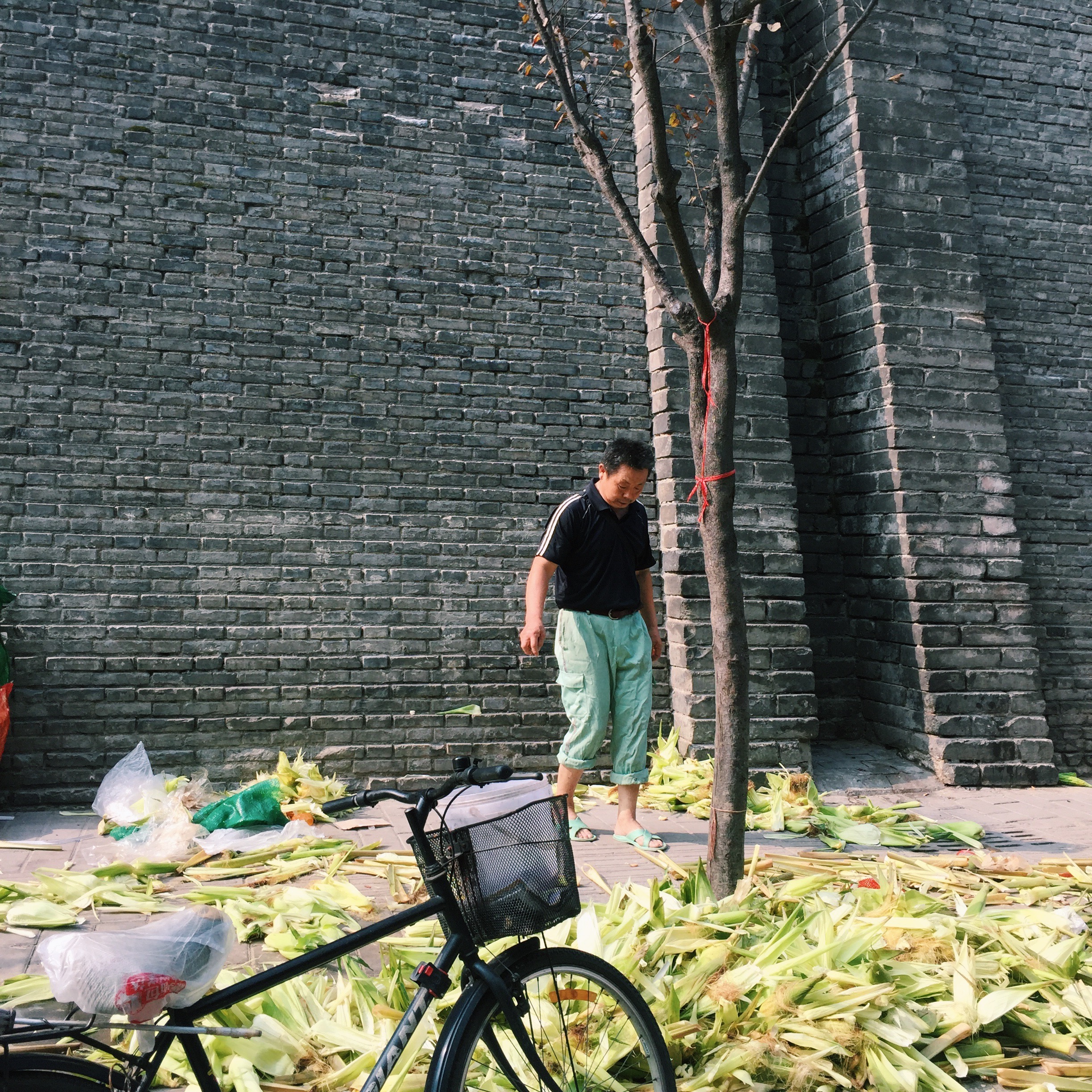
This is, however, not a show. Business is done for the day. Just shy of 9am, a flurry of activity ripples through the street. The farmers furiously bundle their produce into styrofoam boxes and newspaper cones, irritably swatting us away when we wander over to pick through their things (明天!they tell us, knowing we won’t resist returning the following day). Another din of honking and ringing and motor engines revving. The sight is almost comical: discarded vegetable peel and wrappings left in the dust of farming motor tricycles put-put-putting away. Within fifteen minutes, the market has vacated — probably a result of city regulations. One or two old people stay behind to pick through tossed produce. At the end of the street, a makeshift barber store is left. The roads leading into the Inner City fill up with traffic. The market, like an extended breakfast, has drawn to a close. Now the city is fully awake and pulsating, fed, ready, alive.
 Market Survey