This blog has the domain ‘travel’ not for nothing (okay, mainly because I didn’t want to pay for a .com site, but hey). But one of the pleasures of settling down in a new city is getting to know its market(s) as your own: somewhere you can buy fresh seafood and veggies for the week, somewhere you bring a weekly shopping list to and can come home from, shoulders sore from the ten (10) kilos of produce you just balanced precariously on your cycle back. And the satisfaction of spreading out all your purchases in a kitchen you actually cook in, arms akimbo, “…and all this for 20 euros!” — far surpasses doing the same in a hotel room.
But I’m getting ahead of myself.
I’m spending this summer in The Hague. My first weekend here was a groggy blur of unpacking and sleep, recovering after the previous few days of packing frenzy, walking around my neighbourhood in hazy disorientation, and mainly sitting in my room in befuddlement, trying to psychologically adjust myself by repeating in my head, this is home for now.
The second weekend, one week of work completed, and I was feeling a little more settled. This wasn’t quite yet my city, but I’d been in it long enough that the paralysis of alienation had ended and I was starting to be curious. Dutch people told me that The Hague is a posh city — and it certainly seems that way, what with the grandeur of the Peace Palace and lush greenery lining amazingly smooth cycle paths (these cycle paths! You have to understand, this is a major step up from competing for road space on constantly-crumbling bitumen with industrial lorries back in Cambridge) and the drama of the Binnenhof’s reflection (the seat of the government of Netherlands) shimmering in the Hofvijver (basically a glorified pond) in the city’s Centrum. But it couldn’t all be such a postcard. So on a burning Saturday morning I set off to De Haagse Markt, apparently in existence since 1614; apparently the largest market in the Netherlands. I had high expectations.
Dutch markets are apparently more muted than the raucous extravaganzas I am used to. This one, though, bends to no such social more. It’s not China, but it certainly isn’t serene canals and elegant Dutch houses either. Cycling to the market, one can already get a sense of the vibe: there are more Middle Eastern convenience shops around, eateries advertising Kanafeh (a syrupy crispy cheese-based dessert, and so deliciously sinful), more people wearing their own ethnic dress.
(As a sidenote, I dislike that term — ethnic — because it is a sore understatement of the incredible vibrancy and diversity that people’s expressions of their sense of cultural heritage bring to any social environment. The term ethnic breeds broad-brush generalisations that give rise to callous stereotypes and ill-conceived cultural misunderstandings, and possibly worse, a tendency to fetishise and exoticise the Other — one I know that I’m always at risk of doing on this blog, and which I hope I manage to avoid in most, if not all, cases. But I digress. All I meant to say was that I use the word ethnic in a heavily qualified sense, with an awareness of its inherent dangers.)
In cities around the world, the market square is traditionally the city centre, and I think that’s kind of beautiful. Whether it’s a Moroccan bazaar, a Malaysian morning wet market, a Spanish mercado, or a weekend farmer’s marché, markets have historically been centres of economic and social activity, cultural exchange on a national level, and epicentres of small-scale gossip-mongering. Great things have happened in markets (see: food, duh), and not so great things (see: the slave trade). Oliver Wendell Holmes used the market as a central organising metaphor in his defence of freedom of expression in the ‘marketplace of ideas‘ argument.
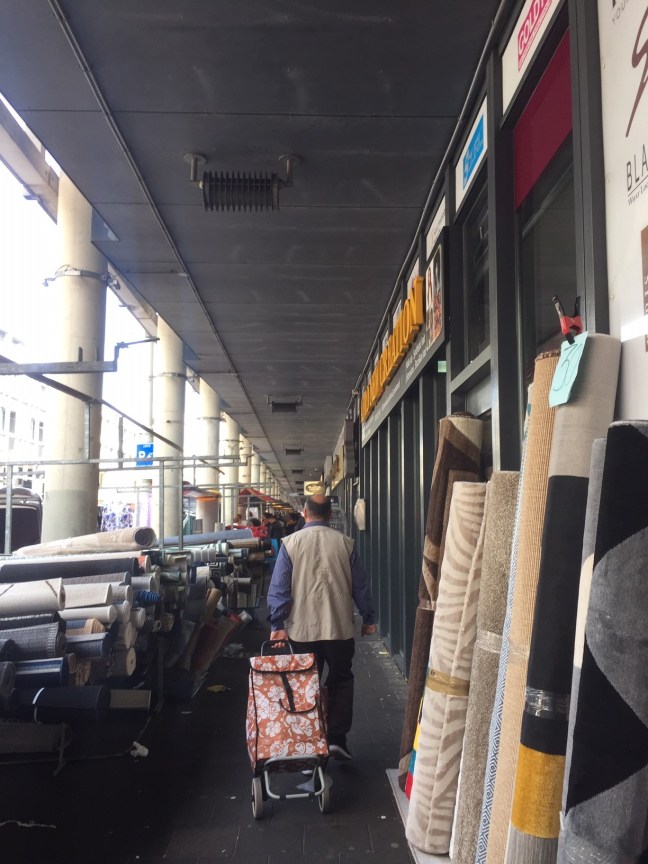
De Haagse Markt, while not located in the city centre, told me a bit more about the city I live in. Renovated in 2016, it is contained in a neatly demarcated square, very much in line with no-nonsense Dutch sensibilities. But even then, multicultural, multiethnic commerce spills beyond the literal four corners of the market to its surrounding streets, so that the noise, smells, and general flow of human traffic function as direction signs to the market proper. As I neared my destination I gave up relying on Google Maps. There was an organised mess to the roundabout crowded with motorbikes and bicycles, deftly ducking the obstacle course lining one side of the road: lorries loaded with crates of fresh fruit and vegetables, stalls peddling rolls of fabric and rugs, kids performing tricks on their MTBs/skateboards/scooters to impress one other. After a while I got off my bike and walked with it to the entrance.
*
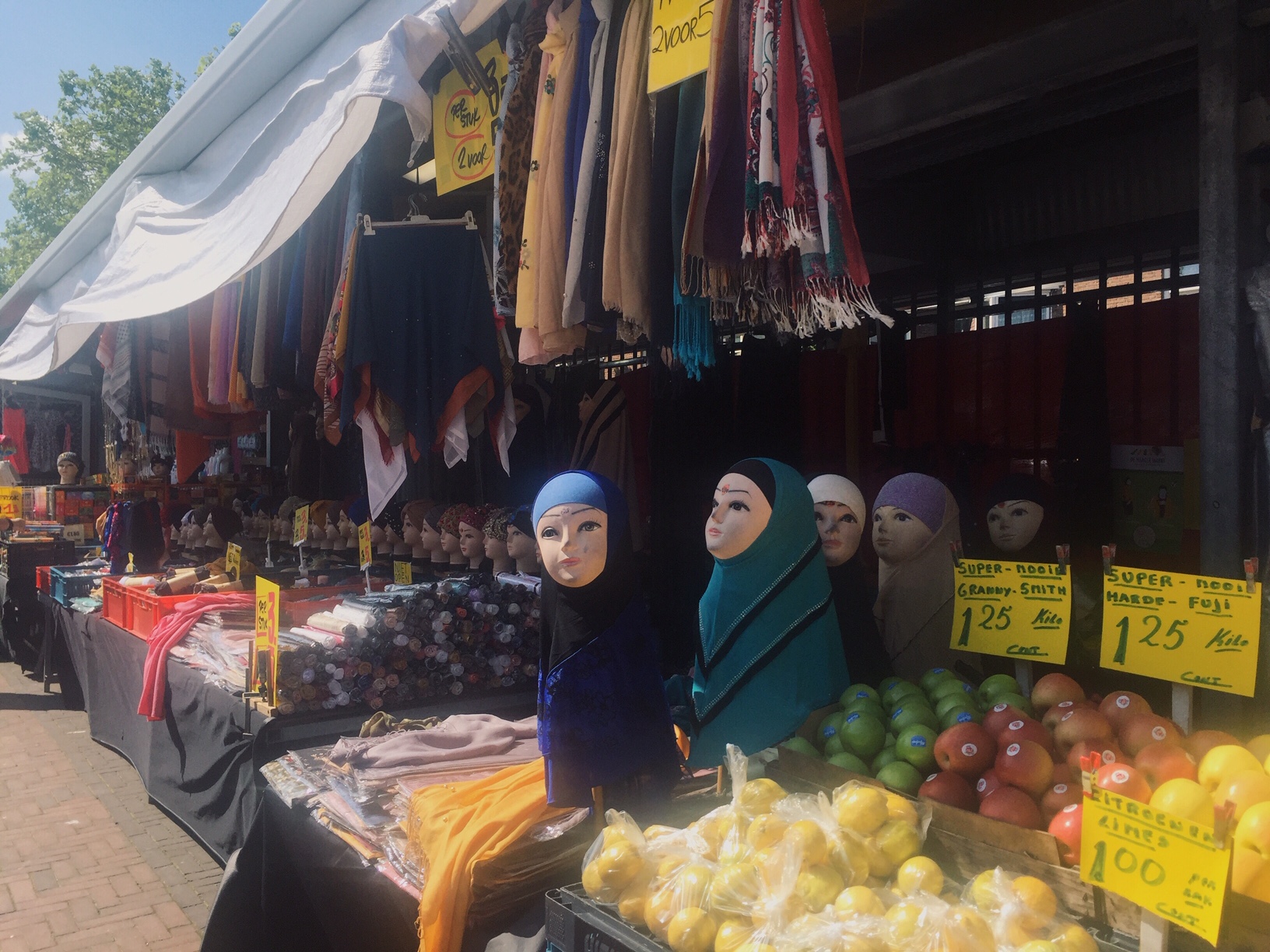
The melange of stalls that greets you when you first step into the market might be bemusing for some, but it gives me a thrill of adrenaline. Baskets of fruits (1kg of peaches for 1 euro? Yes please) sit in the sun next to mannequin heads modelling ladies’ hijabs. A surprising array of clothing stores, some carrying a little more outdated styles than others, but all with advertised prices alluringly low enough to draw you to flick through its racks. At the corner there’s the mainstay coffee shop, with old folk sipping their coffee, shopping trolleys stuffed full by their sides like faithful dogs. Vegetables that go way beyond your average supermarket fare: bitter gourd, wrinkly stubby peppers, sweet potatoes, butternut squash, collards and Chinese cabbage and different types of yam, loofah, lemongrass, xiaobaicai. On the hot summer’s day of my visit, people are crowded round the herring stall tucking into a Dutch favourite: raw marinated herring with diced onions and gherkins, eaten in one go. For the less adventurous of us there’s also kibbeling — battered and dipped in tartar sauce, decidedly more general appeal.
Now I don’t mean to get all pseudo-scientific, but surveying a market has a certain method to it. The first walk-through is to get a bird’s-eye view of the market: how it’s organised (if at all), identifying stores you want to get a second look at, nipping into the snack stores to whet your appetite a little. It’s the leisurely calm before the storm: in your head you’re making a list of stalls you want to hit the next time round. The second is for serious shopping — haggling, if one is so inclined — and it is carried out with the singlemindedness of a hound dog. There’s no pausing, it might disrupt the momentum; just walk, point, pay, repeat. And finally, the third: a stately waltz through the boulevards you have conquered, fishy ice chips, discarded vegetables, stray shreds of raw meat and all.
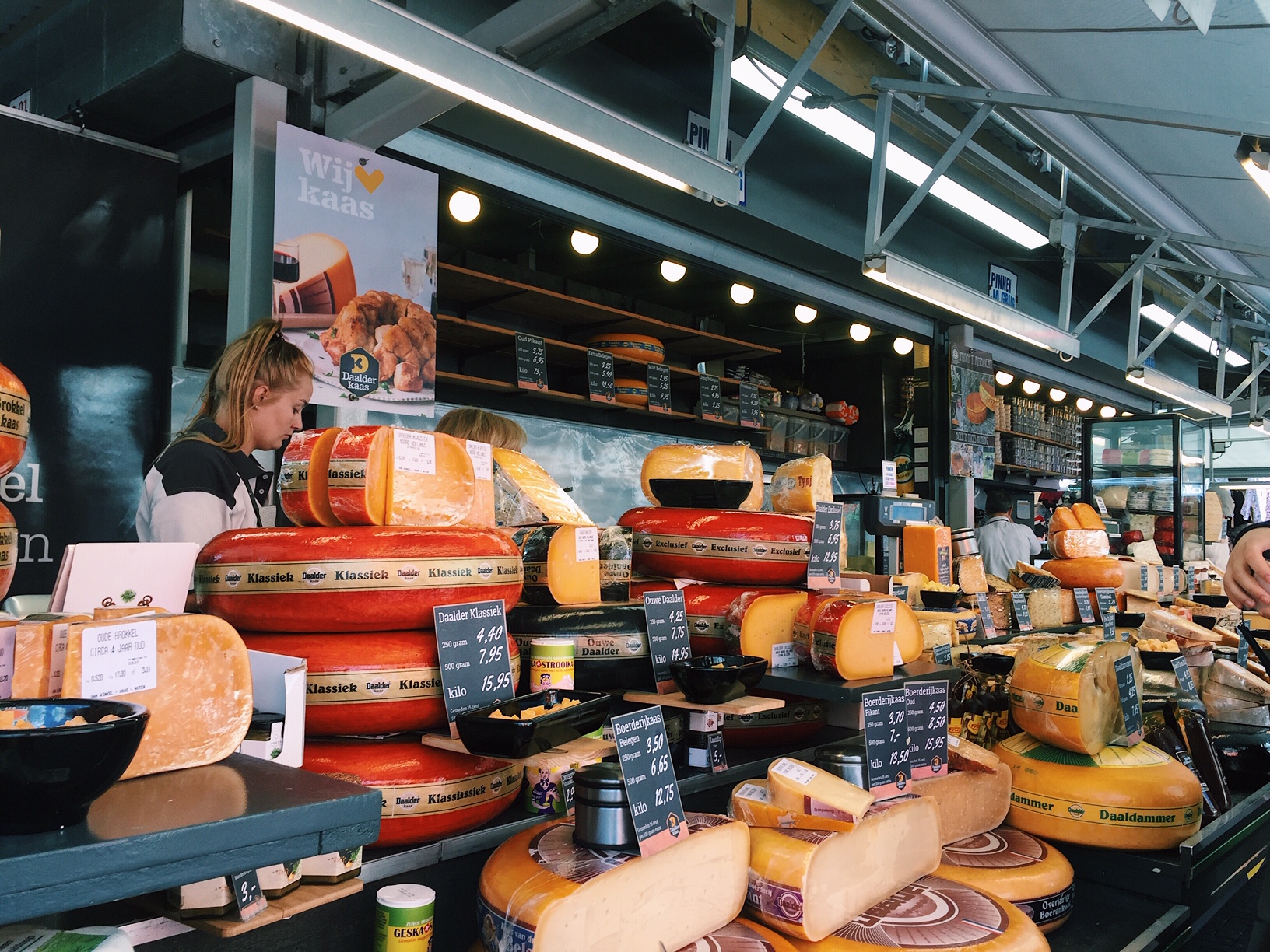
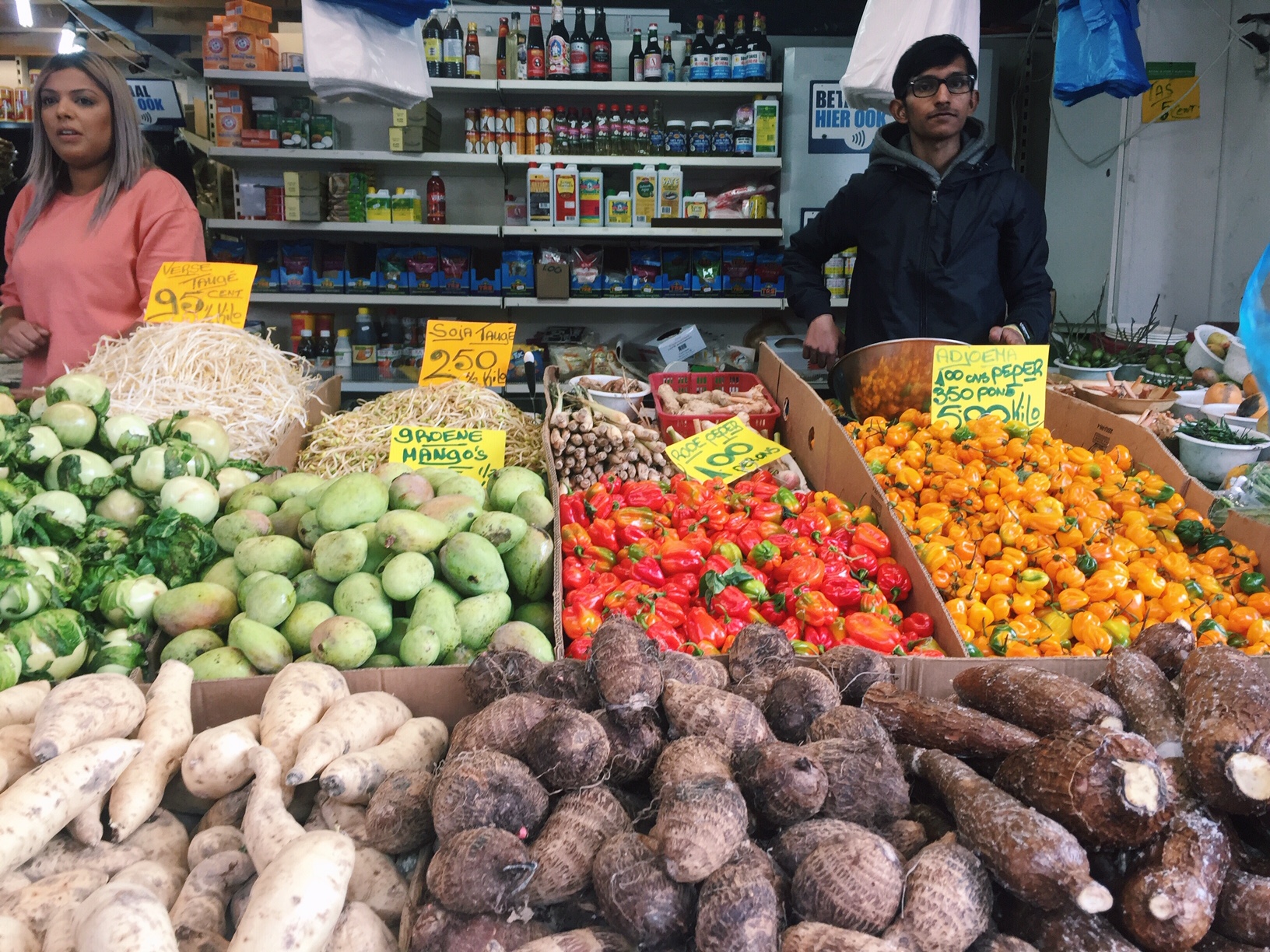
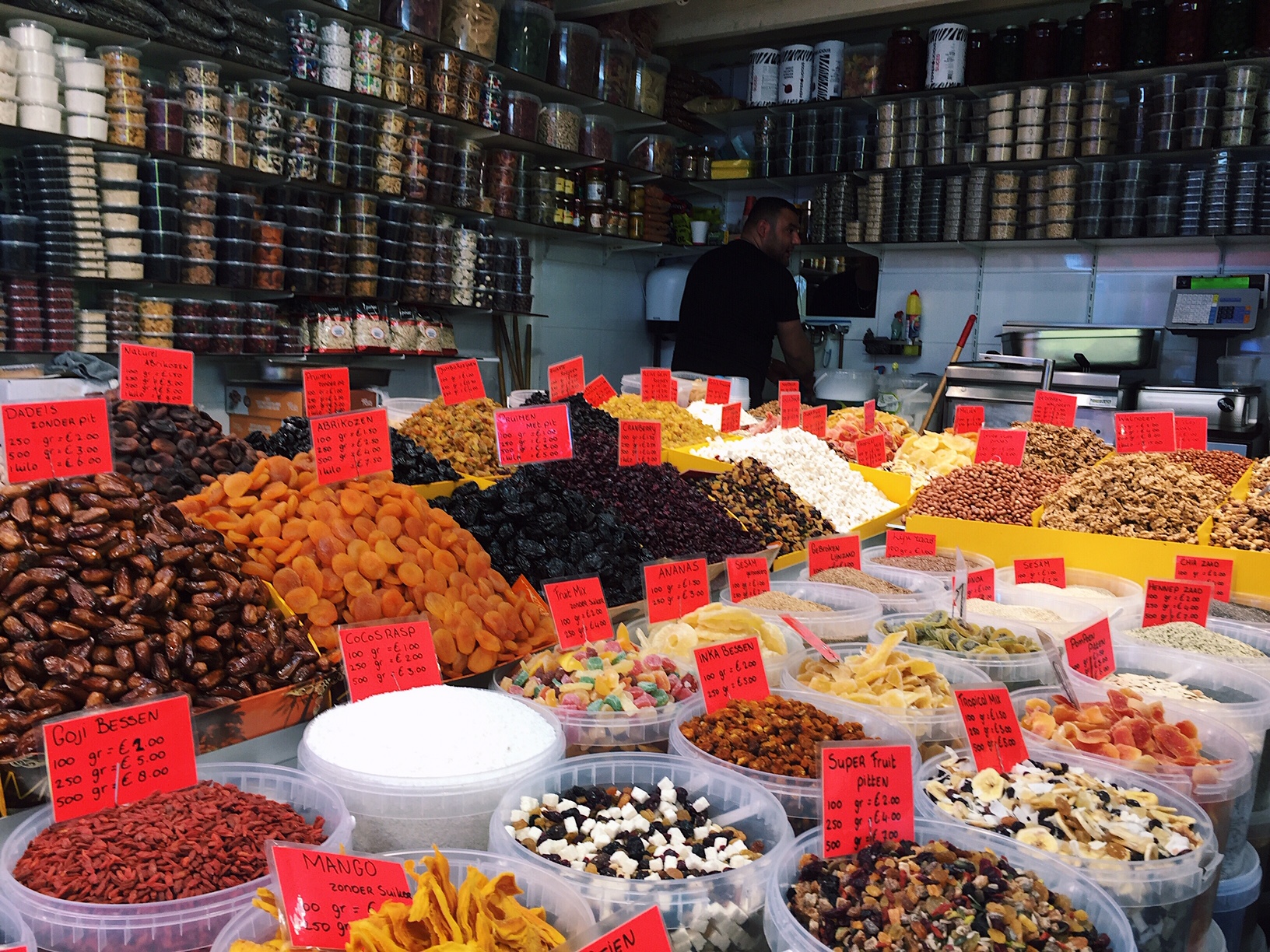
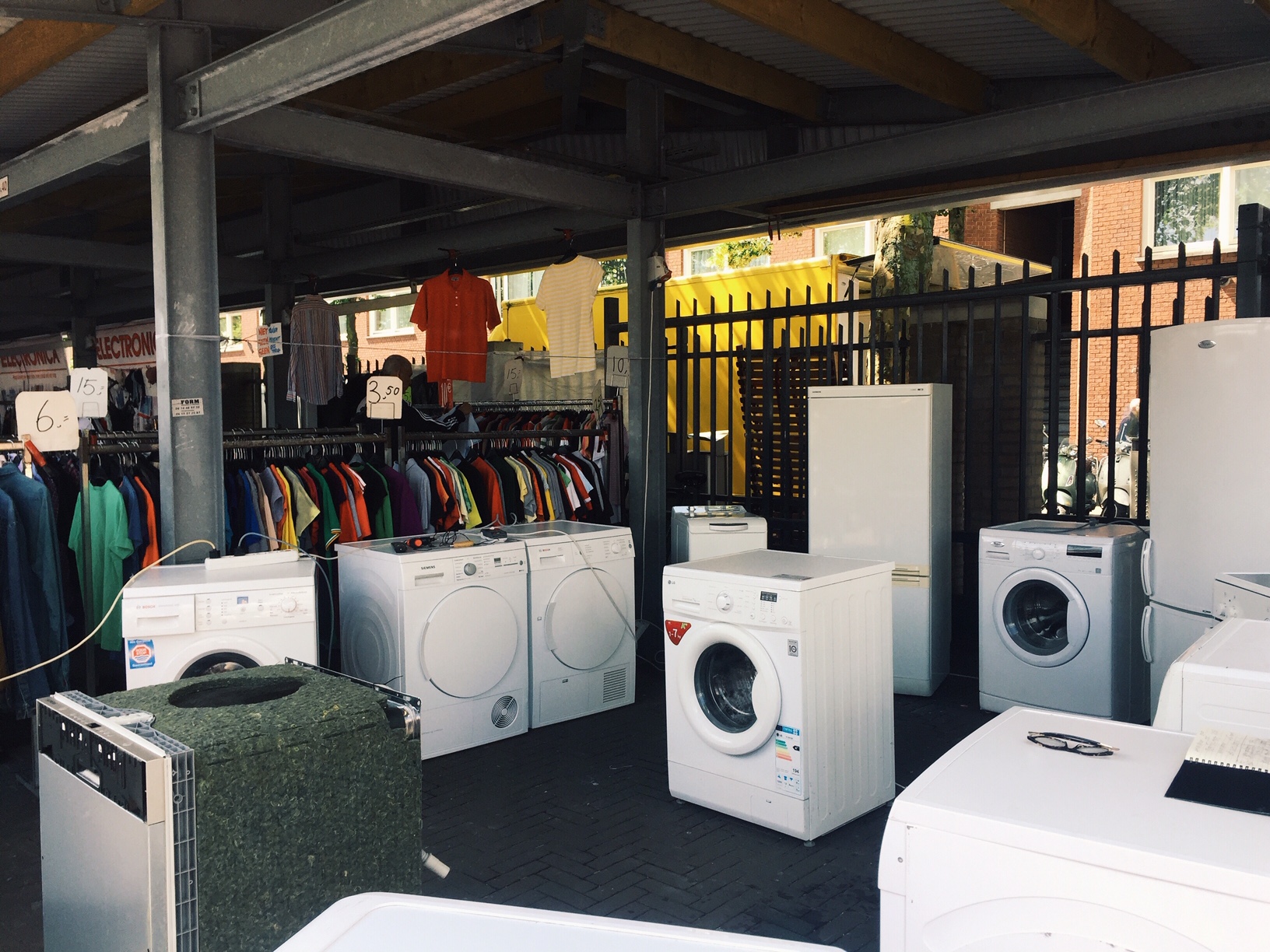
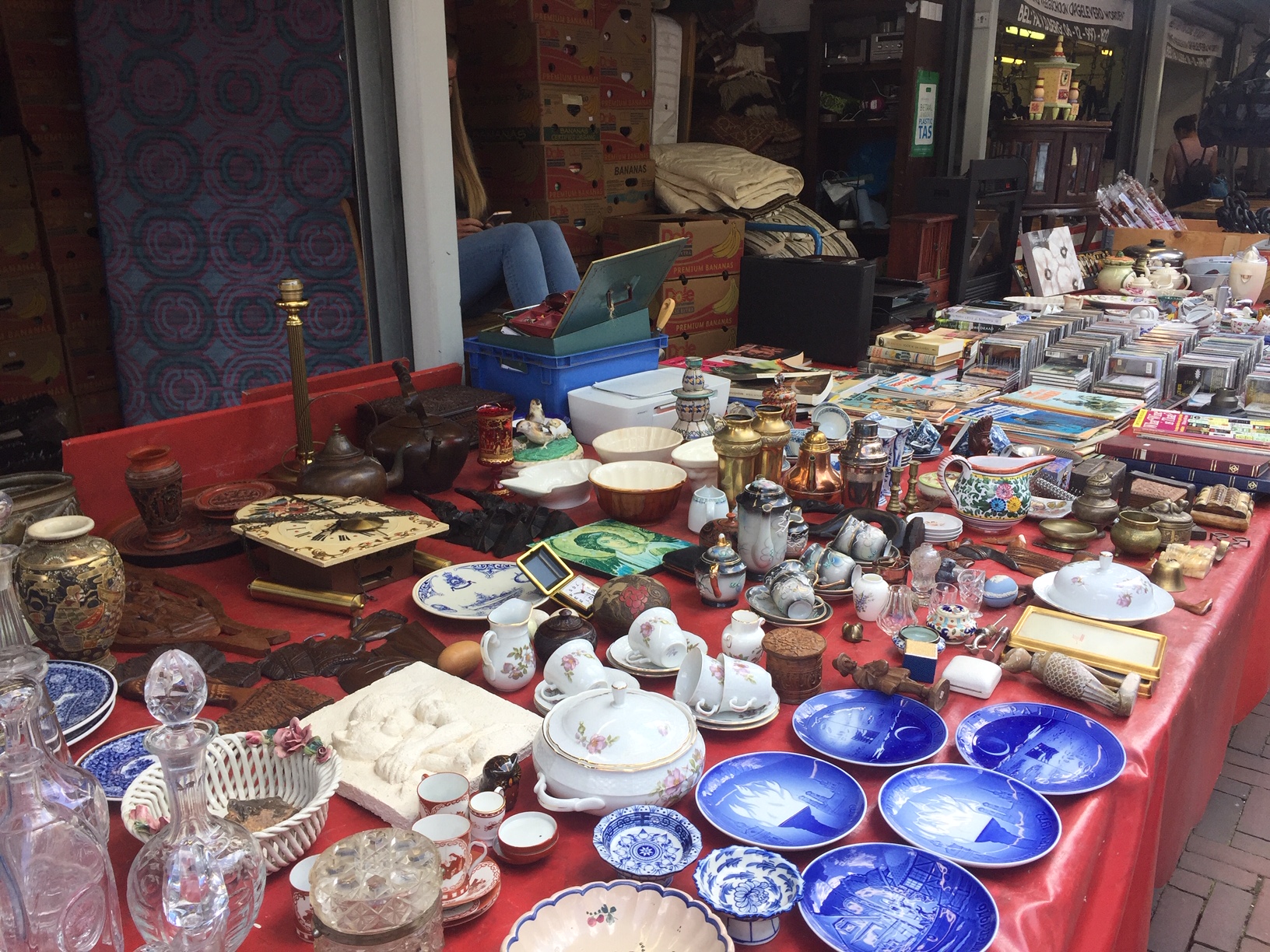
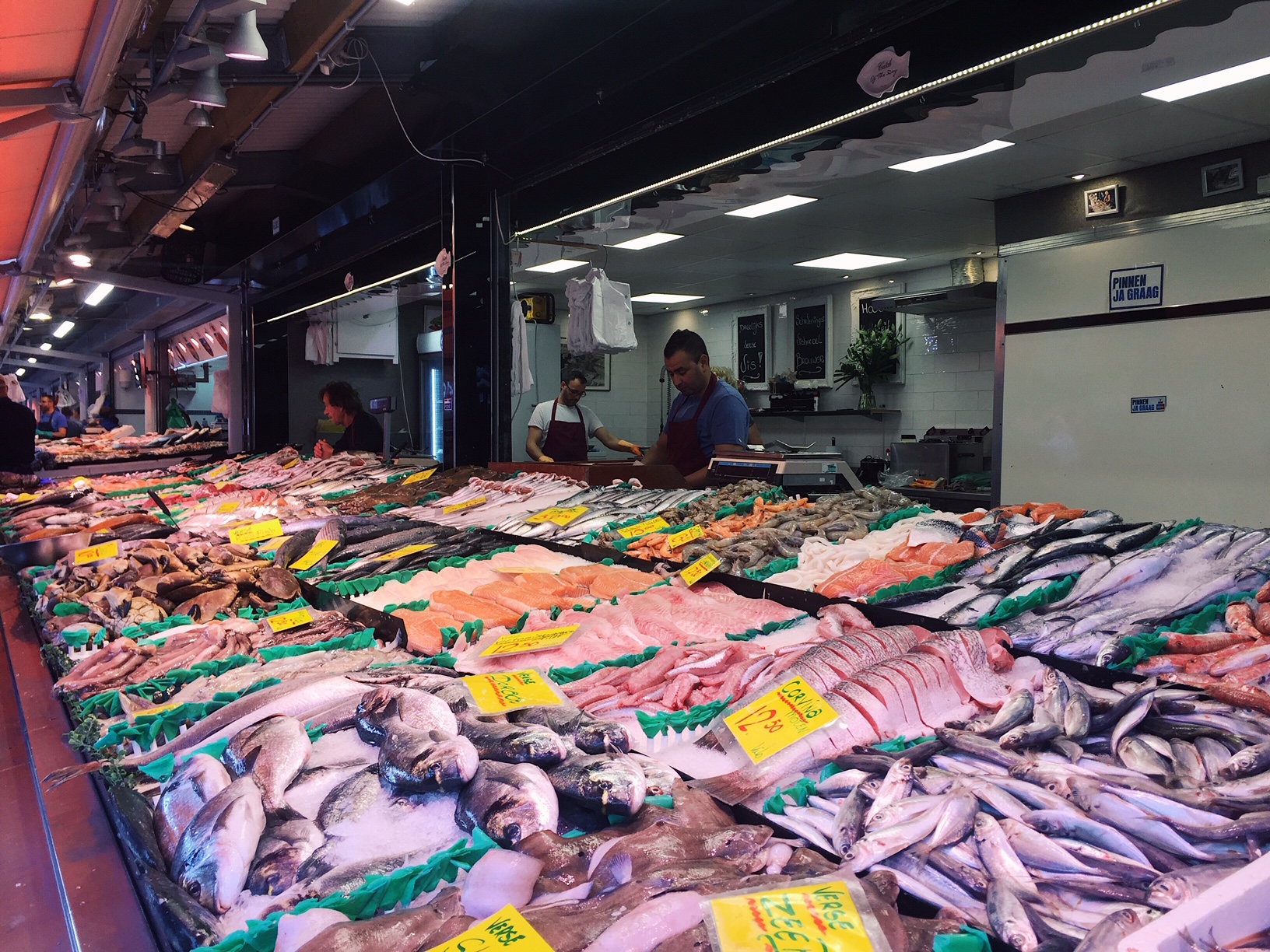
At some parts of this market I had to laugh. It’s a web enmeshed with snippets from all far corners of the world: fruit sellers hollering Arabic overlaid with Cantonese aunties and their trolleys chattering amongst themselves, Dutch and Afro-Carribean-tinged English. I catch some Vietnamese, some Bahasa Indonesia, some Thai. And, of course, where else could one experience the world (or more accurately I suppose, Dutch empire — but maybe there isn’t much difference) than here? The ethnic/racial socialscape of this country, while overwhelmingly white, is peppered with people of diverse origins — more so than I expected. People from Aruba, Suriname and Indonesia, to name a few, settle here because they’re fluent in Dutch, which is still a widely used/national language in their home countries. I am constantly aware of the legacy that imperial and colonial history has left by this country, not least by daily encounters with diaspora from her colonial subjects. But here, I see something different: a space for intercultural dialogue, not in the expert academic sense, but in everyday marketplace intercourse; in French-speaking white Caucasians lined up for croissants with Bahasa Indonesia-speaking Southeast Asians; in me, an almost-exclusively-English-speaking Malaysian buy nuts and olives from a Dutch-speaking woman of Middle Eastern origin; in South Asian stall vendors selling taugey to Vietnamese marketgoers, in Chinese-speaking ladies buying live crabs from Arabic-speaking seafood stallowners.
This isn’t meant to be a whitewashing of imperial history and neo-colonial present. This also doesn’t make up for the empirical observation that, as you cycle closer to the city centre and the city becomes visibly more affluent, the demographics become visibly whiter. But I think there is something to be said about the lived reality of a market, or maybe this one in particular, that tells me a little about the kind of society I’d like to be part of.
*
Postscript: I began writing this post ages ago and sat on it for weeks. Since then, my mum has come to visit and made a visit at my insistence. We had a lot of fun comparing notes: which stalls we got our olives from, which had the cheapest nuts, where she got such-and-such vegetables from, and so on. Now you see where all of this enthusiasm came from.
 Market Survey