Obviously, no travel has been done in the past year.
My life has been a continuum of days sloping into each other, crouched over multiple screens, animated by the 24 hour news cycle, apportioning trips to The Outside World like pills in the neat little compartments of a medicine organiser. Perhaps you can relate.
My contained existence of these past months have borne some fruit: I have written more than I have in a while (and thankfully not essays), from poetry to legal commentary to opinion pieces on topics close to my heart. This blog has gone sadly neglected, in large part because there wasn’t much content to nourish it with. But recently my mum told me that friends of hers had found their way to this online space, and read about my whimsical market escapades with joyful nostalgia. It makes me happy that my idle writing can provide at least temporal respite for a fellow sufferer of cabin fever, and so I resolve to reinvigorate this space, digging around in my mind for memories of trips past like one desperately grasps for coins to pay the storekeeper (I mean, if you just wave your card at the contactless machine in Tesco/NTUC you really haven’t lived).
We begin with a jaunt that requires no travel at all, but nonetheless takes me to a different time — one without masks, when I practised social distancing by choice and not by law.
The last time mum and I visited Pasir Panjang Wholesale Market, our compact island nation of Singapore was already on high alert. These were still early days of the pandemic, when the words ‘DORSCON Orange‘ were just beginning to acquire a sort of quaint irrelevance, Western countries were being slapped in the face by Covid, and the numbers at home were starting to climb irresistibly up as the virus made its pernicious way through the migrant worker dormitories. For maybe a fortnight, whatsapp messages warning of an impending lockdown would light up the boomer networks like wildfire; inevitably, there’d be a rush to the supermarkets. Singapore had by then lived through the toilet paper shortage, but there were other amusing anecdotes, strangely all about eggs: an egg shortage, imported eggs from Poland, an oversupply of eggs. It was in this panicky climate that we made our last trip to the Wholesale Market.
A day after, its hallowed gates were closed to retail shoppers like ourselves, and my mother was relegated to stare wistfully at the lorries that trundled in and out of the compound each time we drove past.
One thing you ought to understand about my household’s grocery habits is that food shopping is not an errand to run; it is a lifestyle. My mother can visit 3-4 supermarkets/wet markets/food shops in one day, her arms laden with plastic bags (I know — sorry, Mother Earth) from every single one. In her book, there is a different preferred shop for fruits, veggies, seafood, meat, pantry items, aromatics, …and the list goes on. Pasir Panjang Wholesale Market does not tick all the boxes, but it’s pretty close, and cheap. It has been in my mother’s repertoire for as long as I can remember.
Driving past the gantry that marks the market’s entrance, you’ll encounter a pretty confusing vehicular milieu. Battered vans and lorries manoeuvre around BMWs and Jaguars. A forklift is zipping in between a shiny Land Rover and an Audi SUV. The luxury cars belong to mistresses of wealthy households who have figured out you can stock up on good quality, fresh produce for affordable prices here, or else to successful proprietors of any one of the wholesale companies.
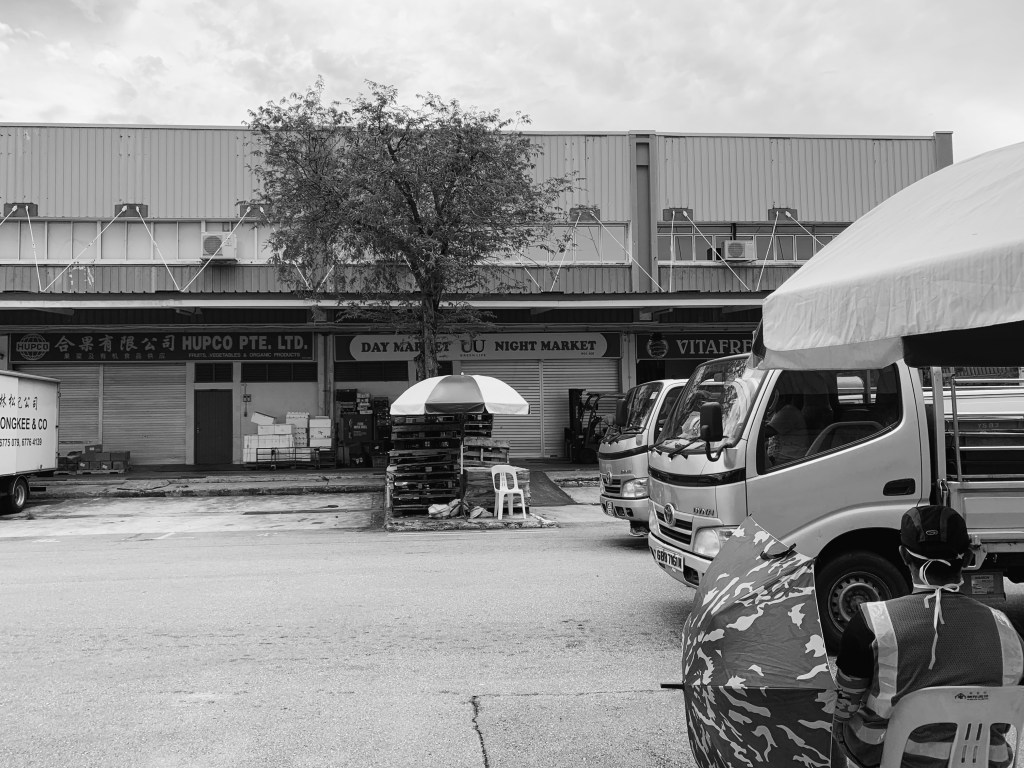
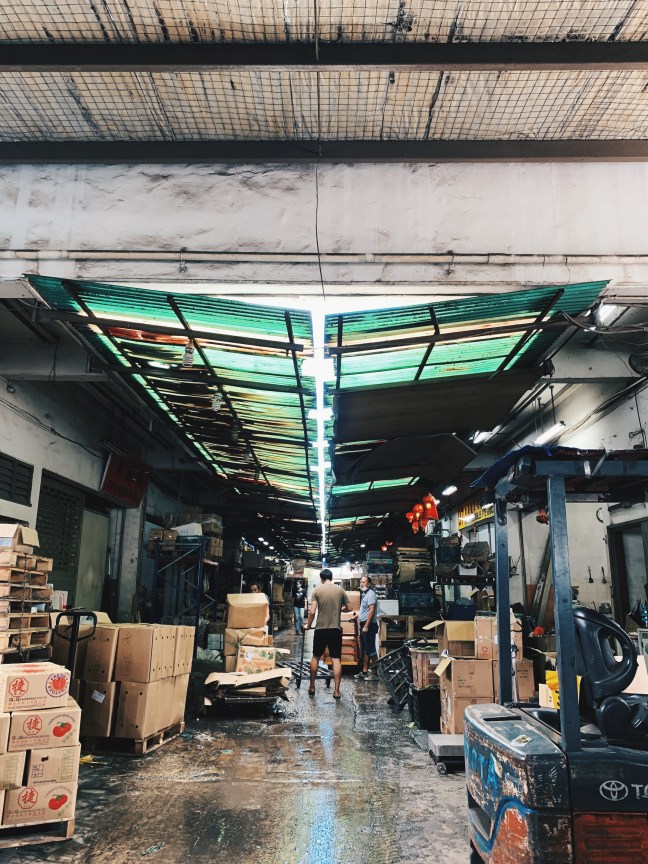
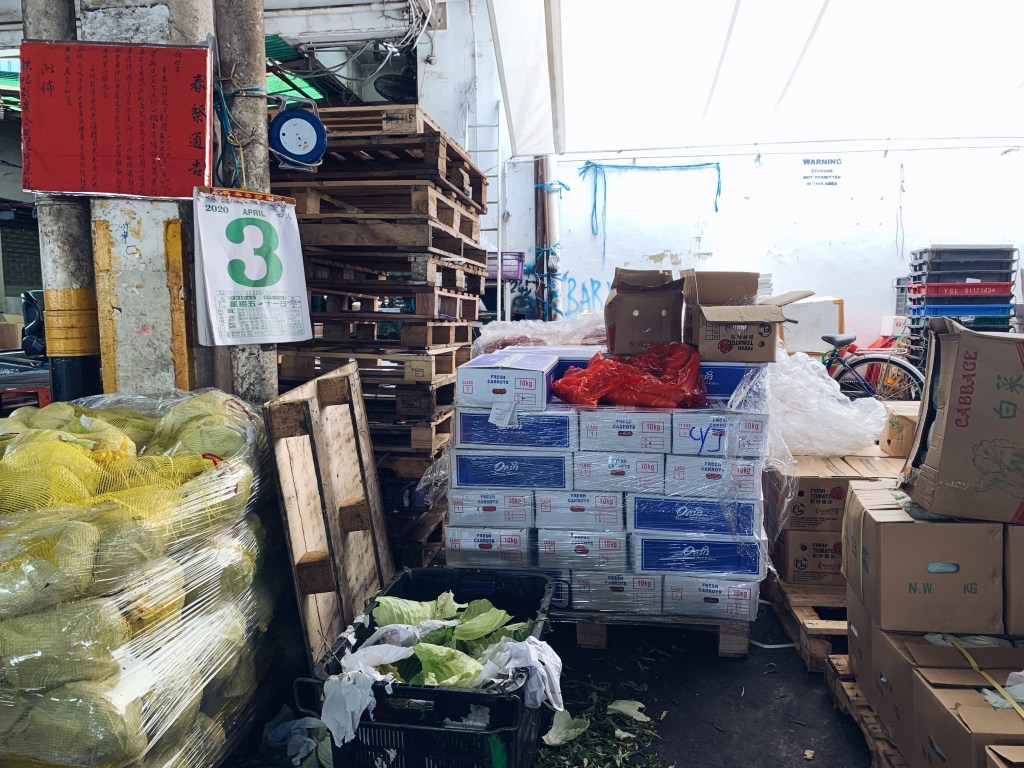
As the name suggests, the market is primarily for wholesalers. They have their cold rooms here, where they store veggies, fruits, frozen foods. Rather than a single space with cute stalls decked out with umbrellas and dainty tablecloth, or a pedestrian street lined with ugly delicious food stalls, this is a sprawling compound of cold rooms, retail stores, inventory spaces; gargantuan lorries and forklifts driven by shirtless uncles that whizz past you with perilous abandon. There’s nothing aesthetically pleasing about these sights. But this is a little universe of men and women making a living feeding the rest of the country, and it’s a pretty terrific ecosystem to be part of.
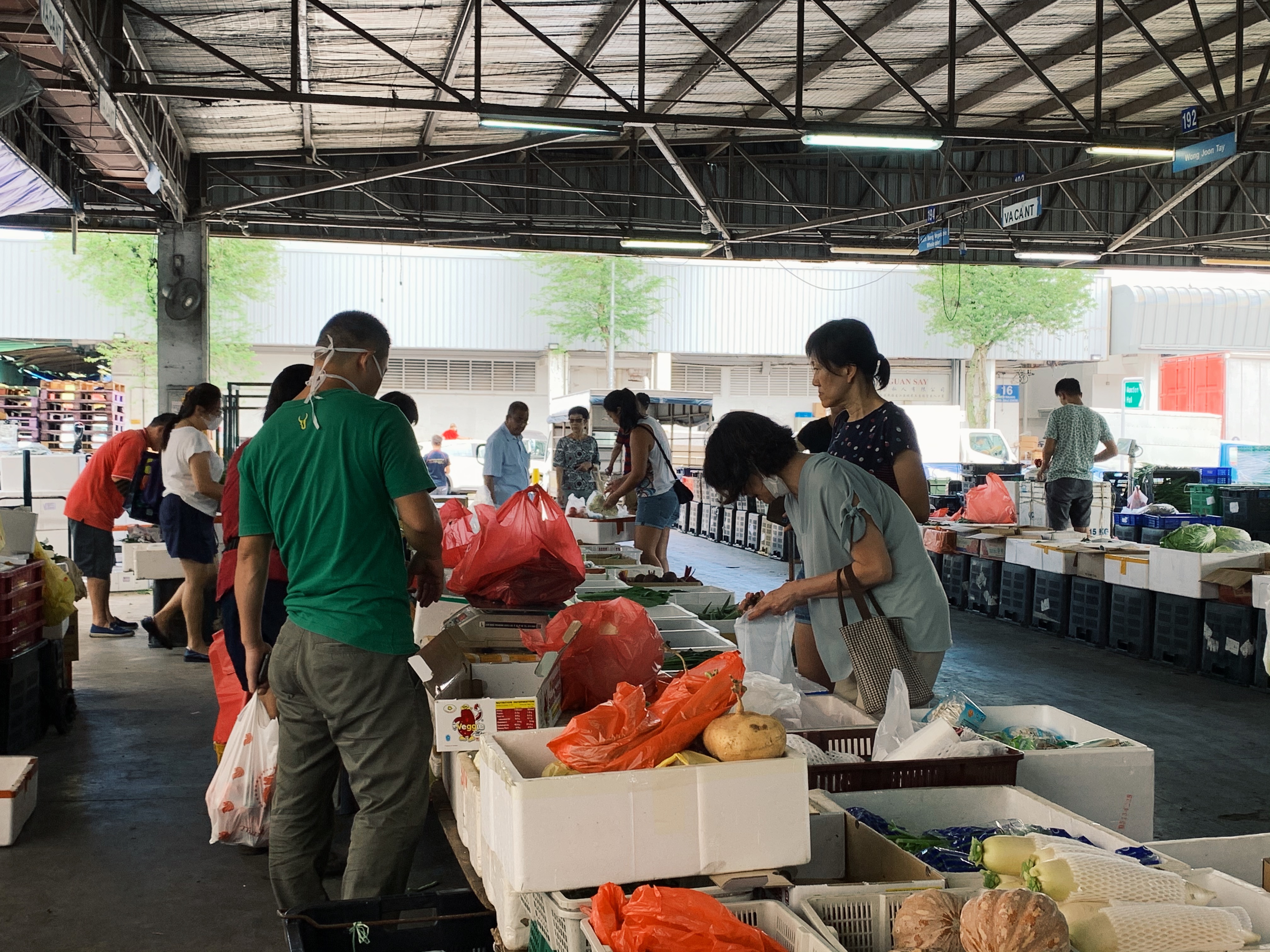
The market’s beating heart is a central, covered space the size of a football field. Wholesale stores display their goods in styrofoam boxes and baskets for retail shoppers to peruse. The prices here are low, and so there is rarely haggling; transactions are typically an efficient process of weighing the produce, proclaiming a price, and handing the produce over for the shopper to carry away. I observe ladies with their domestic helpers trailing after them picking through crates of eggplants, sweaty couples hauling an increasing load of plastic bags from store to store, and sometimes single middle-aged men purposefully striding away carrying an entire box of yams. I imagine some must be owners of restaurants or hawker stores. The stall proprietors, often shirtless pot-bellied Chinese men, watch us all as an emperor whose subjects have come to pay respects would.
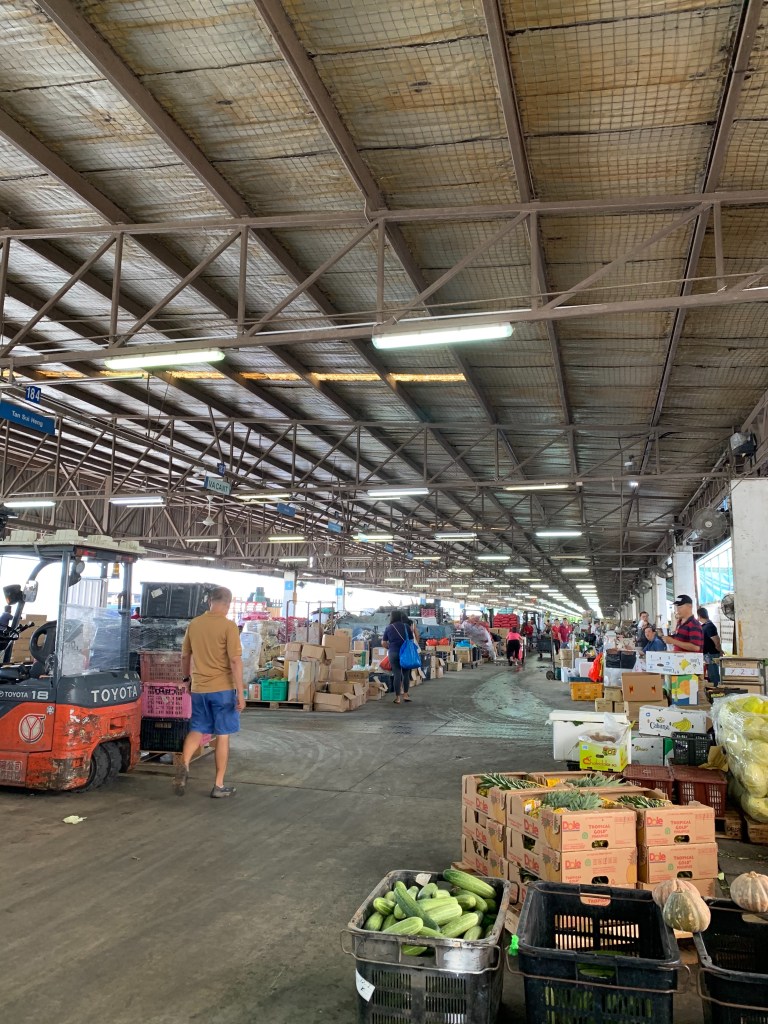
If you are a regular like my mum is, you’ll have certain preferred stalls for certain kinds of veggies. Having accompanied her (usually as her carrying mule) more than a couple of times, I know the store that sells the widest range of Western greens (rocket, arugula etc) but also has a stingy 老板 (lǎo bǎn, boss). I know the solitary old lady with stark white hair and a hunchback, who procures her wares by picking through what other big-time wholesalers have discarded. My mum buys bruised bitter gourds, wrinkly capsicums and other less-than-perfect produce from her each time we make a visit.
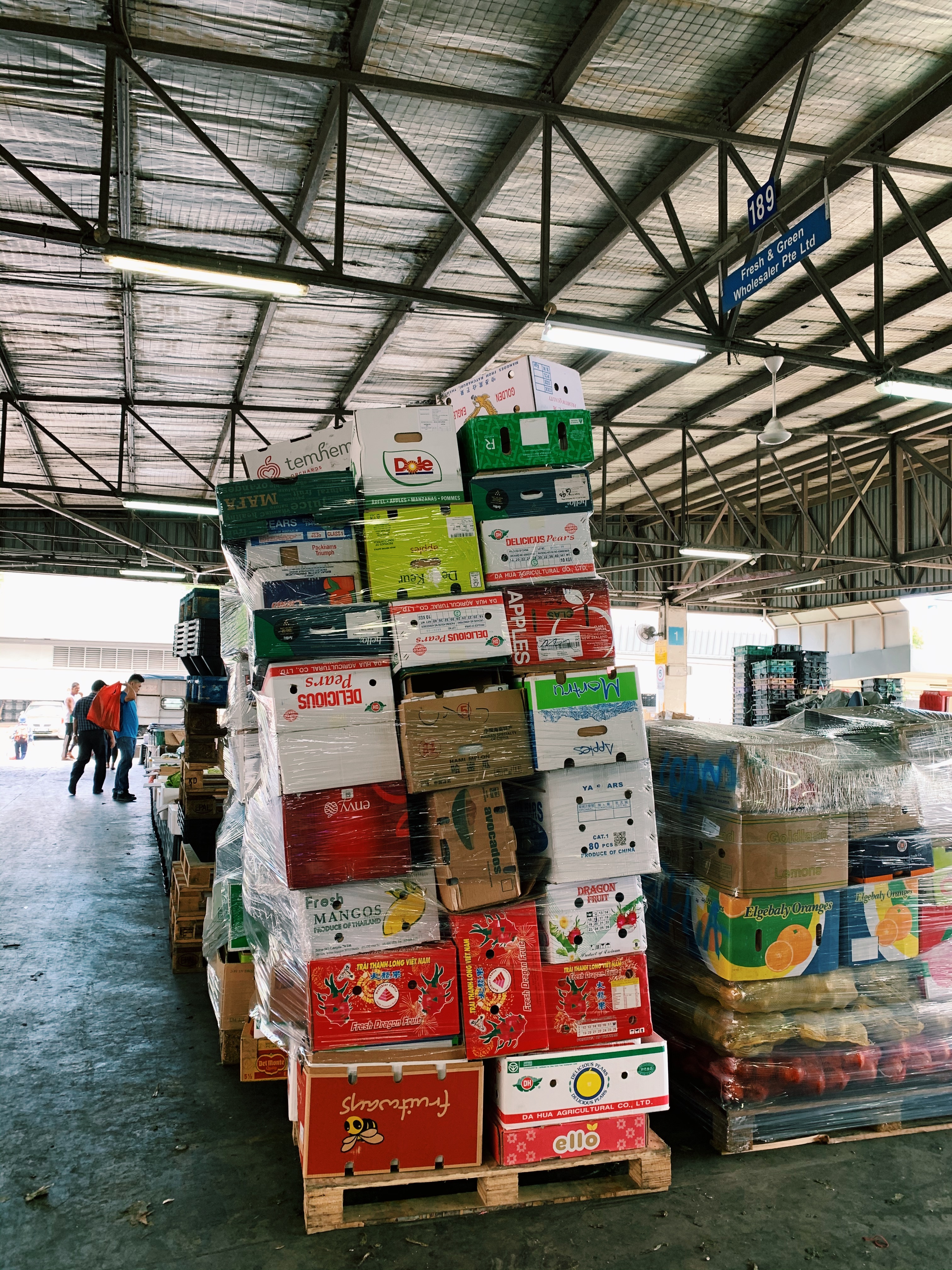
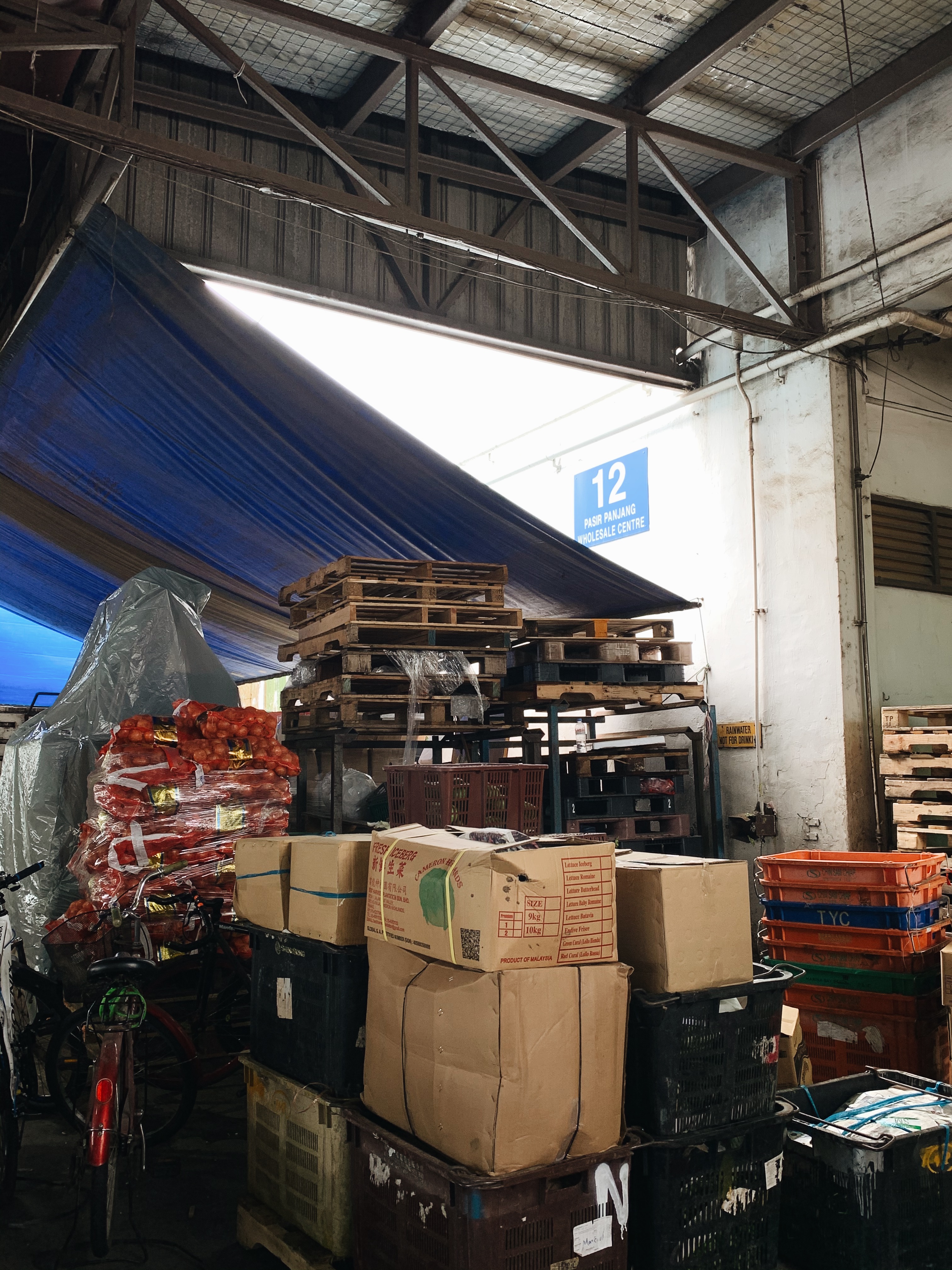
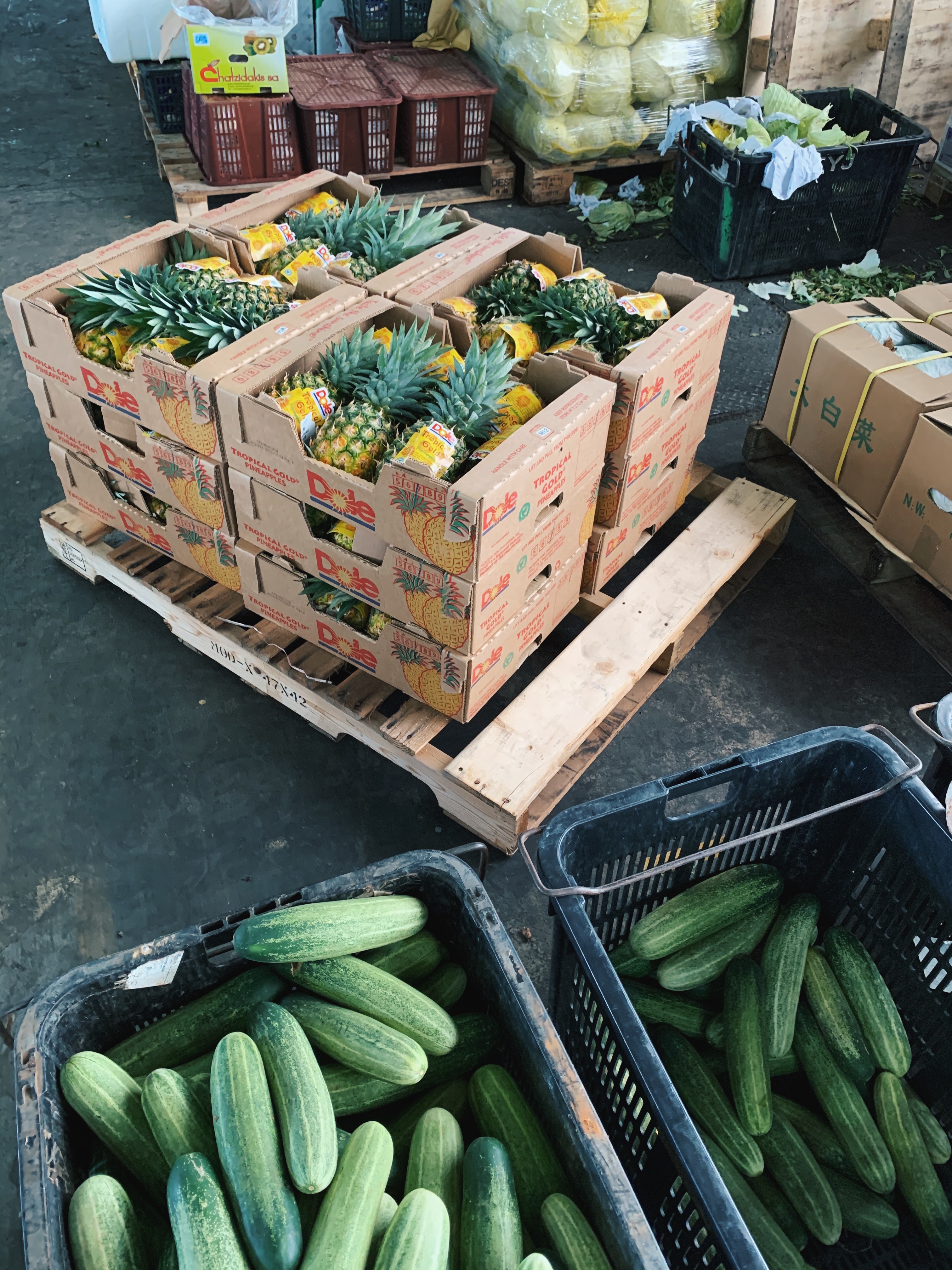
The stalls are loosely termed — they are more a hodgepodge of crates from which you can take your pickings, all arranged in a multicoloured lego-like obstacle course around where the 老板 sits with his cashier machine and weighing scale. Boxes of produce piled to heights twice my size and still shrink wrapped in plastic, fresh off the shipping container, stand as silent sentinels everywhere you look. As you bend down to pick some arrowhead roots (nga ku in Cantonese) — it makes regular appearance around Chinese New Year, but becomes a rare commodity in other months — you keep a watch out for a forklift toting a tower of Cavendish bananas.
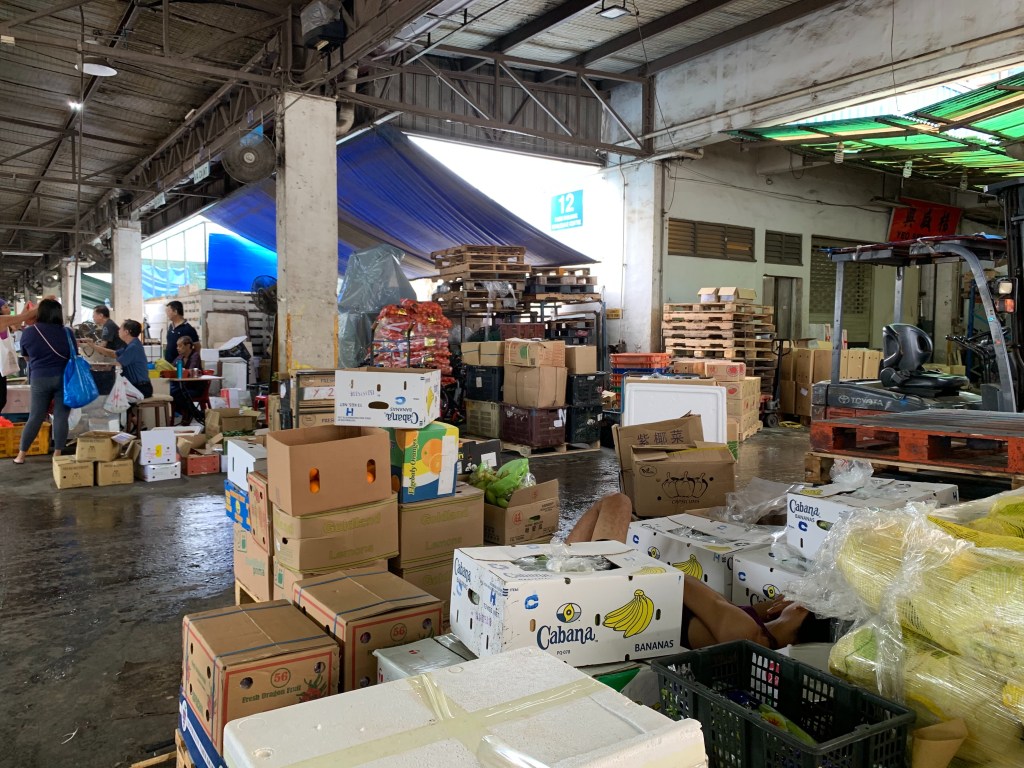
On one side of the covered atrium, dark corridors of cold rooms stretch out, smaller arteries branching out from the main blood vessel. Here, 老板 and their men will retreat for an afternoon siesta or to count money. (Sometimes, they don’t bother — it’s not an uncommon sight to see shirtless men sprawled out on makeshift beds of cardboard boxes, their ribs visible under tanned skin, dozing on the side of their stalls.) On occasion my mother will duck into these corridors to procure beansprouts, which the vendors keep refrigerated, out of the punishing heat of the day.
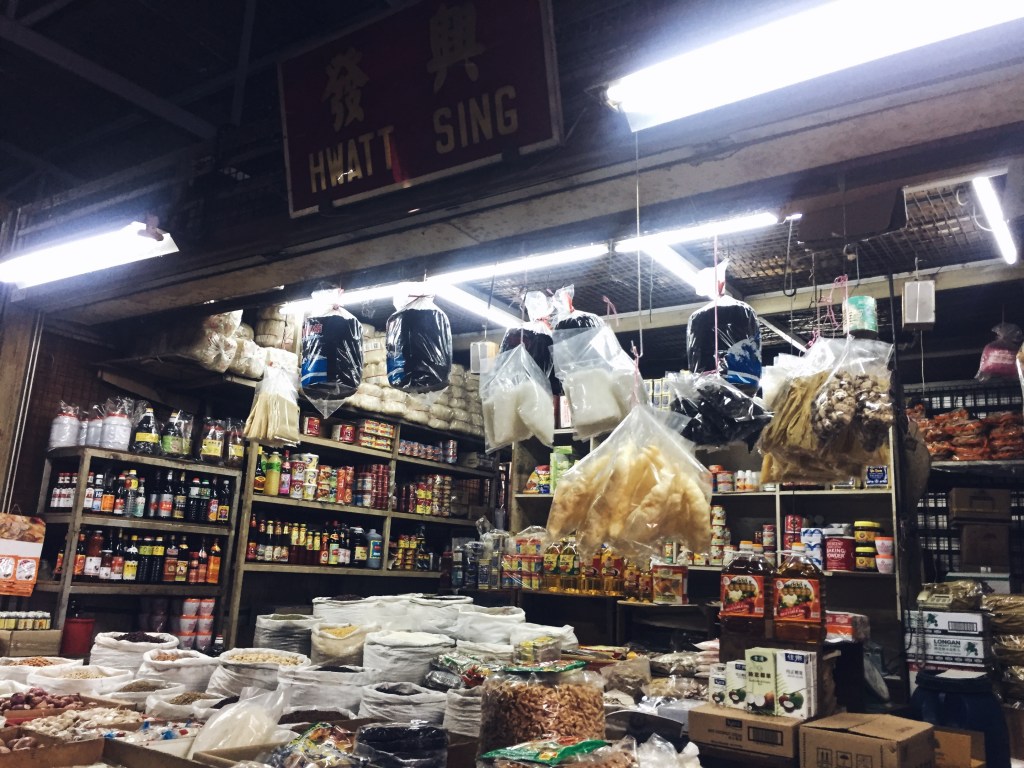
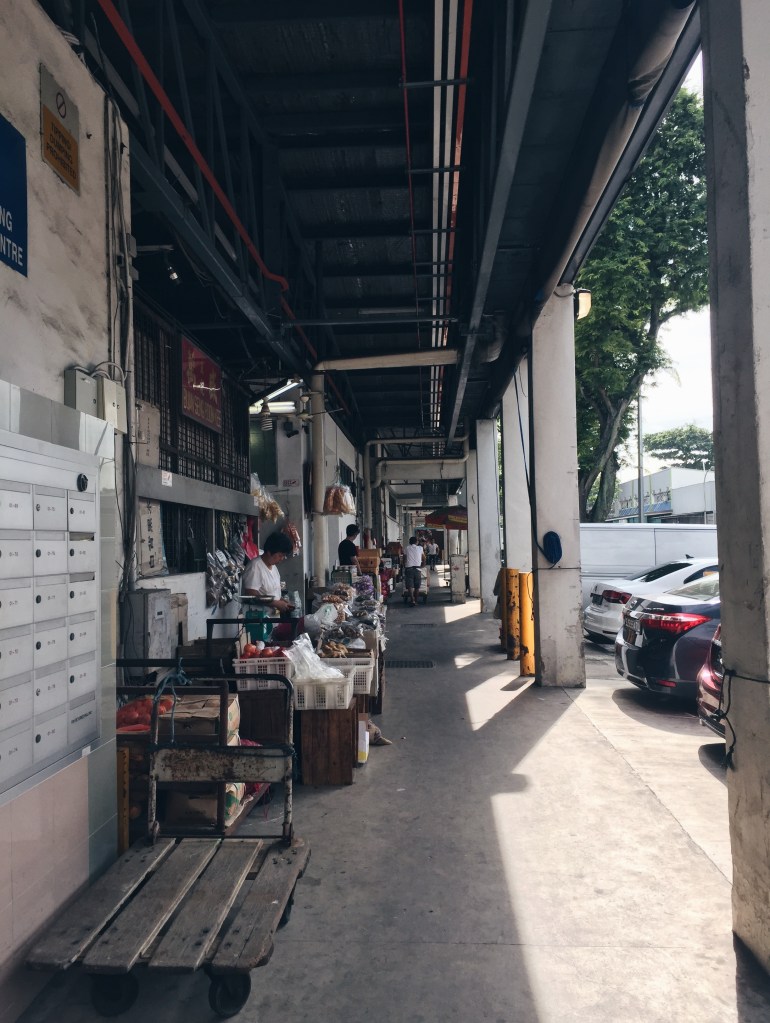
Across from the atrium is another network of corridors — the domain of the sundry wholesalers. My mum often bustles across the road to visit her regular shop after depositing armfuls of veggies in the car. She comes back with red onions, sesame seeds, dried chilli, vermicilli, dried beancurd, various kinds of dried anchovies, oyster sauce, sweet Thai chilli sauce, dried mung beans, Tetrapaks of coconut milk, gula melaka (a fragrant Malaysian palm sugar), belacan (pungent shrimp paste, essential for making the perennial addition to any meal: sambal belacan), ….. and so on.
If we were in a hurry, she’d press some money in my hand and rattle off a list of items to purchase at the sundry store. When I reached the store and regurgitated the list to the kindly shopkeeper, I’d inevitably run into some kind of quandary my unseasoned marketer self was unequipped to handle. Did she ask for 250ml of coconut milk, or 500ml…? Did she want this brand of fish sauce, or that one? When she said beancurd skin, did she want the one for soup, or the one for frying? At this point, Uncle would reveal his familiarity with my household’s grocery habits, selecting the correct brand or weighing out the right amount or simply putting the correct item together with the rest of what I was tasked to purchase, a small knowing smile creasing his lined face. I’d sheepishly thank him, hand over the money and scamper off (only to return again, nine times out of ten, realising that I had still failed to follow my mother’s instructions in some way).
A short drive and right turn away, past the fruit stores (which my mother rarely patronises; she has another favoured store for fruits…but that’s a story for another time), we sometimes stop by the frozen meat store. An interesting factoid I learnt when I was a little older was that the store we regularly patronised made the bulk of its trade supplying frozen foods to ships for their long voyage. When we did have to buy meat, I remember reciting my mother’s order after her in the car, trying to memorise how to articulate my order to the shopkeeper in Cantonese (yat kei lor qit gor jü yoke, mm goi — 1kg of sliced pork, please). I became friends with the lovely elderly uncle who is the store’s frontman. I’d stand awkwardly and smile and nod and attempt to piece together an answer to his questions with my awful Cantonese, as we waited for the younger shop assistant to don his heavy winter gear to retrieve the pork from the freezer room. I remember the uncle being away for several weeks when he had heart surgery. I worried about him as if he were my real uncle.
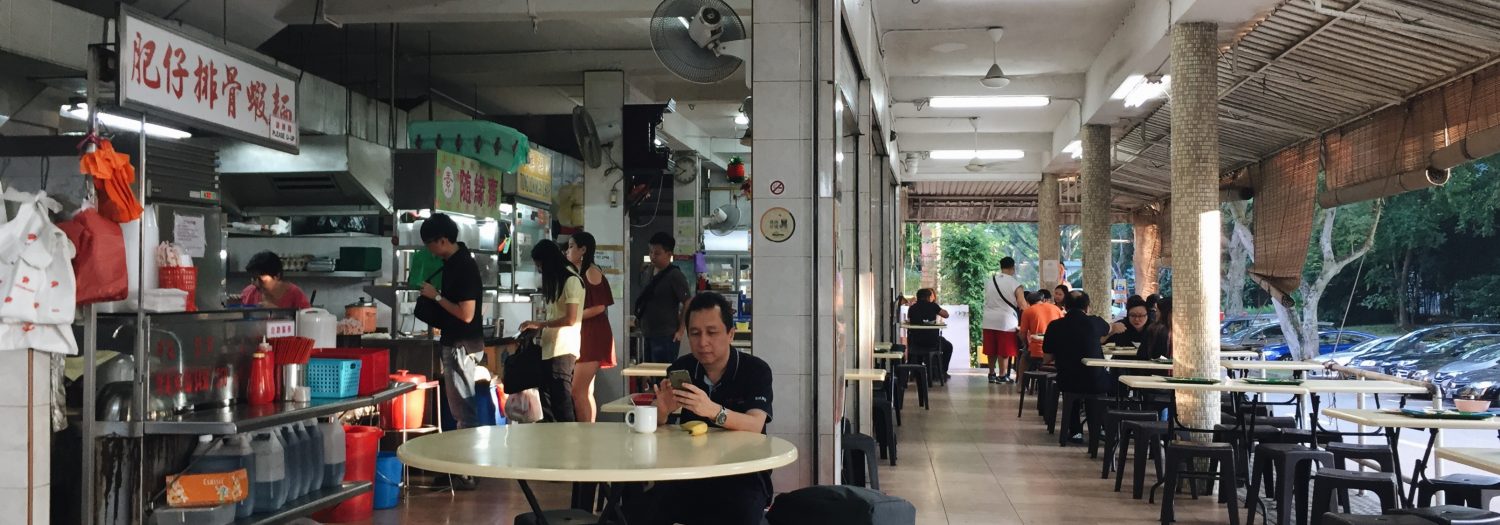
If my entire blog were to have a bildungsroman, my memories of this market would be it. As a young girl, I remember hearing the news of a gruesome murder that took place in Pasir Panjang Wholesale Market and sticking extra close to my mother every time we visited after school (which, needless to say, was often). It is odd that I have not revisited it for close to a year now. On my return visits in the past few years, I began to relish its unvarnished chaos; the discarded vegetables strewn all over the floor, the Budai-like (by which I mean their physique, not their demeanour) shirtless shopkeepers, the kopitiam (open-air food court) frequented by crows. I have been visiting this market for more than half my life and perhaps the only sign of gentrification is the opening of an organic food store, its shelves replete with buckwheat and cacao nibs and riceberry crackers and what have you. Except its clientele is not of the lululemon-wearing, designer-bag carrying variety; it appears to be more of athletic-looking 60-something aunties and uncles in trekking sandals carrying NTUC-issued reusable shopping bags.
The market’s gates remain closed to the public, although my mother has often thought about sneaking in. It’s downright painful that the emporium of cheap, fresh food has been humming along all these months without her. For now, we get our sustenance from Sheng Siong Supermarket and NTUC Fairprice, like the rest of Singapore. But nothing quite replaces the wholesale market: visiting familiar shopkeepers, sharp Canto banter and occasional wrangling over price, being able to ask shopkeepers to throw in a handful of fresh herbs for free.
We’ll return. Soon. We have to.
 Market Survey
The read feels like an actual walking tour in my head. Honestly, even if I didn’t read every single text, the flow just leads me on our “tour”.
I enjoyed it, so much so I can’t wait to visit again after decades of hiatus away.
Thank u
LikeLiked by 1 person
Thank you! That is so kind 🙂 Glad you enjoyed it!
LikeLike