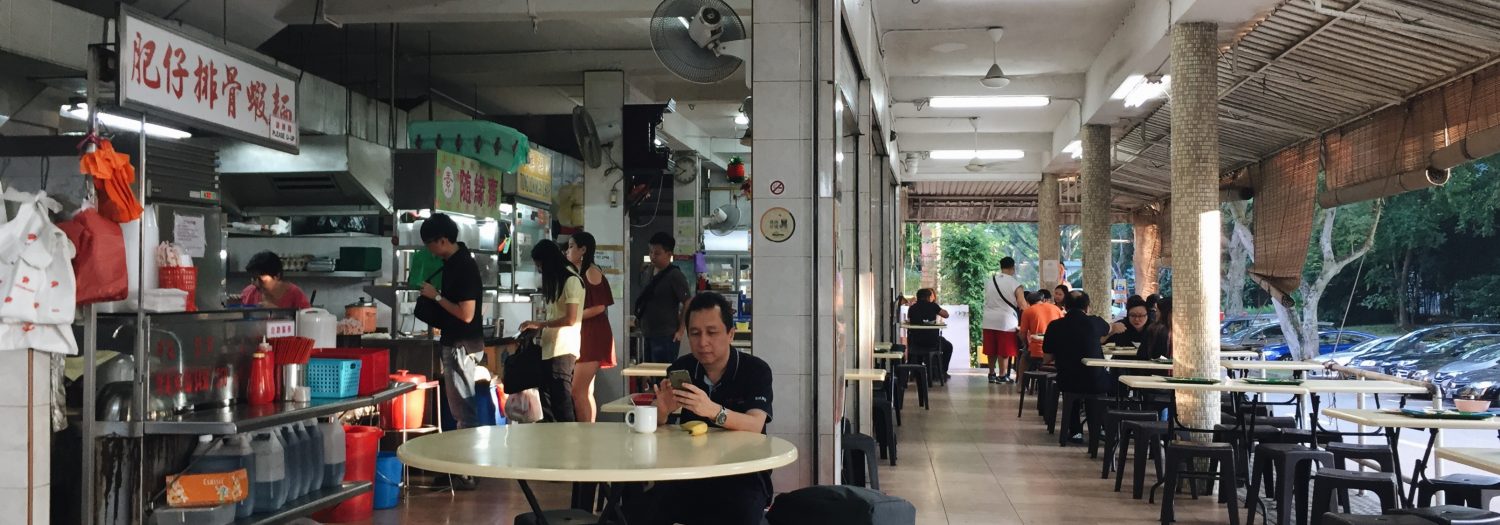
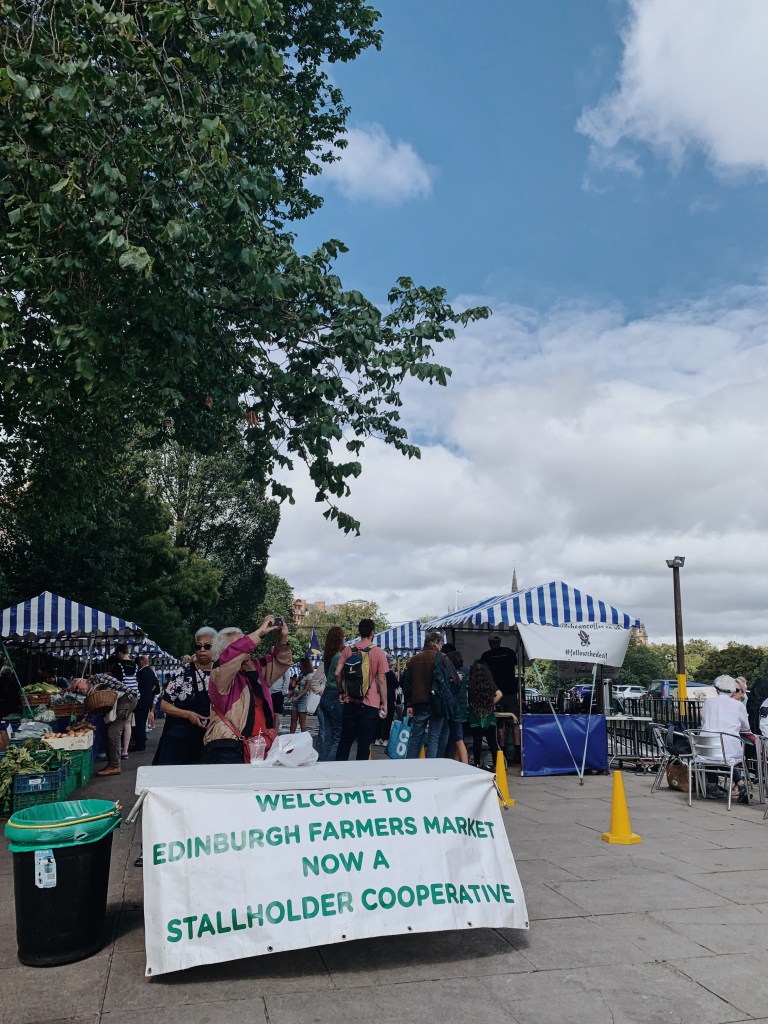
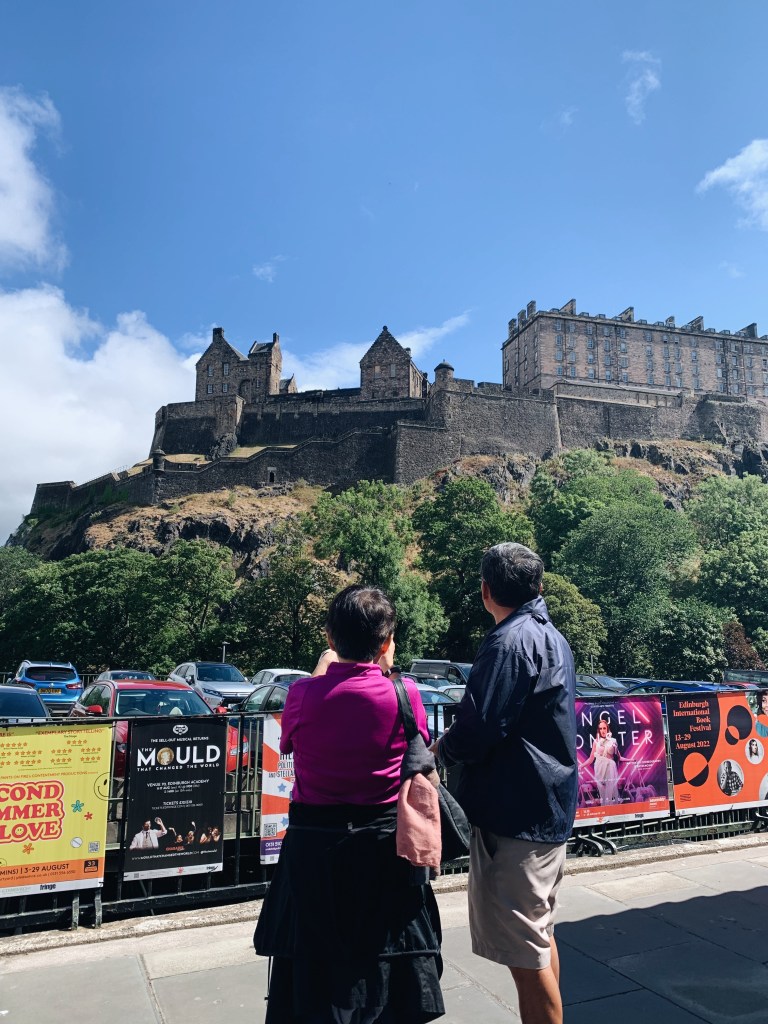
I’d like to think I have a bit of a journalistic streak. Ever since I started this blog, I enter every market with my nose to the ground, sniffing out a story like a hound dog. I knew straight away from Edinburgh’s folksy vibe that the city would have a market or two. But I was looking for narrative – a market as microcosm of a country’s history, economy, baggage – and, as I approached the cheery welcome stall marking the entrance to the Edinburgh Farmers’ Market, the touristic Edinburgh Castle looming in the background, I was quite honestly doubtful that I would find it.
Perhaps it is presumptuous of me to think this way, but I have been to enough European markets to have built up a substantial immunity to their charm. In Berlin, I peered at stalls lined up alongside a canal with critical eyes, looking for a story, and found none. In Amsterdam, I ate poffertjes and stroopwafels with abandon but did not find a tale that struck me. I know this is more of a failing on my part as a traveler, and perhaps somewhat inadvertent by virtue of my position as a foreigner, but isn’t that precisely what journalists are supposed to do – immerse themselves in an alien environment and find its pulse?
And so I steel my resolve and grip my iPhone tighter, determining that I would absorb as much of Edinburgh through its farmers’ market as I was able to.
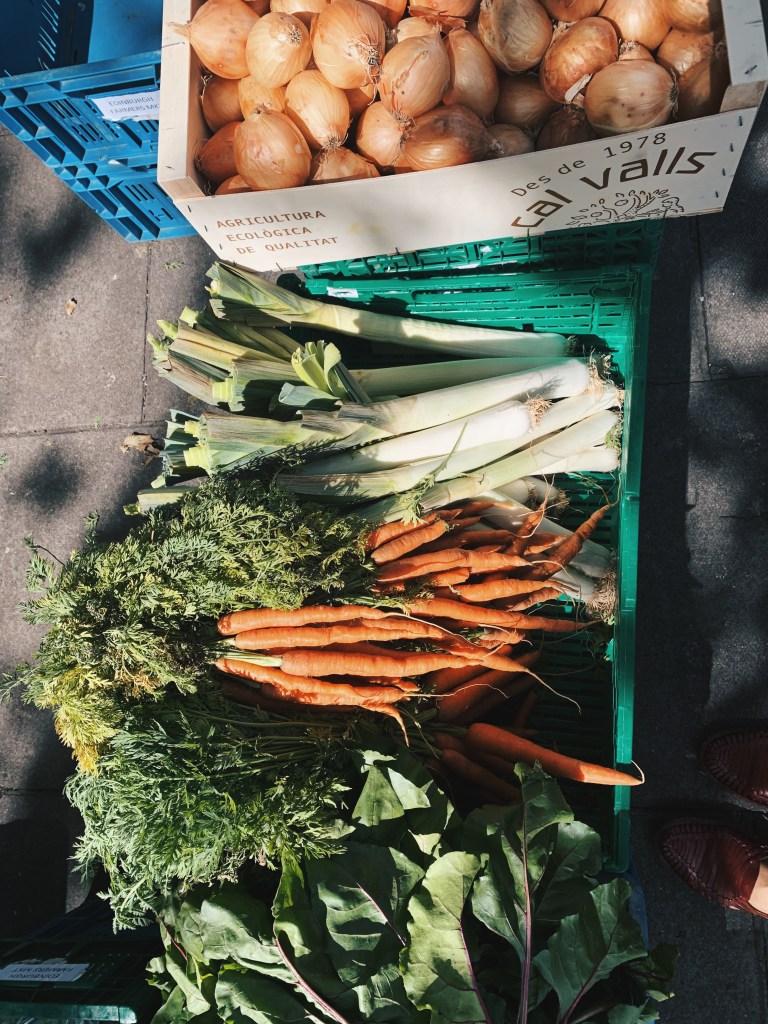
The market is a cheery stretch of stalls spanning several hundred metres, spread out on the rooftop of a multi-storey carpark at the foot of the Edinburgh Castle. Its presence is marked by a sign proudly proclaiming its status as a stallholder cooperative – a jaunty representation of Great Britain’s robust cooperative movement. Its offerings are what you would expect of a good farmers’ market: farm-fresh fruit and veggies, cheeses, and juices, products more familiar to urban folk like craft beer, coffee, and various funky condiments (I got a pretty wicked hot sauce to bring home for friends who have a penchant for pain), as well as more uniquely Scottish fare like wild local game and meat pies.
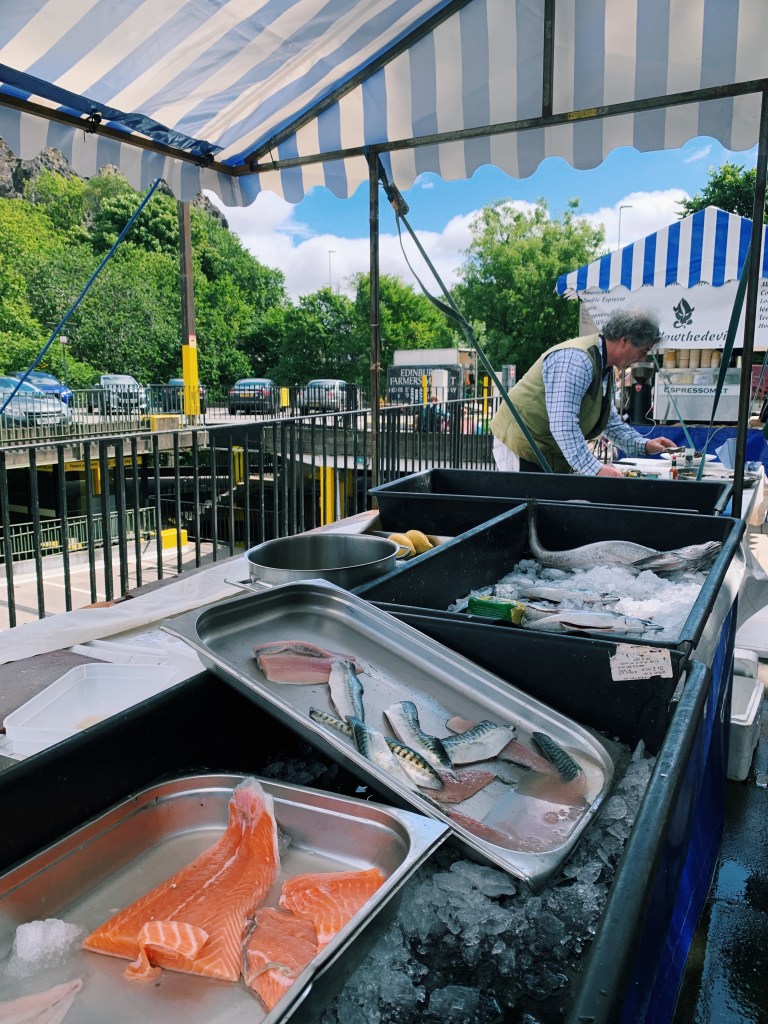
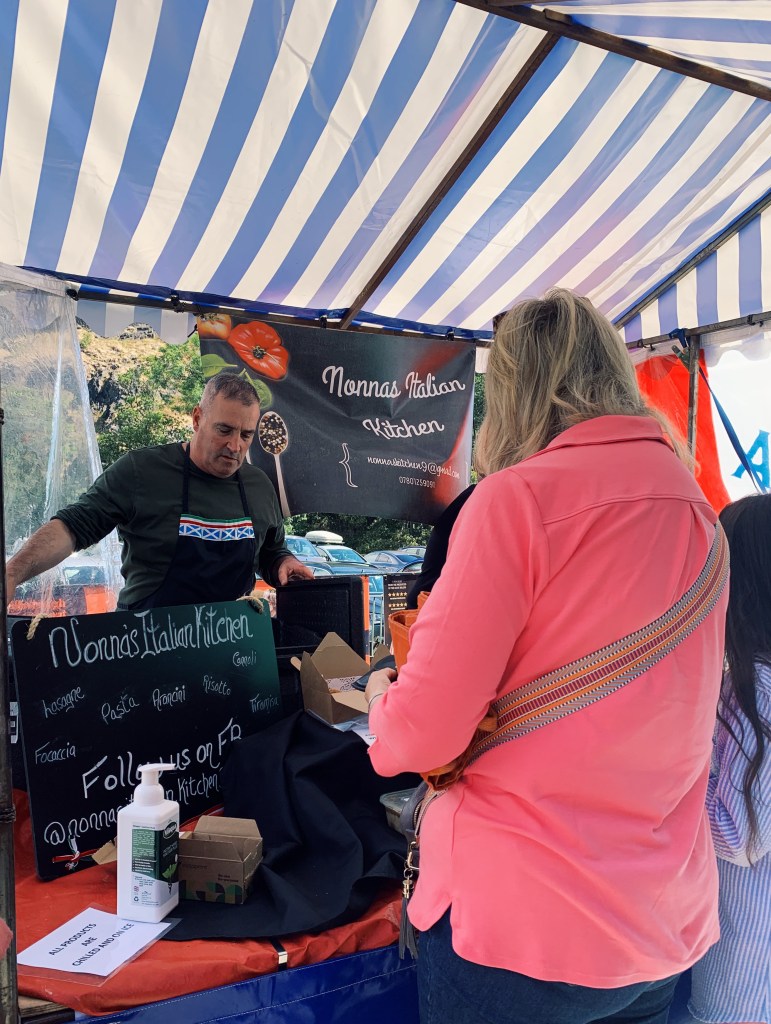
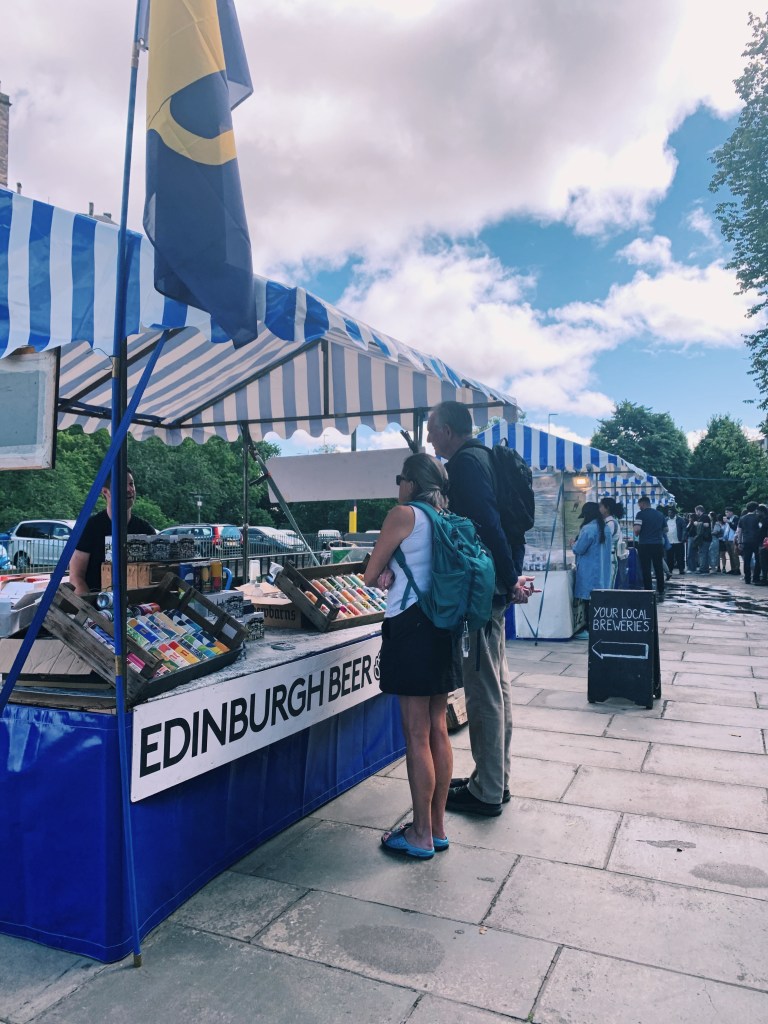
As I walk through the market taking photos, I continue to rack my brain for ways to tailor the images to illustrate a story. I peer over other tourists’ shoulders as they speak to enthusiastic farmers, knowing I am no more capable in accessing their stories than my fellow sojourners. The sights and sounds around me and my own meditations don’t seem to come together to weave its own narrative, and I ponder hard to figure out why. This solitary rumination is disrupted by my mother, yapping excitedly about finding a Scottish meat pie. (My dad is a big pie man.) Surrendering my personal agenda, I allow myself to be pulled along for the quest.
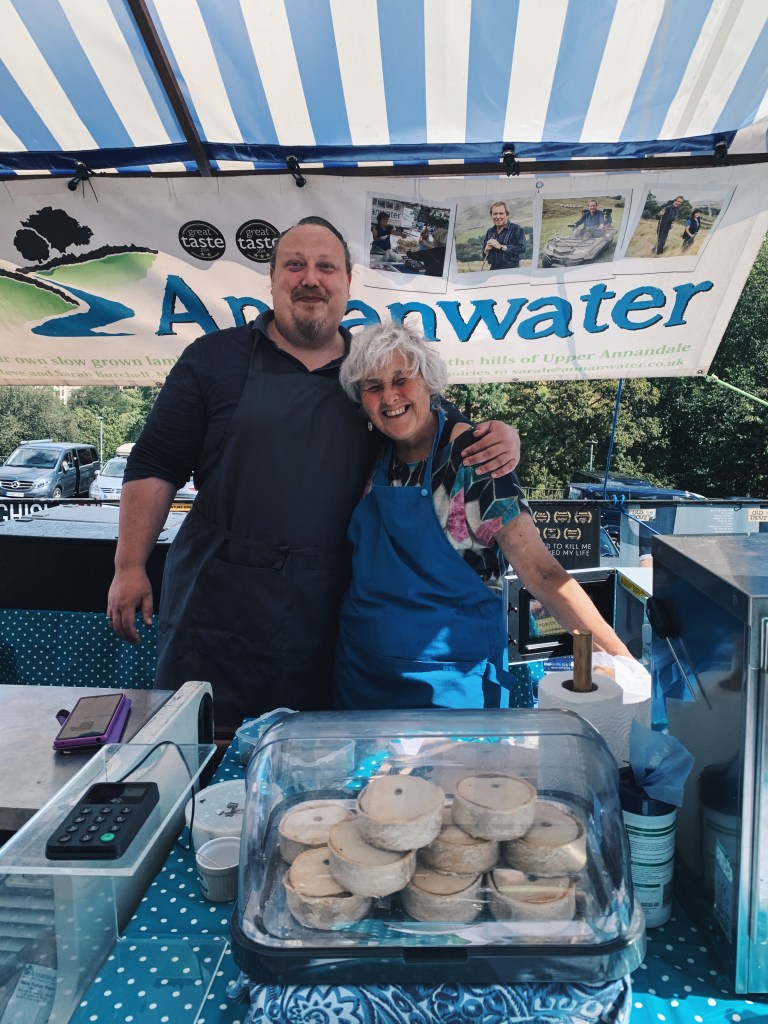
At the second stall we visit, we speak to Sarah and Joseph Burchell, a mother-and-son duo who feed us a delicious Scotch pie. Sarah runs a sheep farm called Annanwater with her husband, Steve. She is warm and effusive about her farm, and her son generously shares with us his knowledge. A lamb is a sheep aged a year or less, a hogget is a sheep aged between one and two years old, and mutton refers to any sheep older than two years. The pie is filled with a mix of hogget and mutton, which is what makes it so succulent. We learn that Joseph teaches and is a researcher at Edinburgh University, and helps his parents at farmers’ markets when he can. I quietly marvel at the diversity of Joseph’s life: shaped by a deeply embodied vocation, inhabiting a highly academic profession and institution, and spending his weekends in an intensely relational occupation. My mother buys four pies.
I wanted so badly for this little expedition to be a nuanced anthropological immersion into the complexities, the tensions, the struggles and joys of being in this city. What I realise instead is that there were thirty-something distinct stories, each traversing generations, that I would not simply be able to access by a brief conversation about how their cheese is made. It would, in fact, be arrogant to think it possible to understand a whole city – let alone country – by the hum of one of its markets. And yet each visit is worthwhile – not least because of the wholesome, delectable treats one can imbibe – but also because, every once in a while, you meet folks as lovely as the Burchells, who will welcome you into their lives, and in so doing, offer a prismatic glimpse into one reality of a people. It is a privilege not to be taken for granted.
 Market Survey