Before my bumbling work friends and I set off for a weekend trip to Bangalore to attend our friend’s wedding, we were given strict instructions by worried seniors and bosses: (1) do not leave the hotel, (2) do not go anywhere alone. I think of rules as advisories. Bangalore is a collision of relatively new affluence in India’s self-proclaimed Silicon Valley and rich ancient and modern history — a city new to me, and its vibrance was ripe for the taking. I couldn’t help myself. On a visit to a staid air-conditioned shopping mall, I wheedled my way with our group of risk-averse Singaporean travellers, repeating the question, “Is anyone feeling…adventurous?” I knew, between a jam-packed itinerary of dances, banquets and dressing up, I had to find the messiest, most colourful market this throbbing city had to offer.
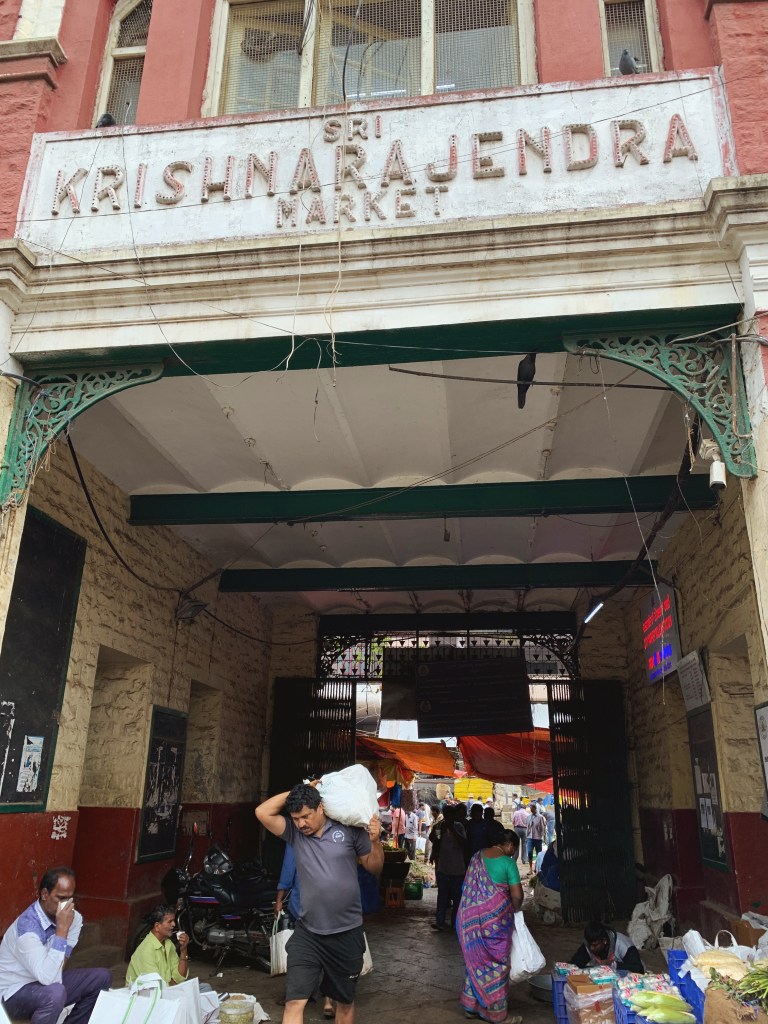
I make cross-references across several internet listicles and triangulate my location on Google Maps before deciding on the target location: KR Market. It’s short for Krishnarajendra, named for the 24th Maharaja of Mysore, who ruled in British India in 1902 – 1940. His gleaming legacy features all kinds of progressive reforms and state projects, from the abolishment of child marriage, the development of a local textile industry, to Asia’s first hydroelectric dam. He played eight instruments and founded two universities. I learn from the internet that KR Market is the largest flower market in Asia and the oldest market in Bangalore (it turned 100 in 2021). It’s going to be quite a sight, but it’s a piece of history, too.
To my absolute glee, I manage to find a fellow intrepid explorer. In the small hours of the next morning, we send each other text messages assuring the other that we are awake, last night’s 2am sangeet dancing still pumping in our blood. We convene, bleary-eyed, in the hotel lobby, pile into the waiting Uber, and silently watch the waking city from amidst the thickening traffic.
The original market building, a red-brick heritage structure, dates back to the 1800s. The market itself literally spills onto the street: an endless procession of two-legged people, two-wheeled vehicles and four-legged animals filter into its main thoroughfare from the road, such that one can’t quite tell where the road ends and the market begins. We pay our increasingly harrowed Uber driver and hop out from a vehicular traffic jam, into a human one.
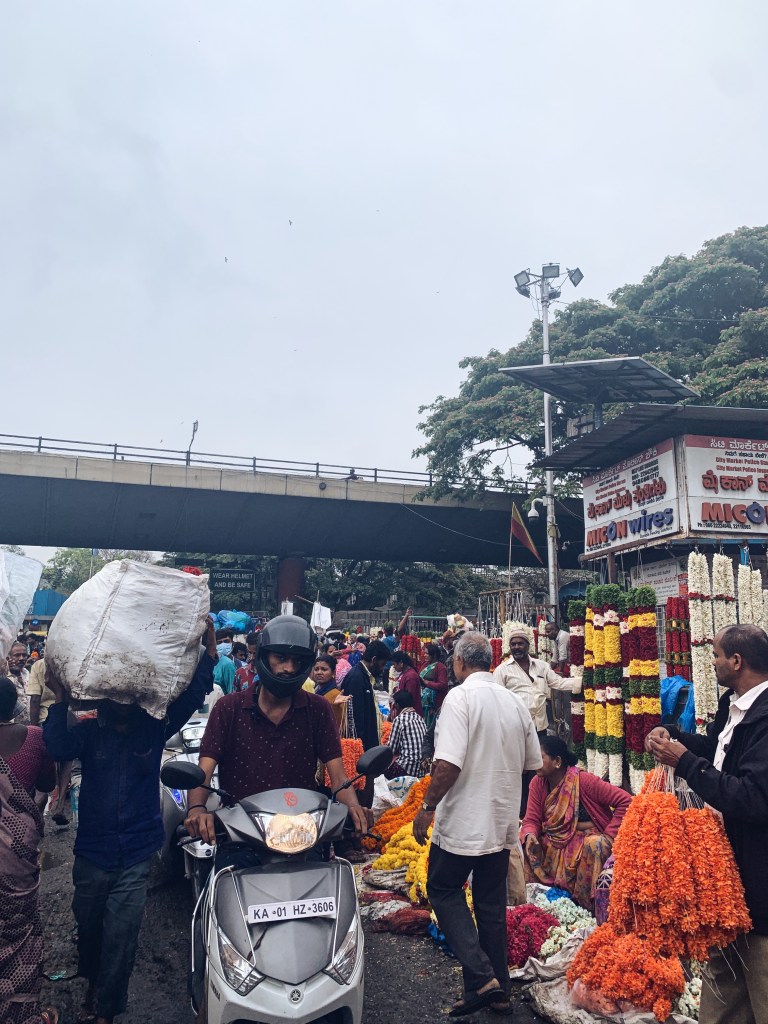
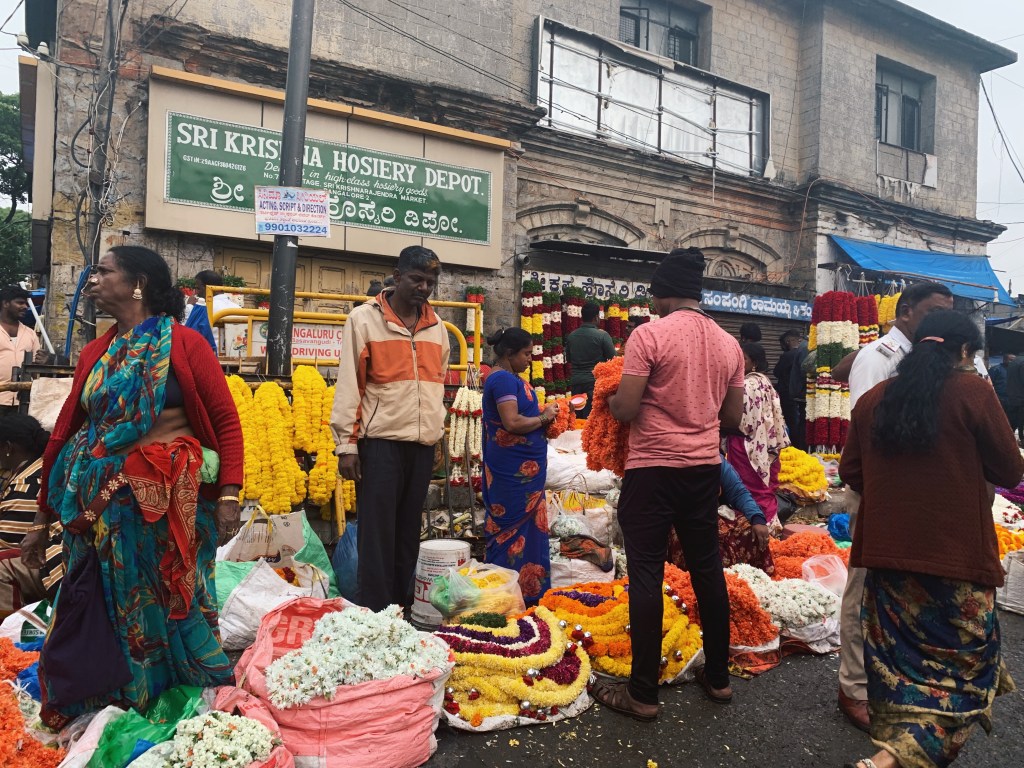
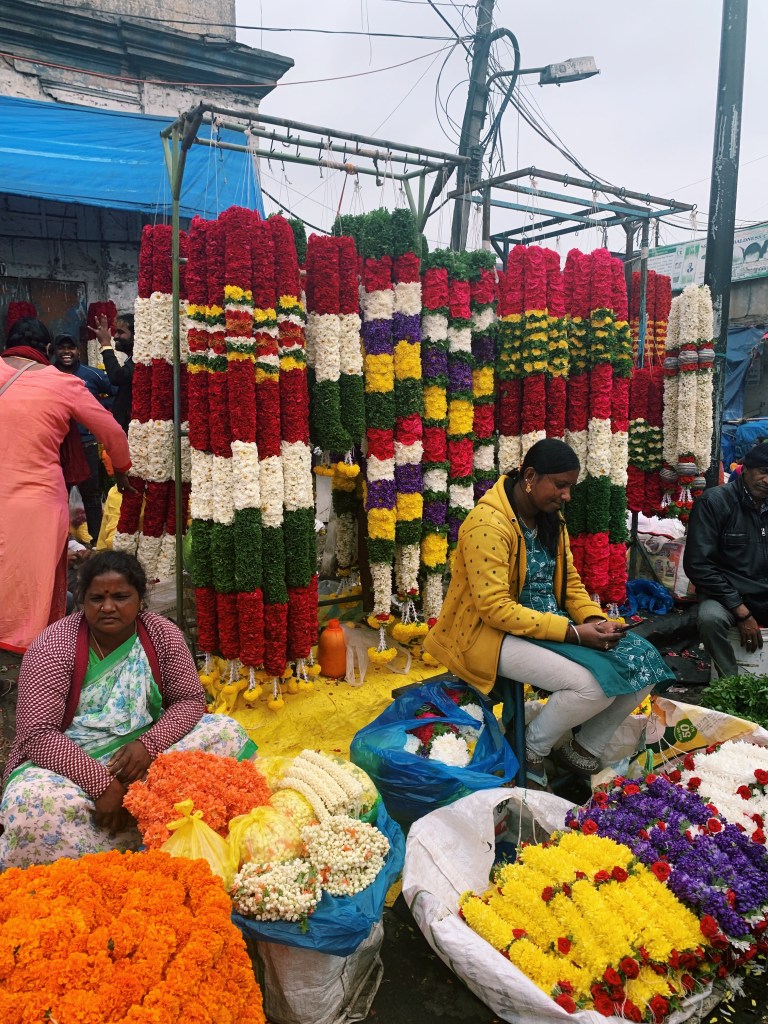
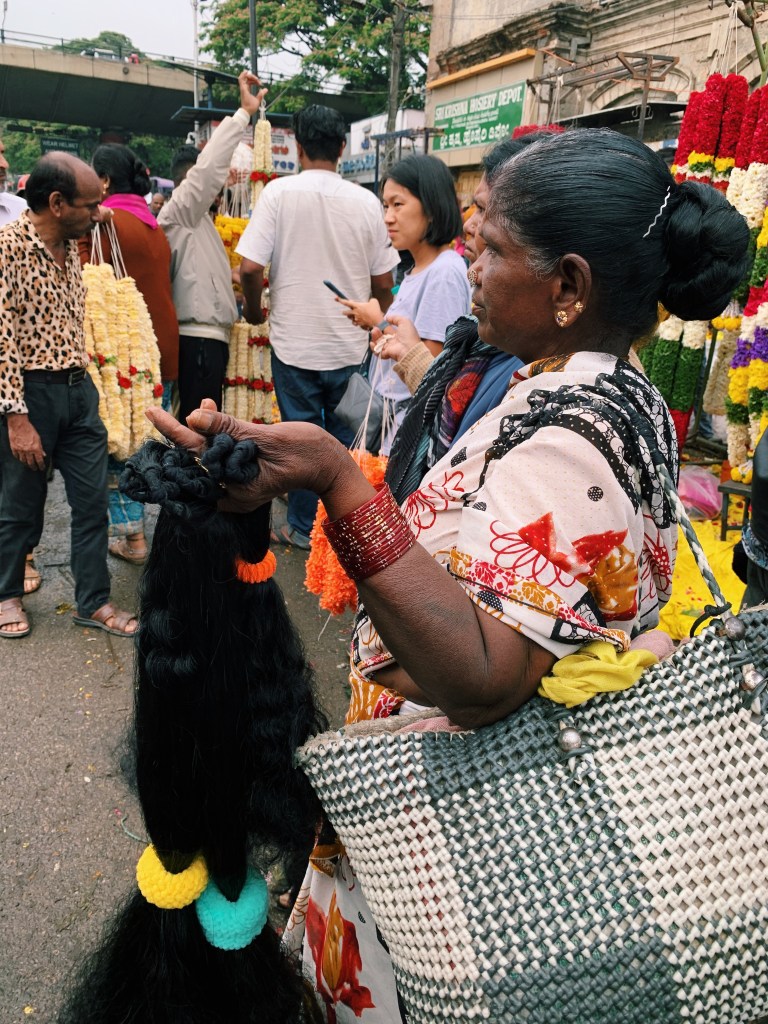
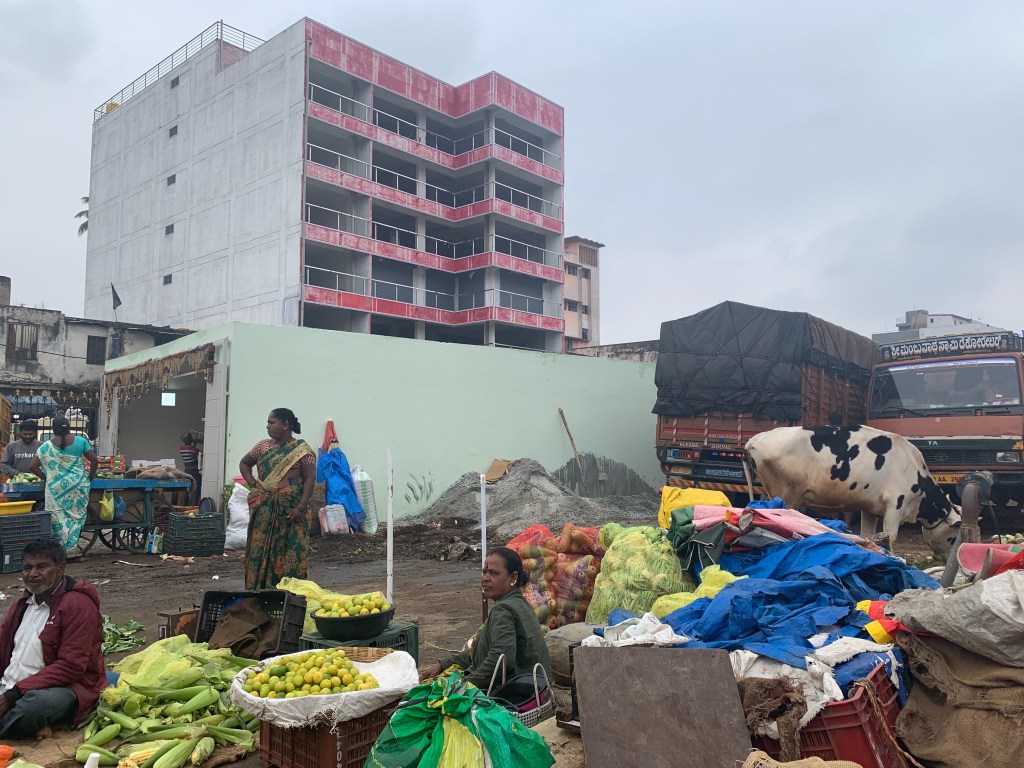
I read online that from 4am, KR Market grinds to life. By the time we arrive, it is a veritable chaos. The muddy, well-trodden thoroughfare is a highway of floral commerce. On either side, sari-clad women sit on their haunches in front of piles of colour. Some weave through the crowds toting chains of flowers strung together. One woman saunters past me – she is inexplicably peddling bunches of lustrous, thick human hair. Enormous canvas bags balanced precariously on men’s heads are narrowly missed by the helmet of a motorcycle rider inching his way through the crowd.
Every market has a life of its own — a rhythm only known to its inhabitants. Like an unexpectedly powerful undercurrent, KR’s is irresistible. We get pulled into the market’s undertow and allow its movement to transport us to whatever it wants us to see.
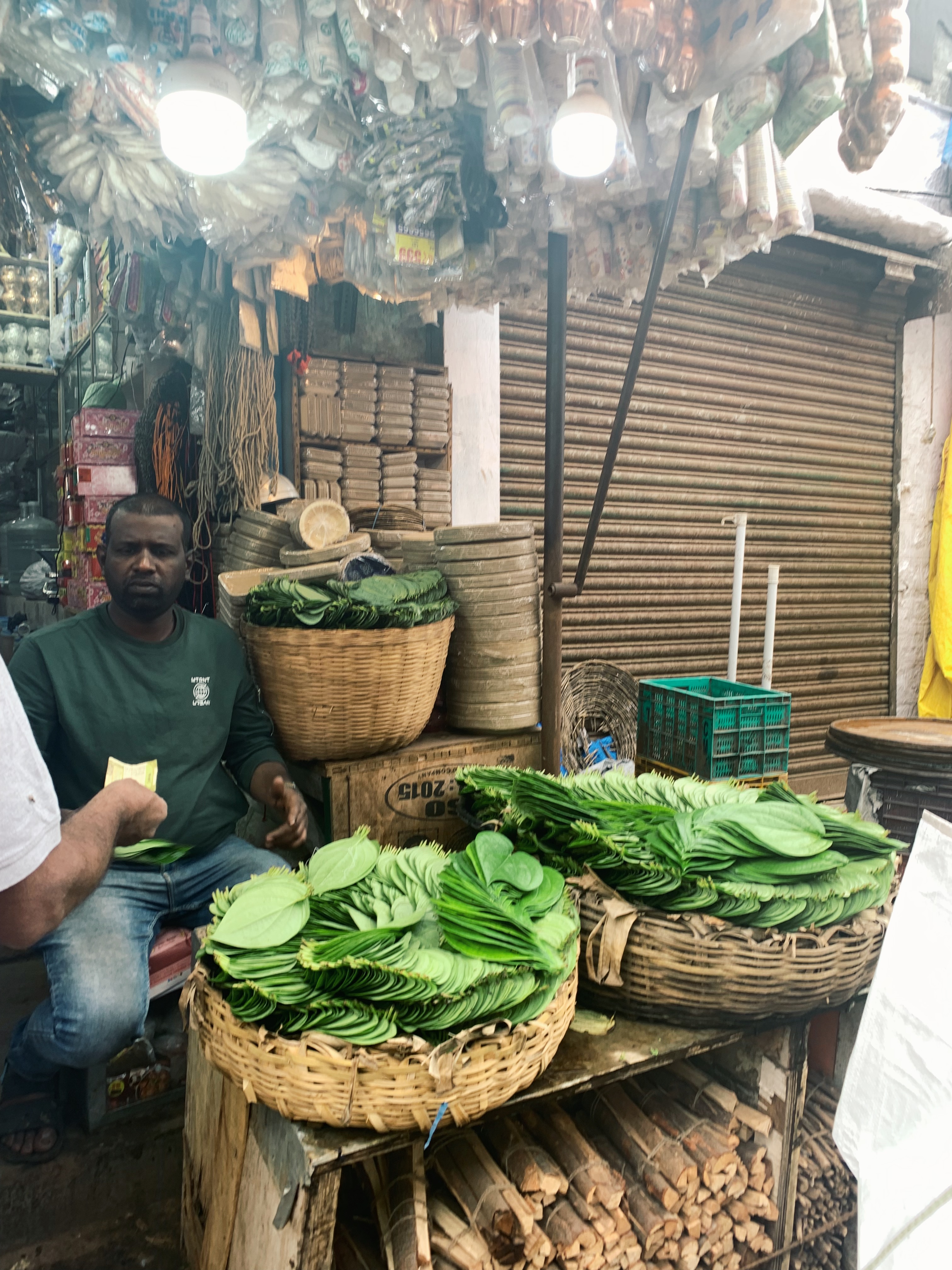
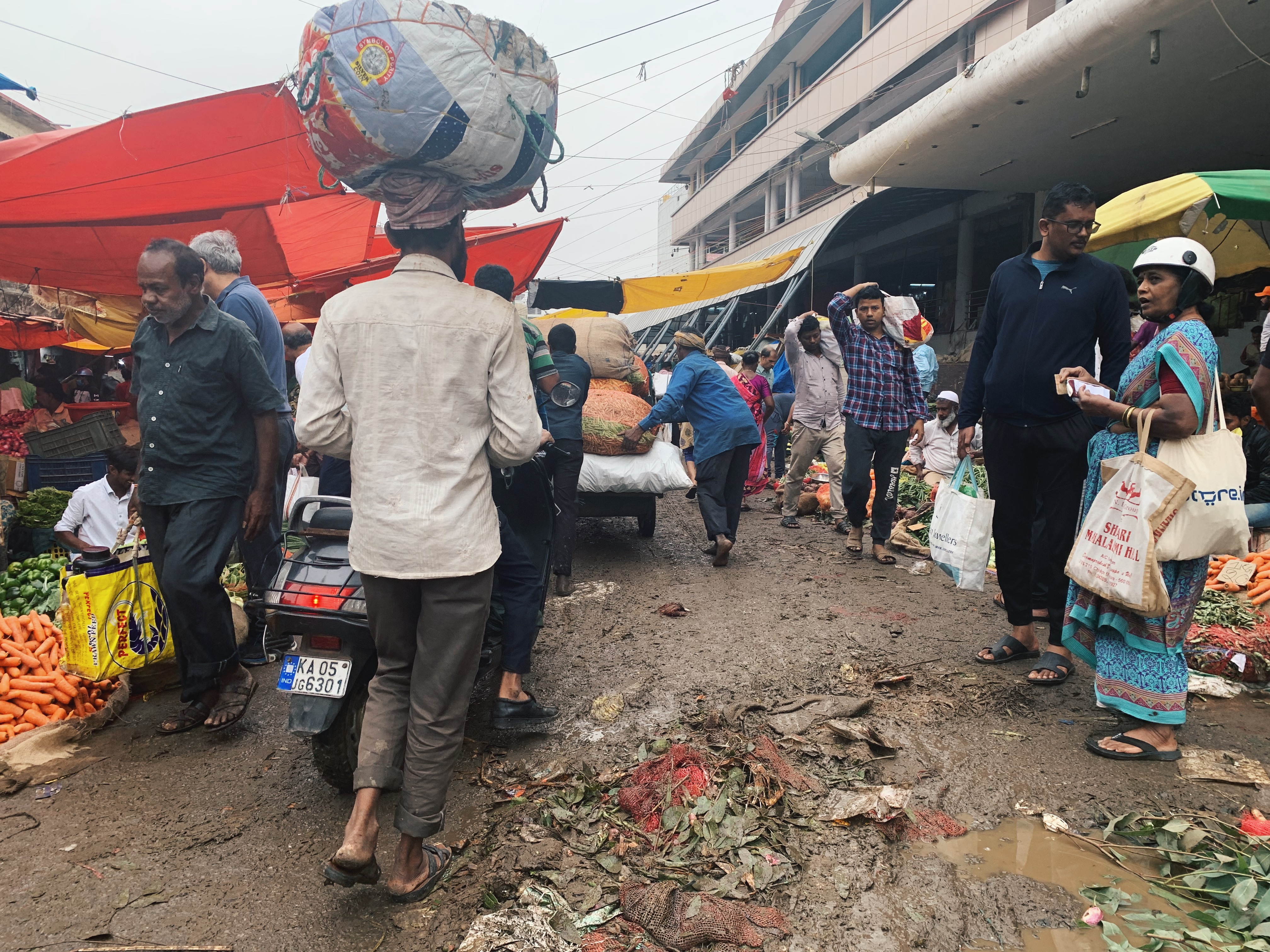
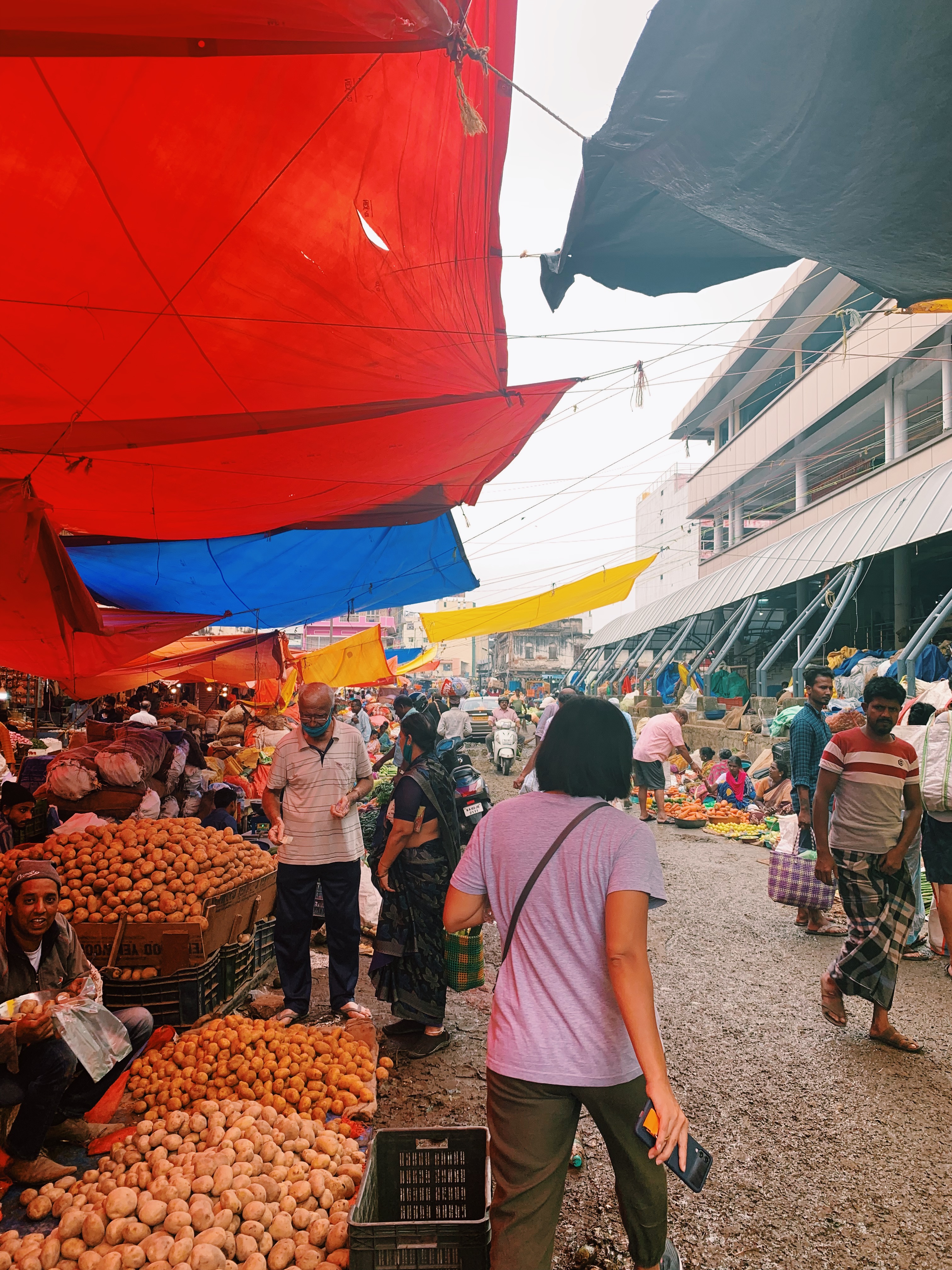
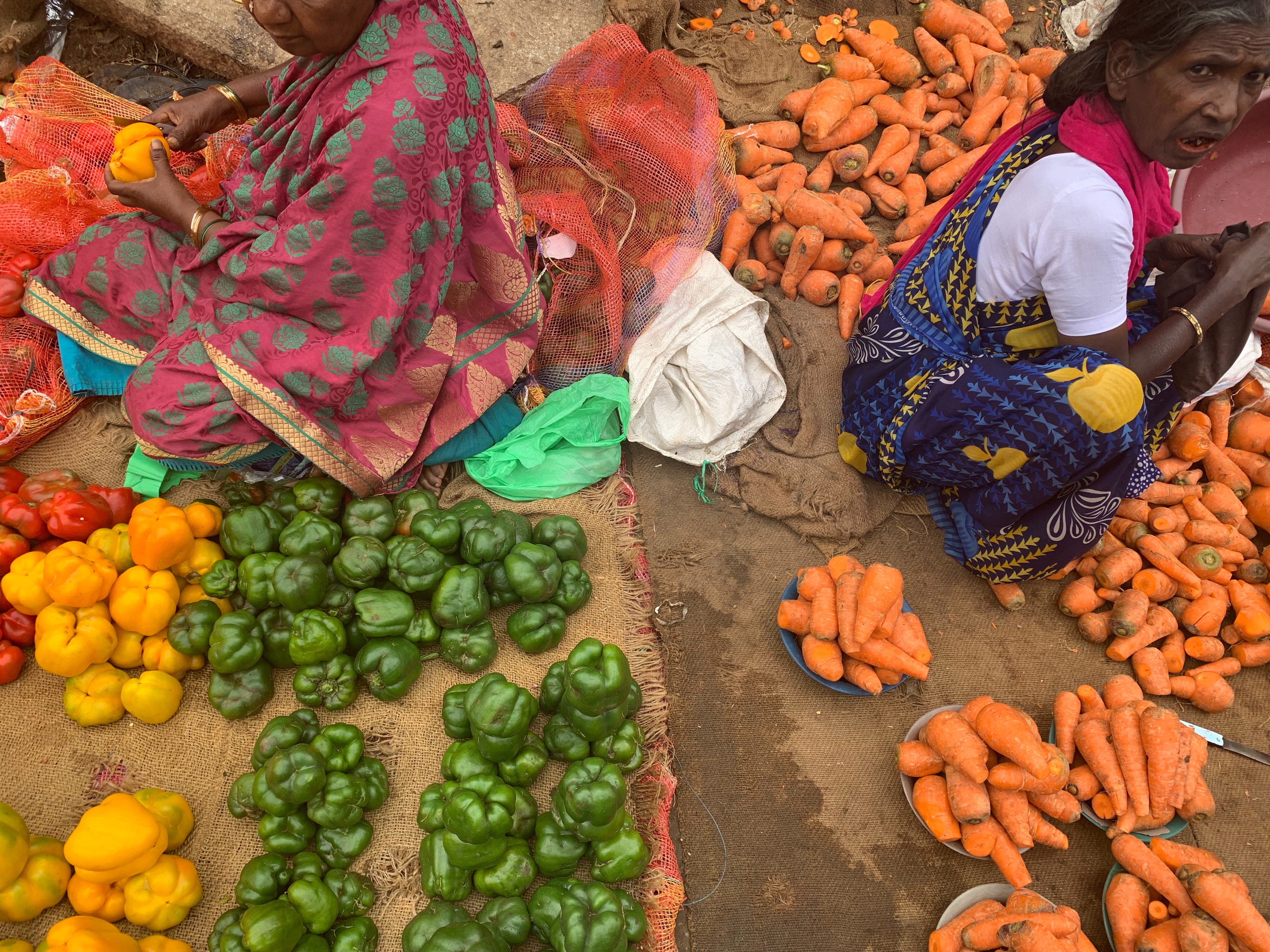
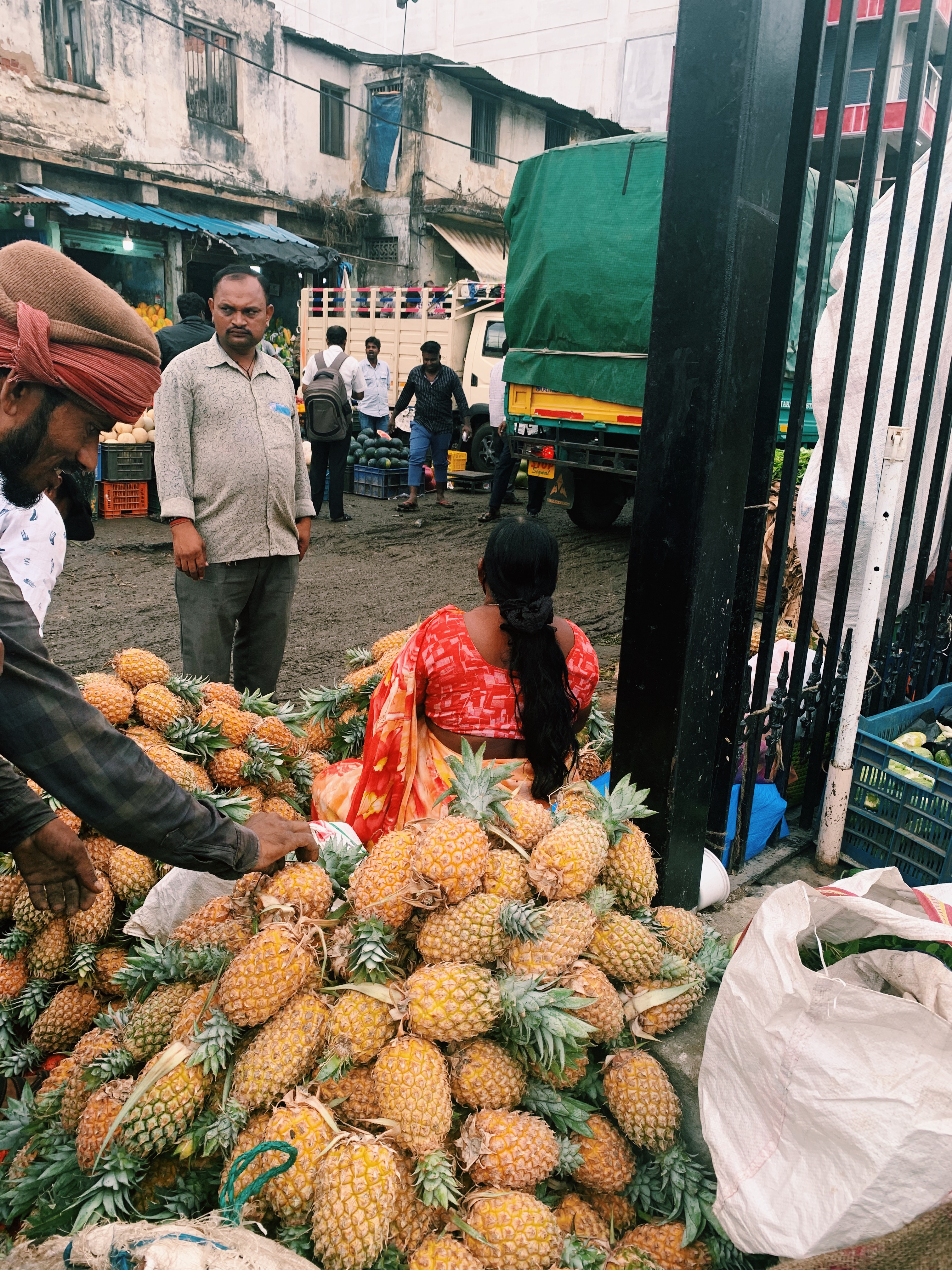
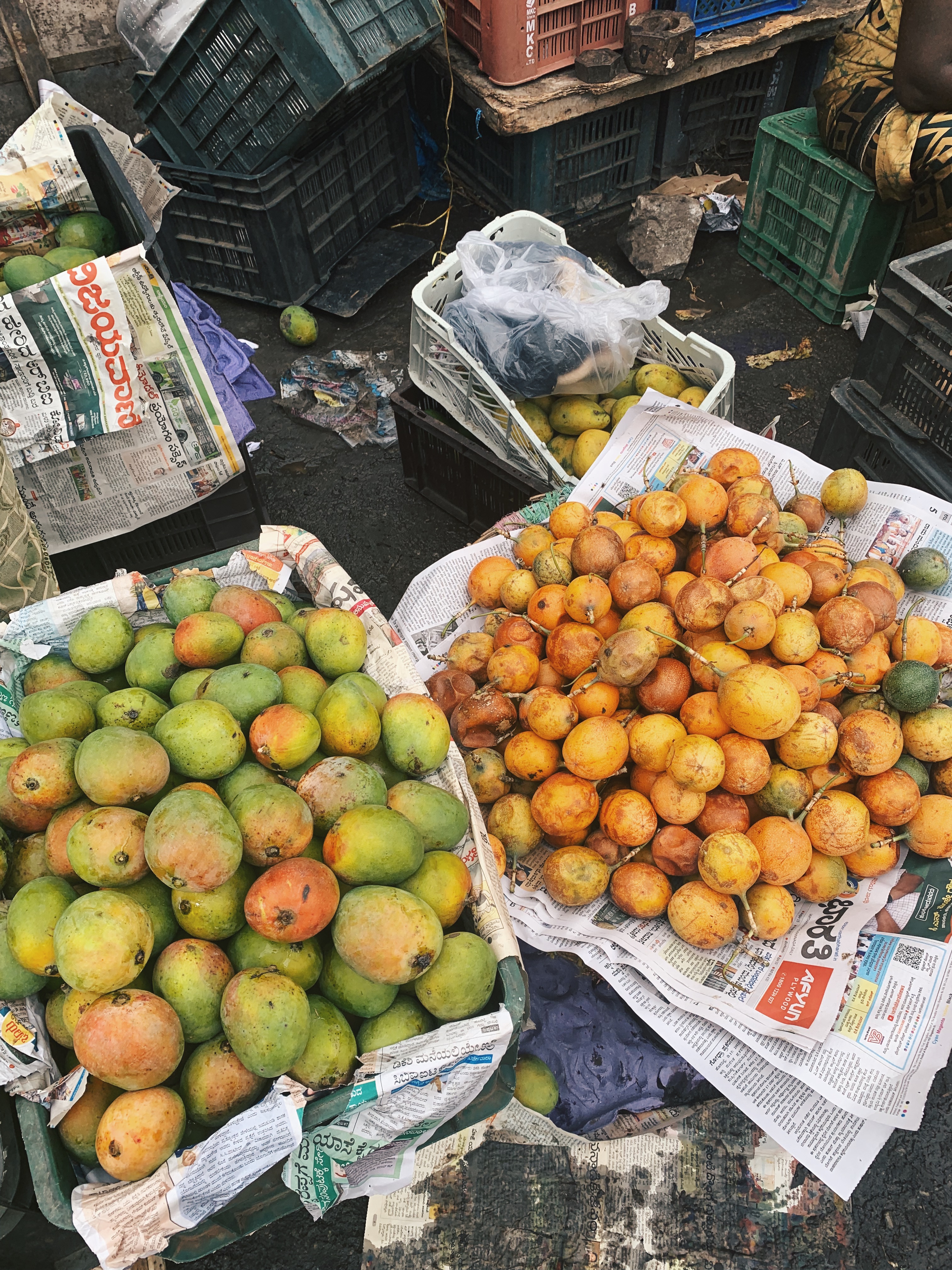
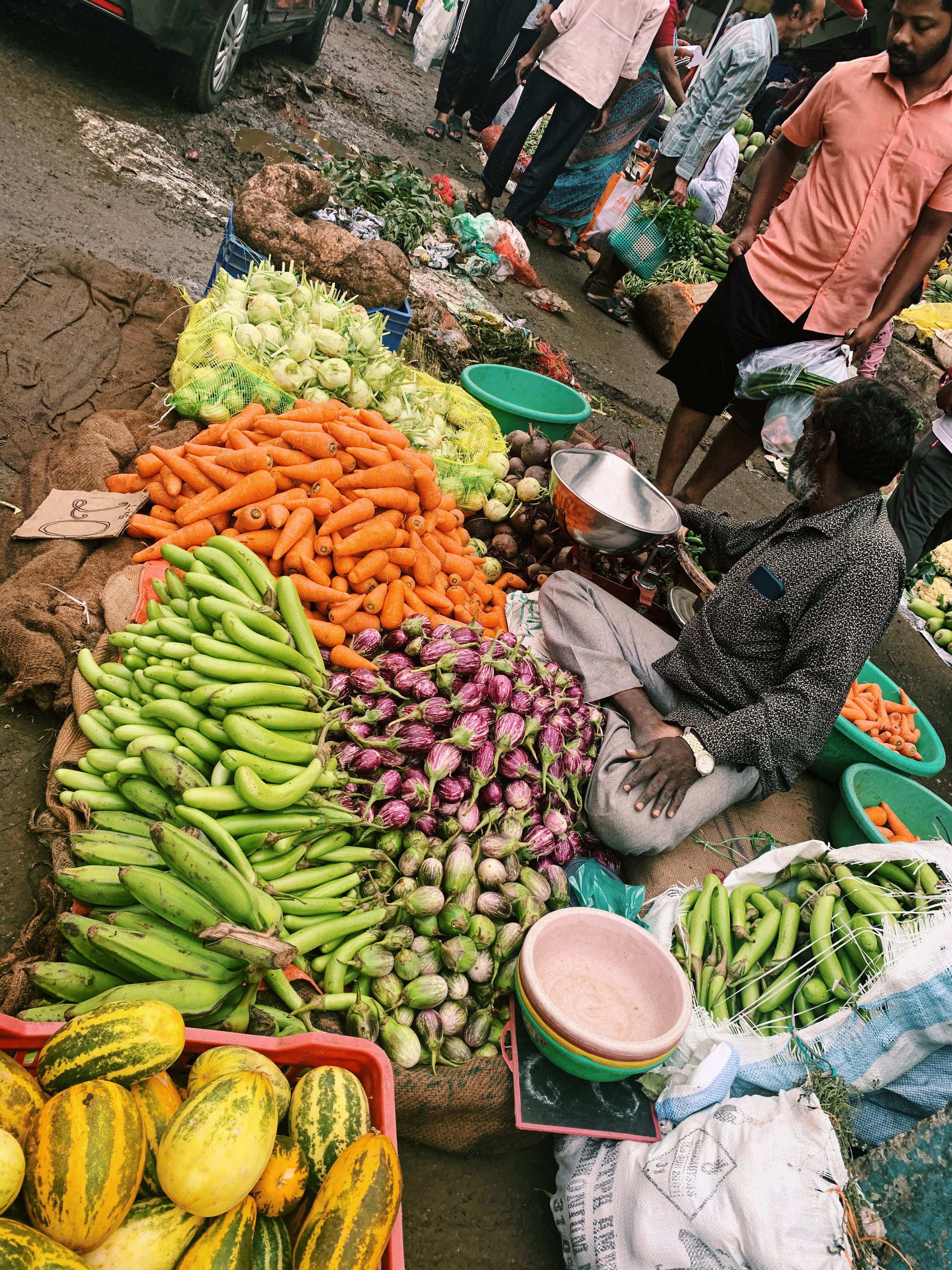
And my goodness, is there a lot to see. There is a rainbow of capsicums lined up like little soldiers atop wet cardboard, bowls of bulbous carrots, an array of glossy heart-shaped betel leaves (used for religious ceremonies, desserts, and chewing tobacco — we love a leaf that does it all), spread out like a fan; there are potatoes and pineapples and brinjals and green beans and melons and yams and passionfruit — and mangoes, so many mangoes. I have heard about the magic of an Indian mango, so I pick a few of two varieties, bring them home for my parents’ discerning palates (my dad proclaims the mango “is pretty special”, which is a compliment of the highest honour, coming from him). There are pale green chillis and gourds that curve around like a dog trying to bite its own tail, pyramids of luridly dyed masala, bouquets of cauliflowers, incredible piles of hairy coconuts, stored up in their very own warehouse space. One stall has banana leaves hanging over its rooftop like a sunshade, while the stallholder industriously dries, brushes, and cuts banana leaves into identical rectangles, which he then folds away and stacks up like freshly laundered towels. We come across one alleyway through which a herbaceous fragrance wafts: the ground is strewn with trampled leafy herbs, which an errant cow peacefully munches away at. At the end of another alleyway, there’s a stall preparing fresh dosa, which men tuck into while standing up. I’m tempted to stop and join them.
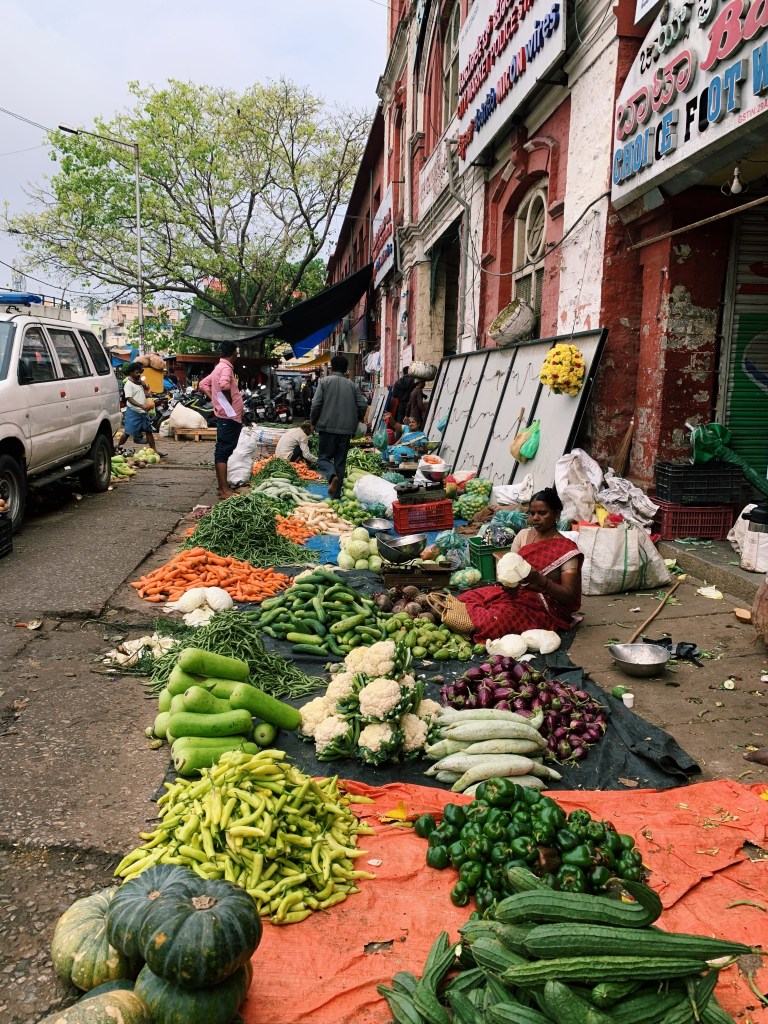
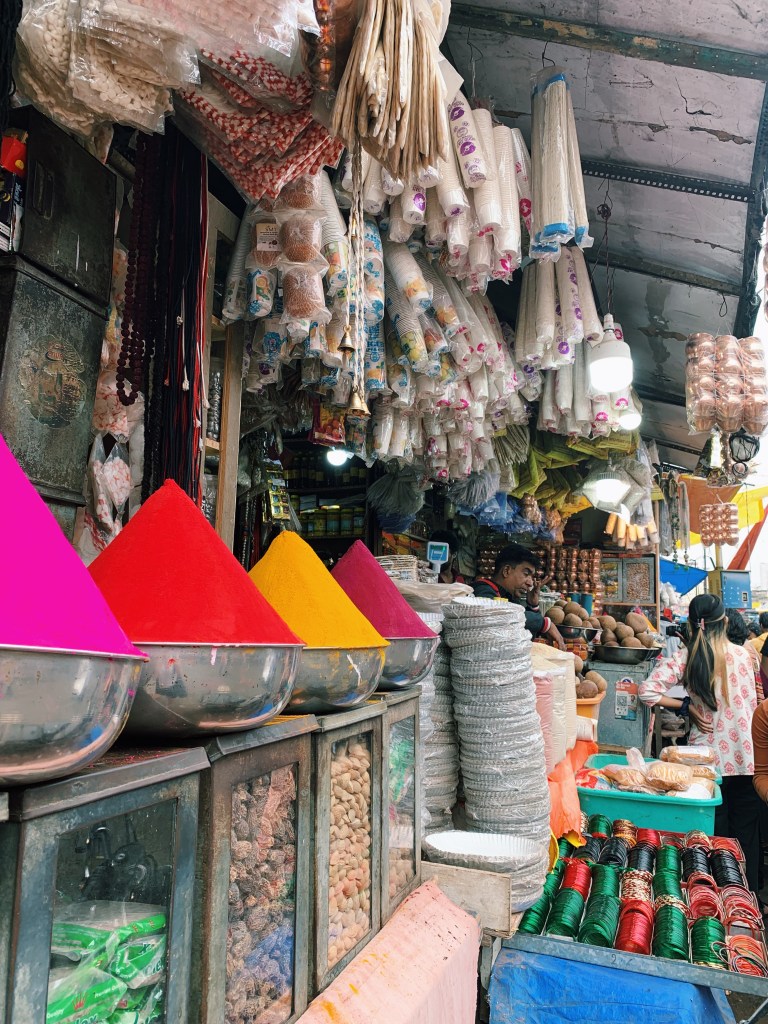
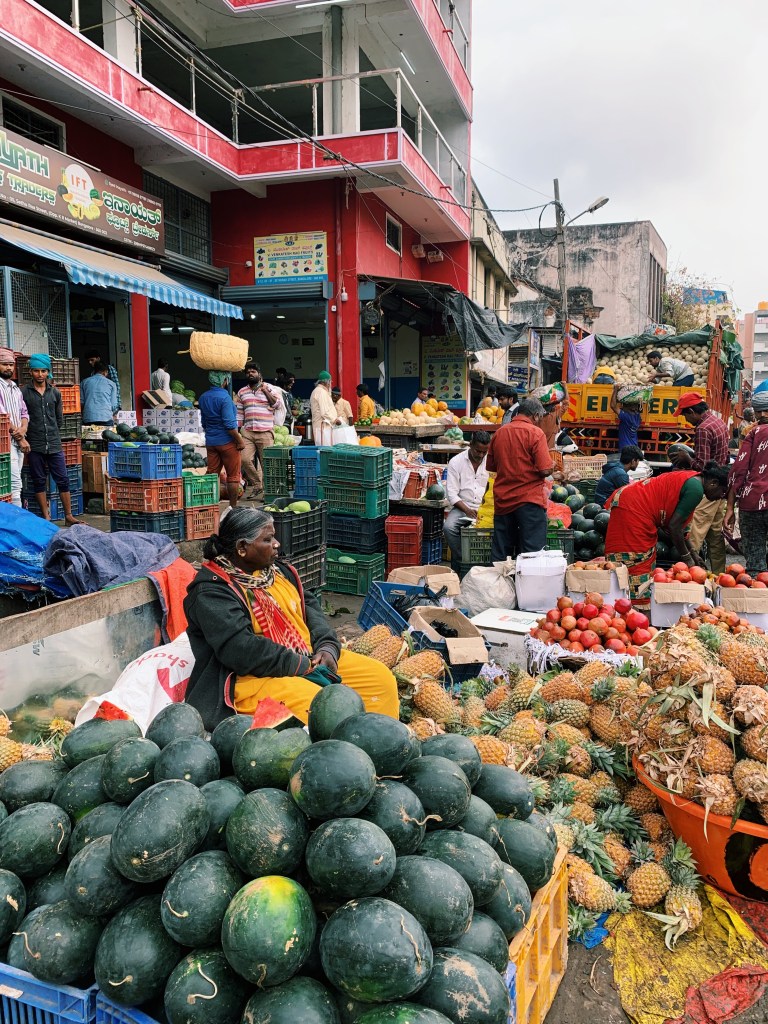
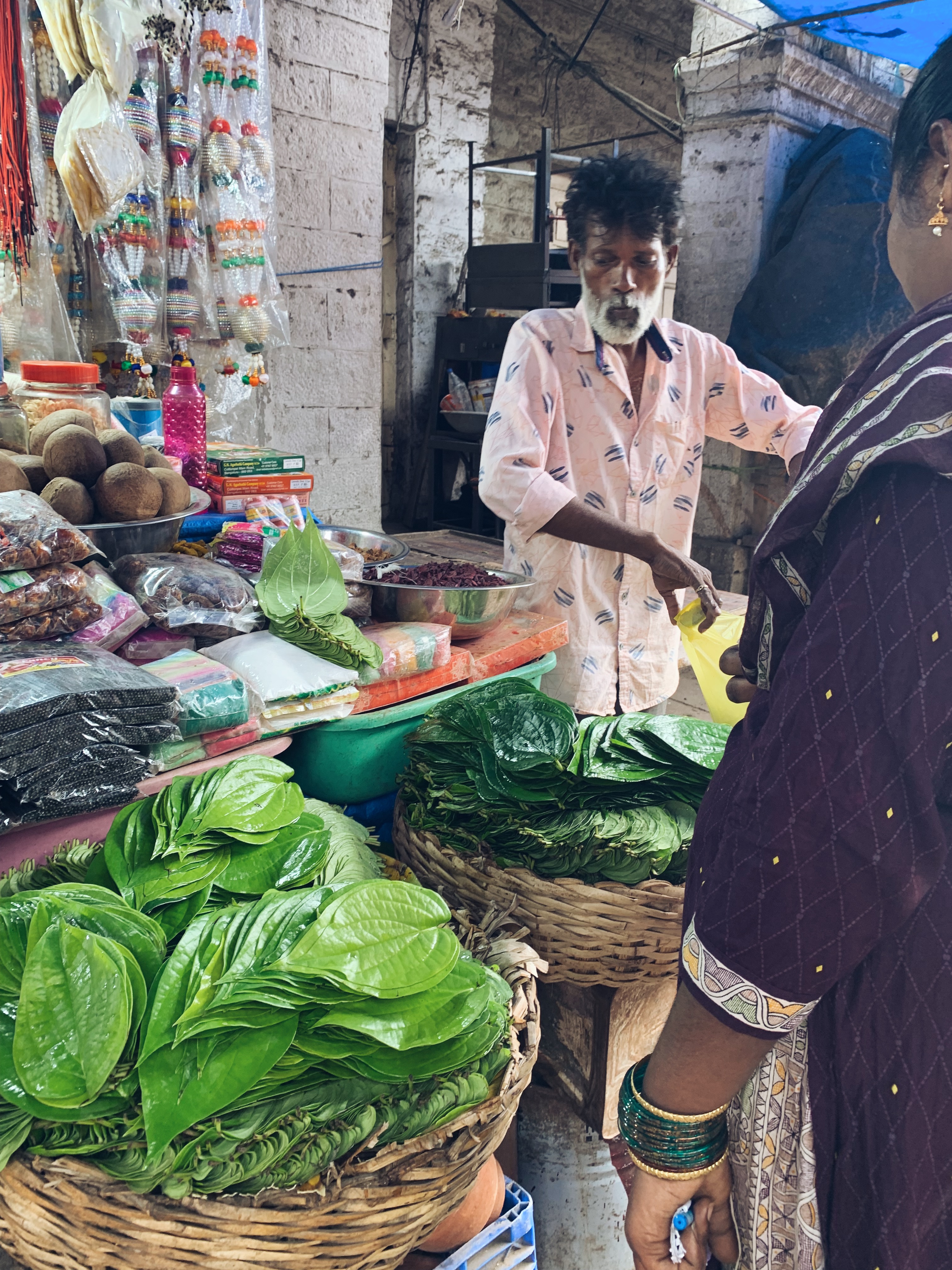
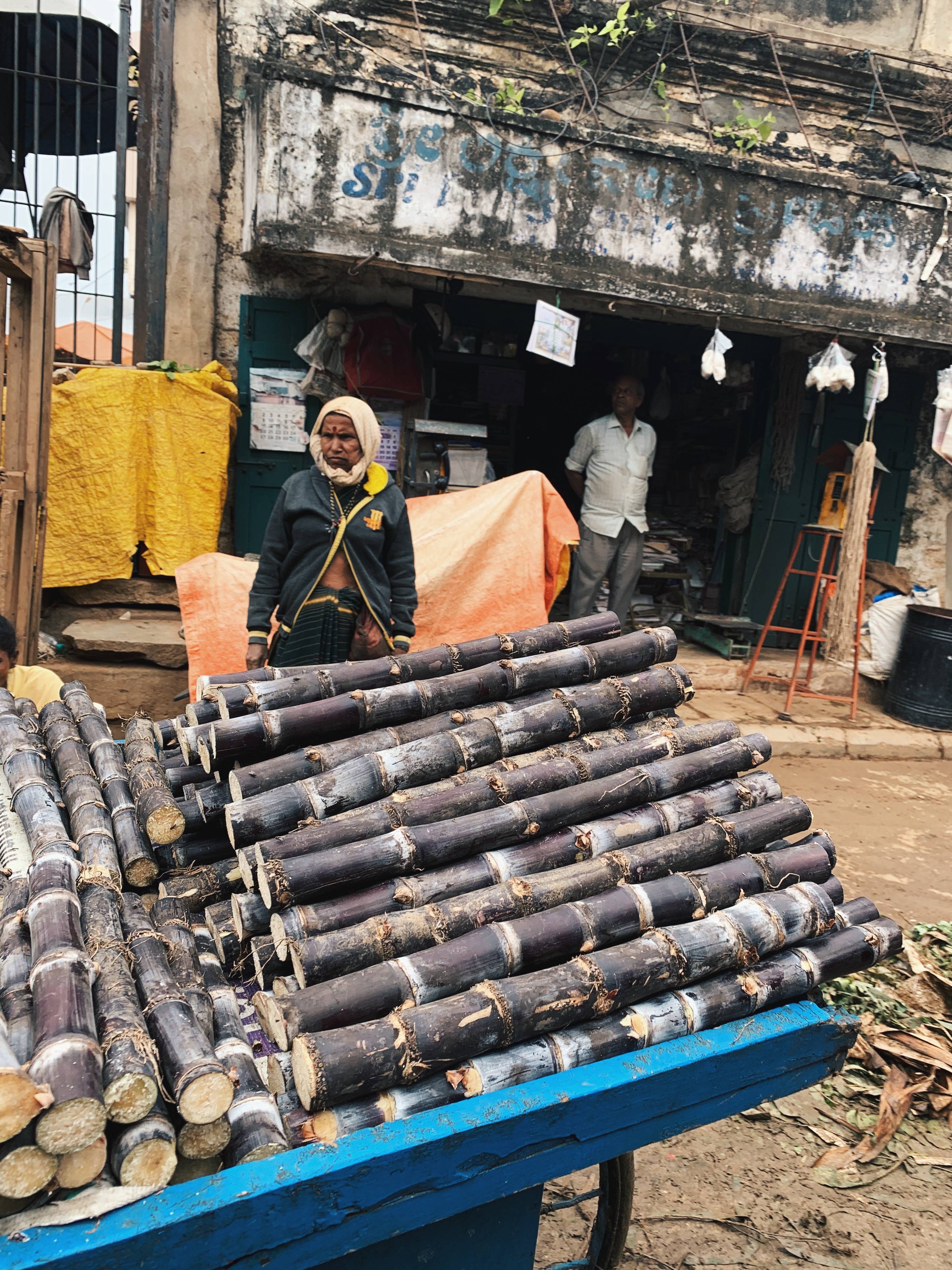
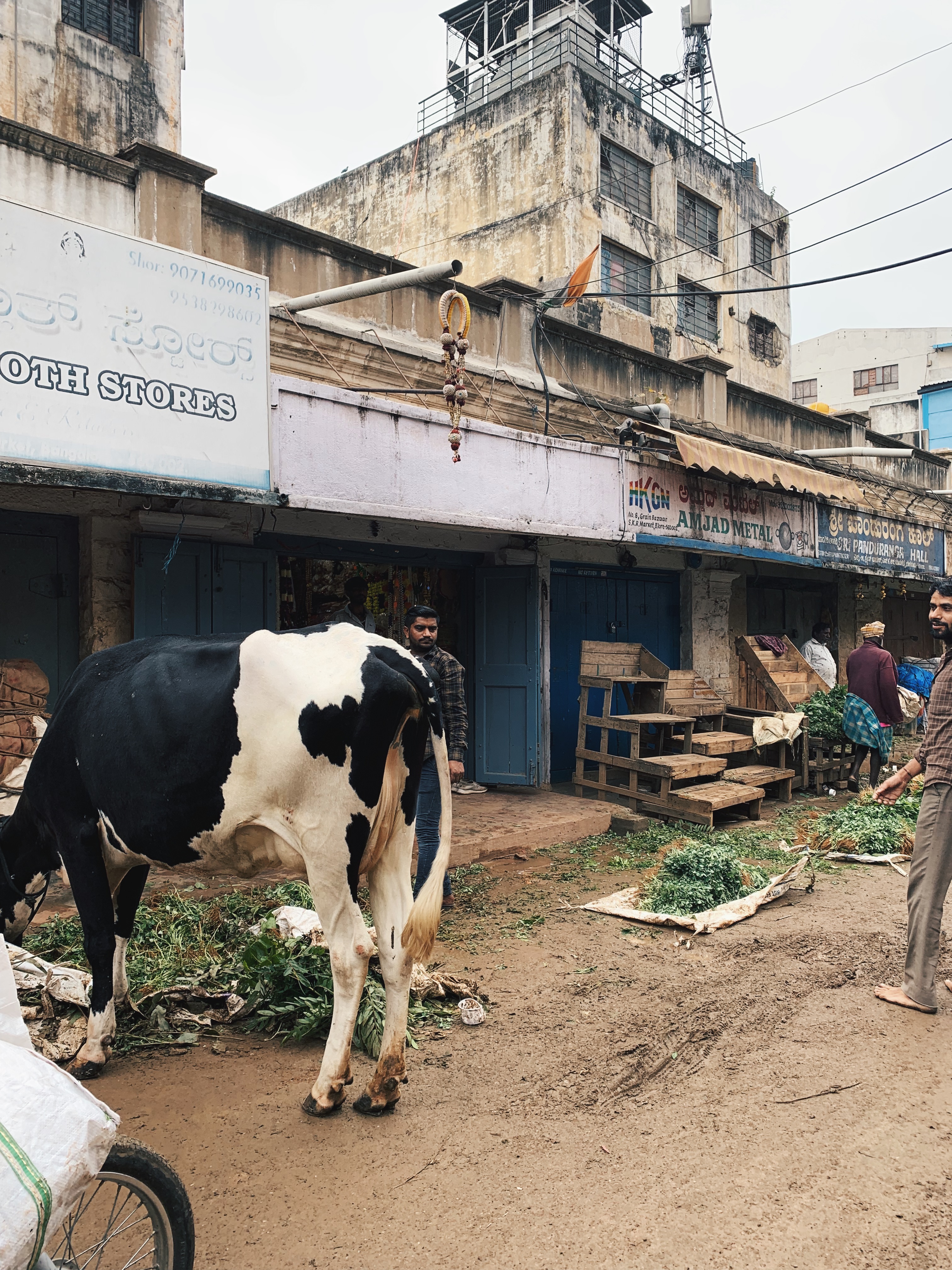
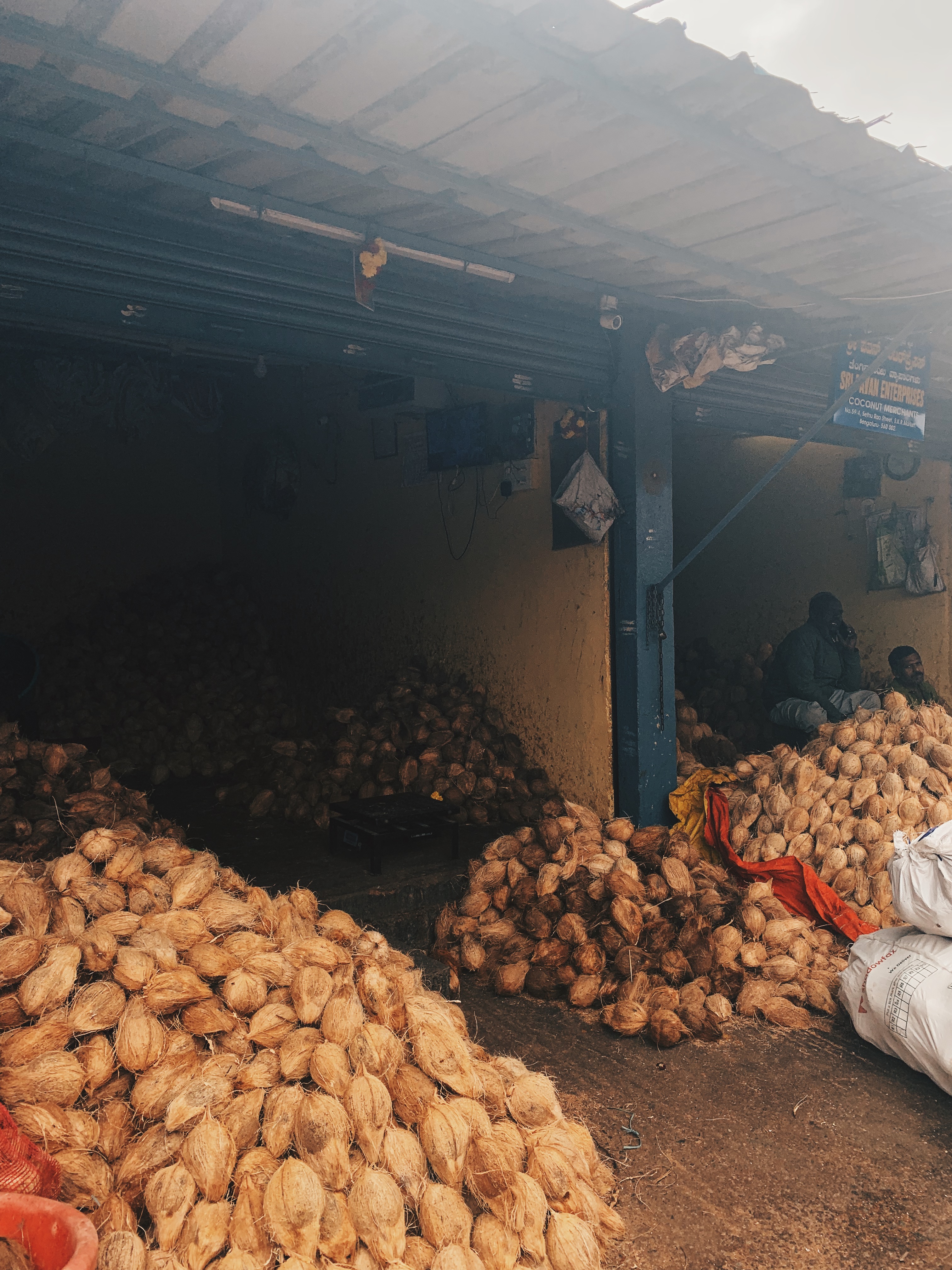
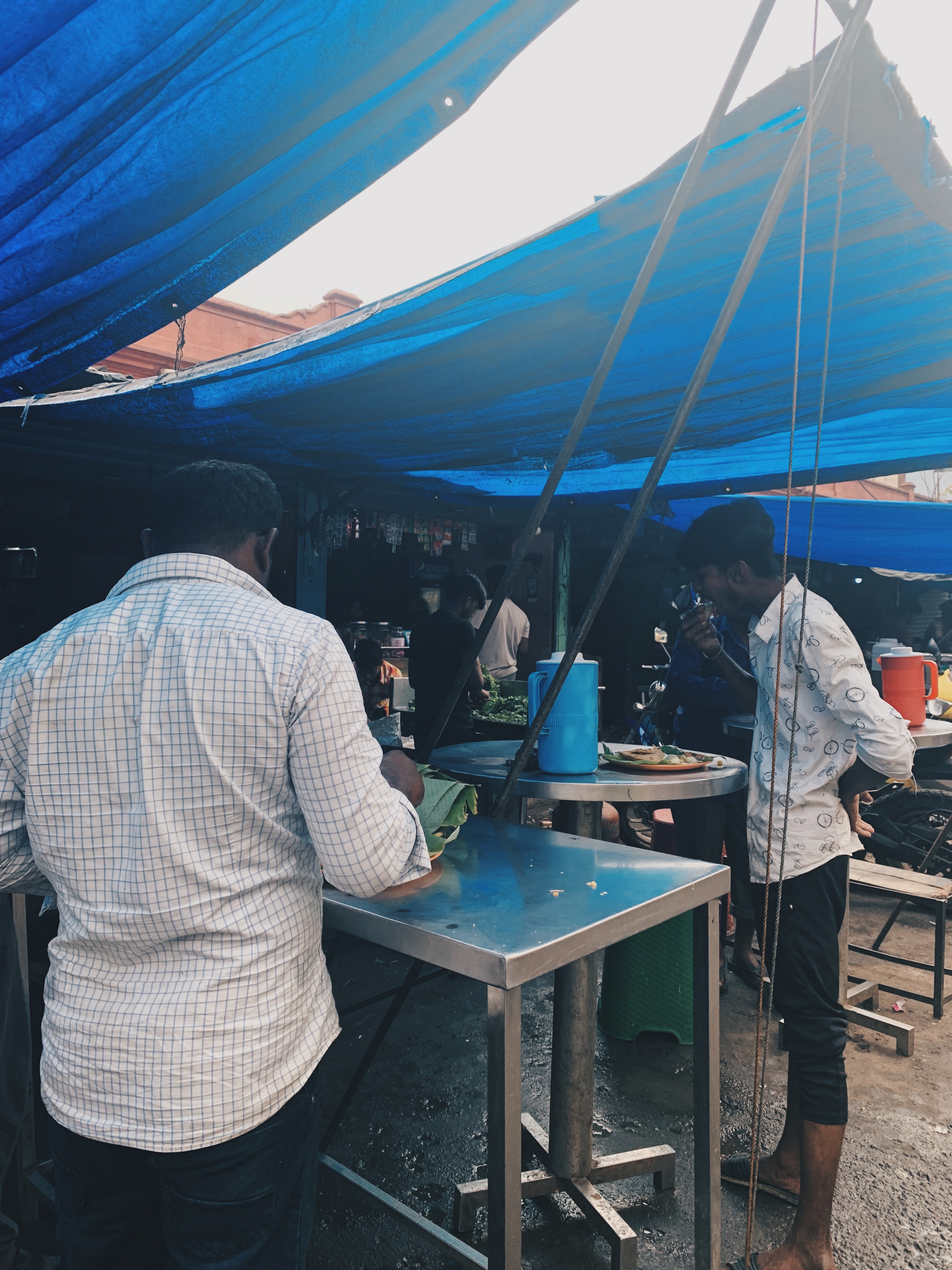
To me, KR Market is a blend of Morocco’s Had Draa Market and Singapore’s Pasir Panjang Wholesale Market. There’s the organised mayhem of women and men doing their grocery shopping for the week, while the industrious cadence of wholesale commerce thrums in the background. At Had Draa, I had felt the thrill of being within and without someone else’s weekly routine — being surrounded by a feeling of un-self-conscious, purposeful productivity, without actually having anything to accomplish. As for Pasir Panjang Wholesale Market, I had always felt a secret pleasure of being privy to the bustling, self-possessed energy of wholesalers supplying the country with boxes of kailan, cucumber, carraway seeds, imported from all over the world. Here, individual sellers trying to earn their daily wages jostle with large-scale wholesale traders, whose truckloads of produce trundle in and out of the market. The sense one is given is unmistakable: we have business to do. The sellers know it, the buyers know it, the cows know it, the lorry drivers know it.
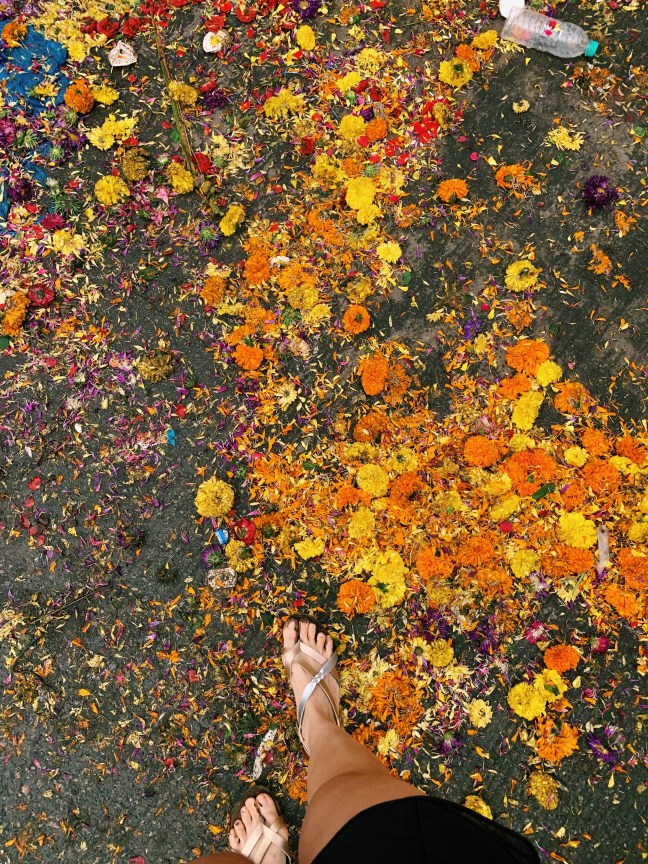
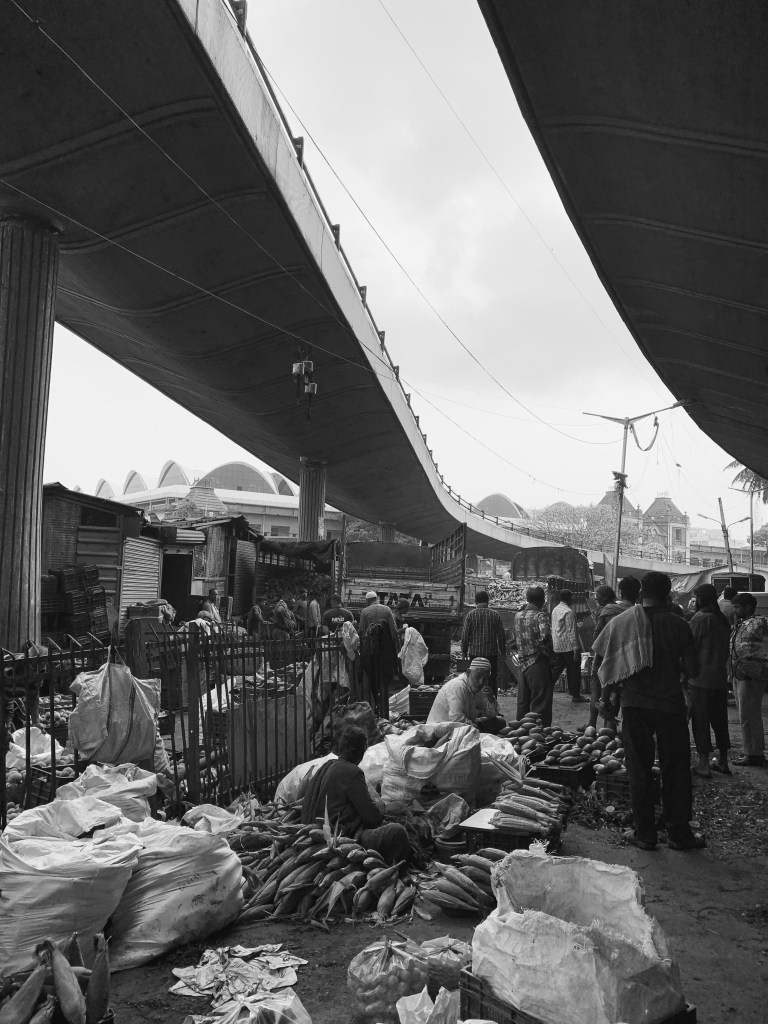
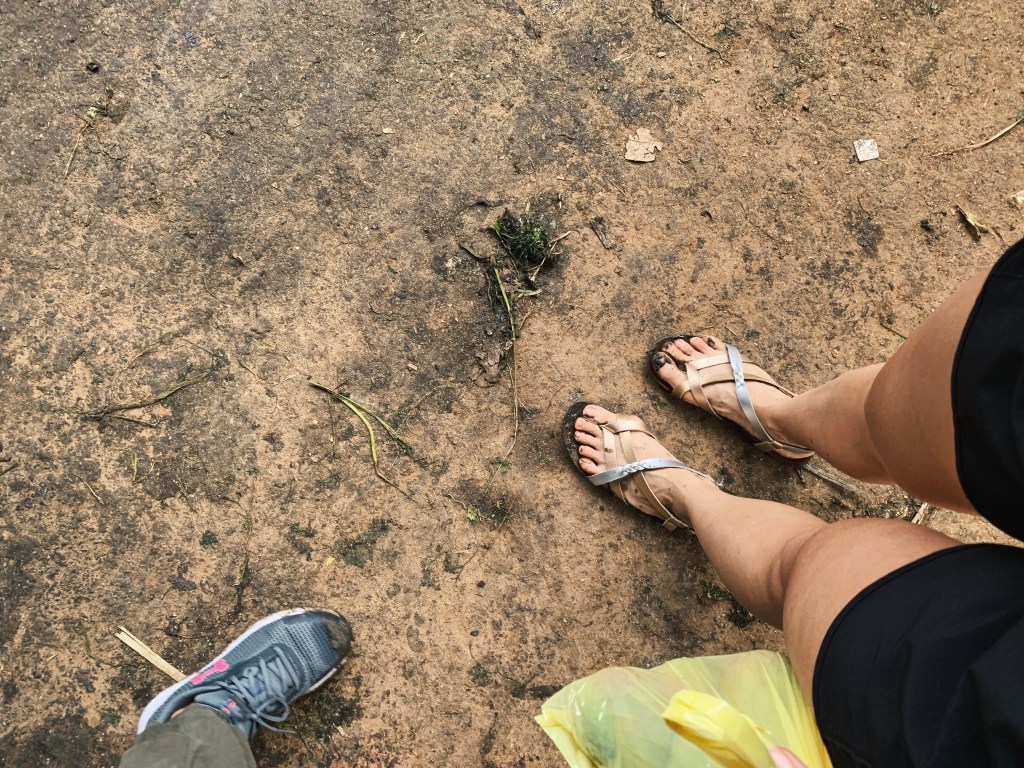
It’s almost 9am and we have followed the market’s inexorable motion of humans, motorbikes and cattle to its outskirts. A honk from behind — I hop to the side, just in time for a looming bus to narrowly squeeze its way through the muddy passageway lined with fruit vendors. Our feet are thoroughly soiled. Somehow, we’ve unknowingly joined the main road. We try to hug close to the side of the road, avoiding motorbike taxis and minibuses that honk at us for obstructing the way. Even here, beneath overhead expressways, the market breathes lavishly: lorries piled high with sugarcane sit idle just off the main road, while bundles of sugarcane lean against the highway piling like casual labourers waiting to be picked up. Everywhere, market vendors showcase their produce on the ground.
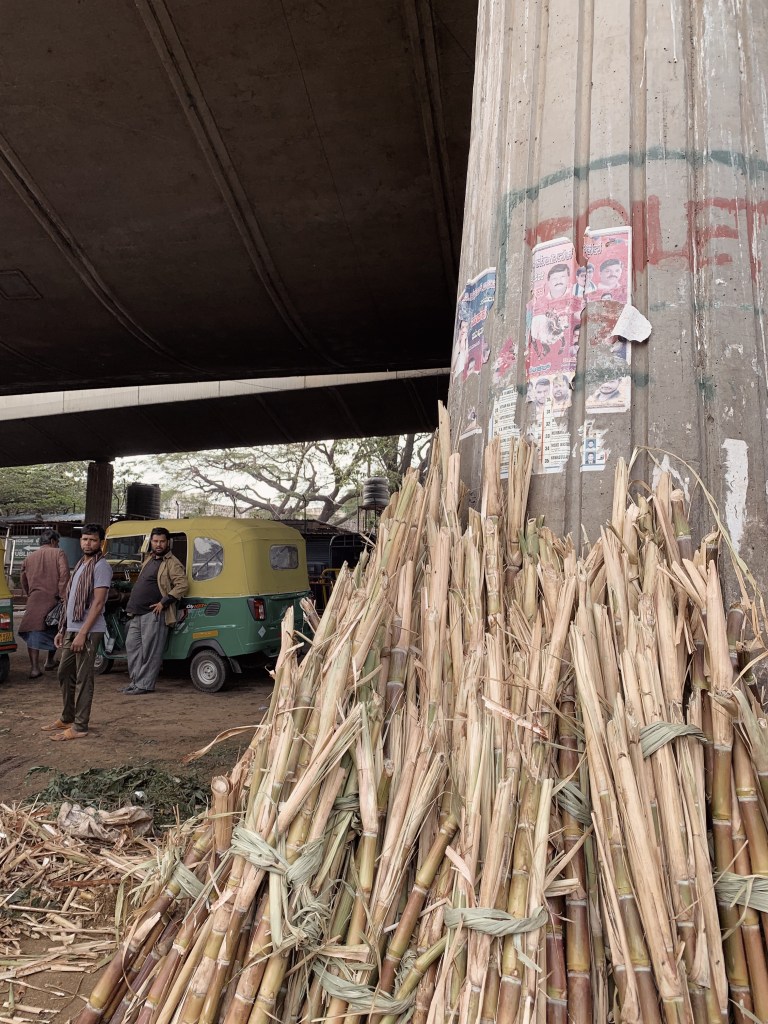
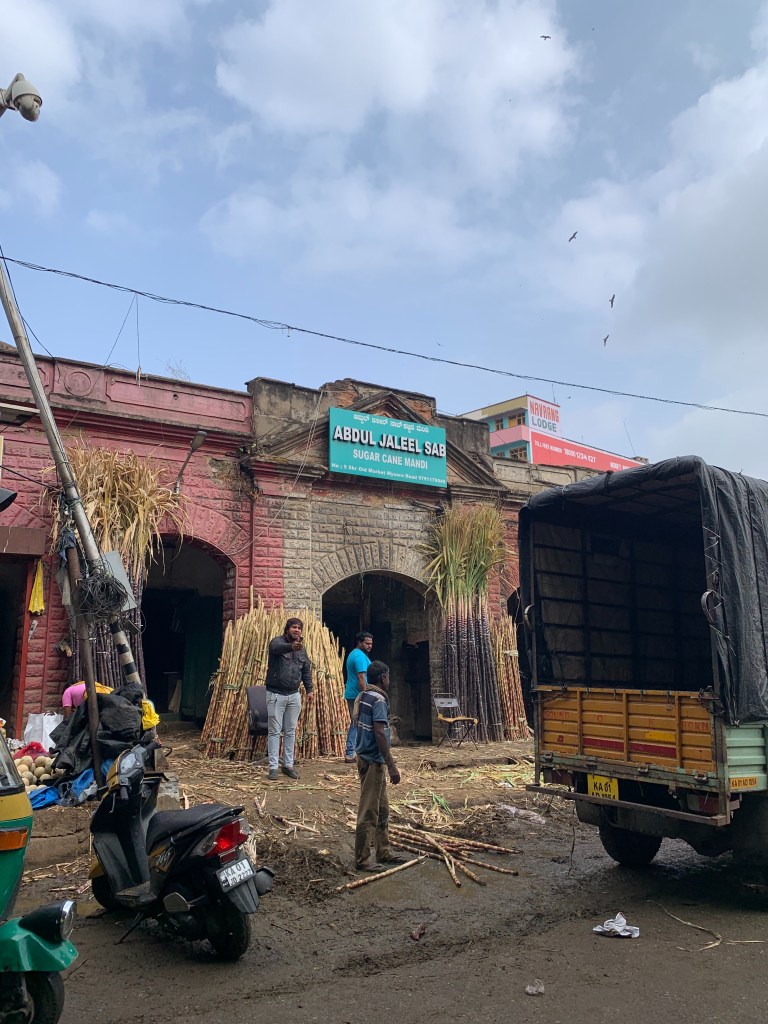
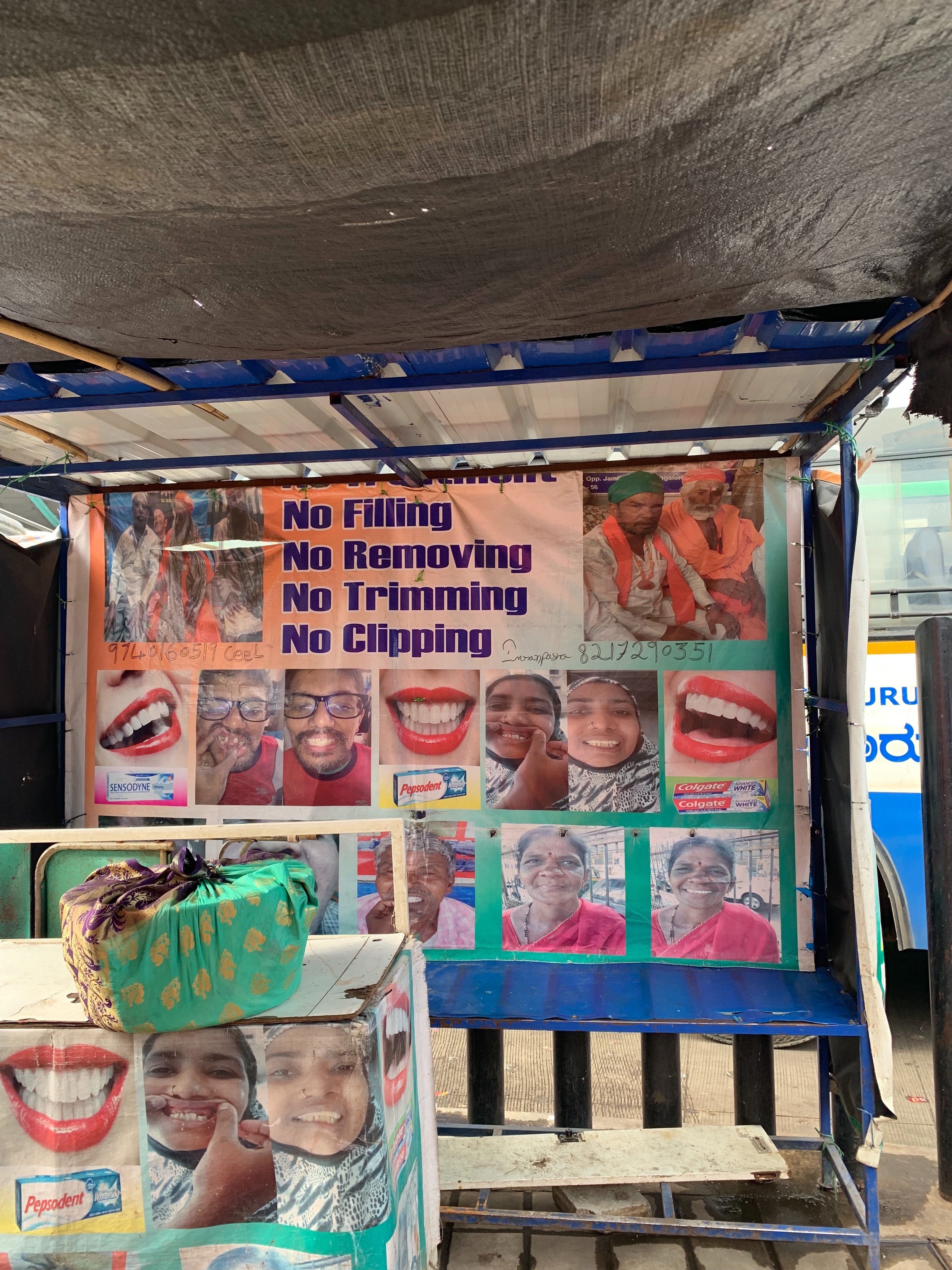
There’s an organised chaos to this place. It is utterly enervating. As we head towards the nearby bus terminal, we stumble upon a row of mobile dentists. Each stall is operated out of a portable cart equipped with an umbrella. On the wall behind them, posters with pictures of gleaming grins proclaim the efficacy of the dental services on offer. I hang back here for a bit, slightly slack-jawed (I’m sure the stallholders looking back at me see a set of teeth sorely in need of their work).
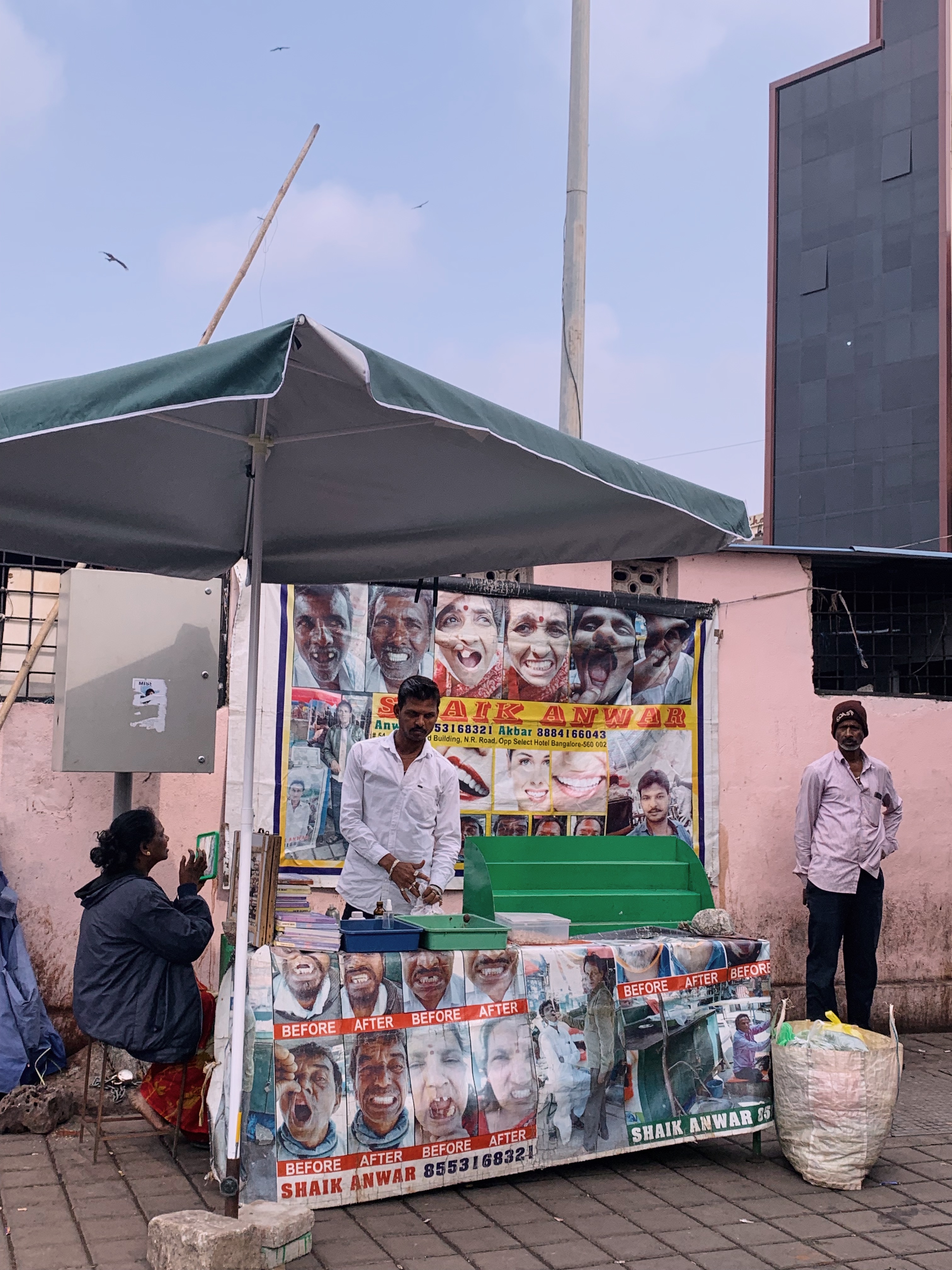
A lot of articles online about Bangalore lament the problems of over-expansion and untrammelled urbanisation: bad traffic, poor sanitation, challenges to waste management, air pollution. KR Market is a microcosm of the same issues — Karnataka’s politicians have made much of de-congesting and cleaning it up. I know Bangalore longs for shiny modernity just as much as any city. In some quarters, KR Market’s pandemonium may even be a source of embarrassment. I come with the rose-tinted glasses of a sojourner, certainly — if anything, the unmitigated filth, unfiltered smells, unmuted sounds add grit and authenticity to my experience of this place. I longed for this, while ensconced in the luscious surrounds of the hotel where the wedding is being hosted.
As we walk away from the raucous sounds of the market, the city becomes palpably less frenetic. I think, as I often do, about whether I have objectified my experience. The answer is invariably yes: as a traveller, it’s difficult to avoid, and even more so when there is a communication barrier. It is frustrating to hold your feelings up to scrutiny and find that there is little room for critical reflexivity beyond acknowledging your own subjectivity. As I write this now, several months later, I’m conscious of how much of my experience I am constructing with romanticism and my weakness for lyrical expression. I do not have the slightest grasp of the complexities and tensions that underlie Bangalore’s economic, social, cultural compact. The reality is that I’ve spent two hours in one market in one part of the city, and that tells me very little. But at least I know I know very little.
We return to my companion’s hotel room and wash the mud off our feet and shoes in her pristine bathtub. She’s staying in an absolutely breathtaking, Taj Mahal-like luxury hotel. We curl up in plush armchairs and chat over coffee brought to her room in silver teapots. I then return to my hotel room and start dressing up for the day’s wedding festivities: the mehendi. An hour later, I’m standing on the hotel lawn with a hundred other gorgeously dressed wedding guests. My hand is adorned with an intricate henna motif. I look down at my feet, which are now clean, moisturised, and in high heels. My companion shows up at the mehendi slightly later, and we exchange a conspiratorial giggle at the thought of our extremities caked in mud several hours earlier. The stark change of scenery feels almost farcical.
I distrust my words with good reason, as should you. Instead, take this as an invitation to venture outside and get your feet dirty. Put your own subjectivities to the test.
 Market Survey